 To enhance service speed and avoid tariff delays, we've opened a US warehouse. All US orders ship directly from our US facility.
| Cat. No. | Product Name | Field of Application | Chemical Structure |
|---|---|---|---|
| DC66263 | DSPE-Hyd-PEG-OH Featured |
DSPE-Hyd-PEG, also known as distearoylphosphoethanolamine-hydrazide-polyethylene glycol, is a type of lipid-based polymer that has various applications in drug delivery and biomedical research.
One of the main applications of DSPE-Hyd-PEG is in the field of targeted drug delivery. It is often used as a component of liposomes or lipid nanoparticles to improve the stability and targeting ability of drug carriers. DSPE-Hyd-PEG can be conjugated with targeting ligands, such as antibodies or peptides, to specifically bind to receptors on the surface of target cells. This targeted drug delivery system allows for more efficient and selective delivery of therapeutic agents to the desired site, while minimizing off-target effects.
More description
|

|
| DC66262 | DSPE-Hyd-PEG-FA Featured |
DSPE-Hyd-PEG, also known as distearoylphosphoethanolamine-hydrazide-polyethylene glycol, is a type of lipid-based polymer that has various applications in drug delivery and biomedical research.
One of the main applications of DSPE-Hyd-PEG is in the field of targeted drug delivery. It is often used as a component of liposomes or lipid nanoparticles to improve the stability and targeting ability of drug carriers. DSPE-Hyd-PEG can be conjugated with targeting ligands, such as antibodies or peptides, to specifically bind to receptors on the surface of target cells. This targeted drug delivery system allows for more efficient and selective delivery of therapeutic agents to the desired site, while minimizing off-target effects.
More description
|
|
| DC66261 | DSPE-Hyd-PEG-SH Featured |
DSPE-Hyd-PEG, also known as distearoylphosphoethanolamine-hydrazide-polyethylene glycol, is a type of lipid-based polymer that has various applications in drug delivery and biomedical research.
One of the main applications of DSPE-Hyd-PEG is in the field of targeted drug delivery. It is often used as a component of liposomes or lipid nanoparticles to improve the stability and targeting ability of drug carriers. DSPE-Hyd-PEG can be conjugated with targeting ligands, such as antibodies or peptides, to specifically bind to receptors on the surface of target cells. This targeted drug delivery system allows for more efficient and selective delivery of therapeutic agents to the desired site, while minimizing off-target effects.
More description
|
|
| DC66151 | DSPE-TK-PEG-NH2 Featured |
|
|
| DC66134 | DSPE-SS-PEG-CY5 Featured |
|
|
| DC66132 | DSPE-SS-PEG-CY7 Featured |
|
|
| DC66131 | DSPE-SS-PEG-CY3 Featured |
|
|
| DC66154 | DSPE-TK-PEG-NPC Featured |
|
|
| DC66144 | DSPE-SS-PEG-NH2 Featured |
|
|
| DC66136 | DSPE-SS-PEG-CHO Featured |
|
|
| DC66153 | DSPE-TK-PEG-CHO Featured |
|
|
| DC66152 | DSPE-TK-PEG-FA Featured |
|
|
| DC66143 | DSPE-SS-PEG-SH Featured |
|
|
| DC66140 | DSPE-SS-PEG-FA Featured |
|
|
| DC66138 | DSPE-SS-PEG-RB Featured |
|
|
| DC66126 | DSPE-SS-PEG-N3 Featured |
Phospholipids are commonly used polymeric gene carriers. DSPE with high molecular weight can effectively compound DNA, and has strong buffered capacity under endosomal pH conditions, showing good transfection efficiency for a variety of cells. However,DAPE is not easily degraded, and high molecular weight DAPE as a gene carrier may lead to short - or long-term cytotoxicity.
More description
|
|
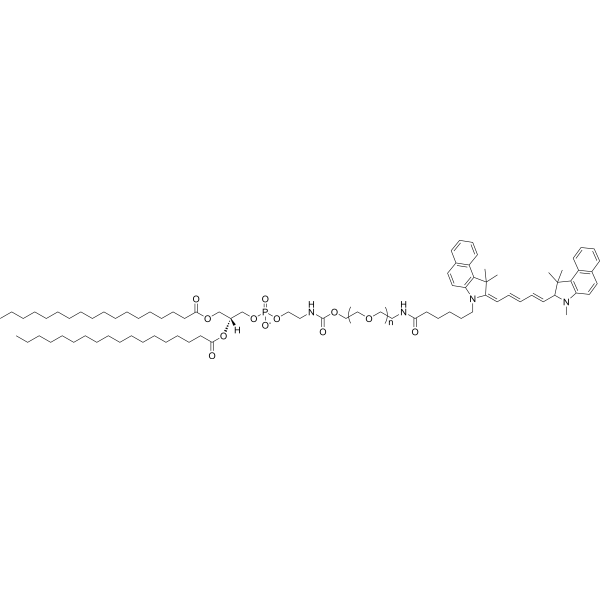
| DC66299 | DSPE-PEG-Cy5.5 Featured |
DSPE-PEG-Cy5.5is a phospholipid. Phospholipids have good biocompatibility and significant amphiphilic characteristics, making them the main and suitable dosage form or excipient in drug formulations, thereby achieving better therapeutic effects. "&B26&"can be used in drug delivery research."
More description
|
|
| DC66148 | DSPE-TK-PEG-SH Featured |
The polymer with ketone mercaptan as the fragment can form the shell of the nanocore, and simultaneously contain the polyorubicin and light sensitive compounds to achieve dual roles. Ketothiol polymers can also be used directly as drug carriers to contain paclitaxel ROS responsive groups, often in combination with a variety of methods. ROS, as the connecting part, connects the hydrophilic part and the hydrophobic part of the nanocarrier. When the nanocarrier encounters ROS, it breaks and releases drugs: the ROS responsive group can also act as the part connecting drug molecules and nanocarriers to release drugs under oxidation. Common ROS responsive groups generally contain sulfur, boron and tellurium. In addition, in order to inactivate the protein, ROS responsive groups can also be used to block the active center of the protein. Common ROS responsive genes include: polypropylene sulfide, borate, thione, tellurium, selenium, ferrocene, anthocyanins, etc.
More description
|
|
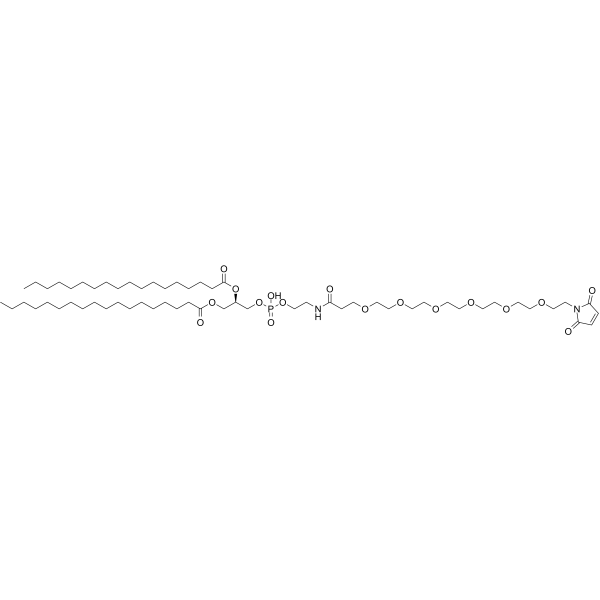
| DC44305 | DSPE-PEG6-Mal Featured |
DSPE-PEG6-Mal is a PEG-based PROTAC linker that can be used in the synthesis of PROTACs.
More description
|
|
| DC44304 | DSPE-PEG2-mal Featured |
DSPE-PEG2-mal is a PEG-based PROTAC linker that can be used in the synthesis of PROTACs.
More description
|
|
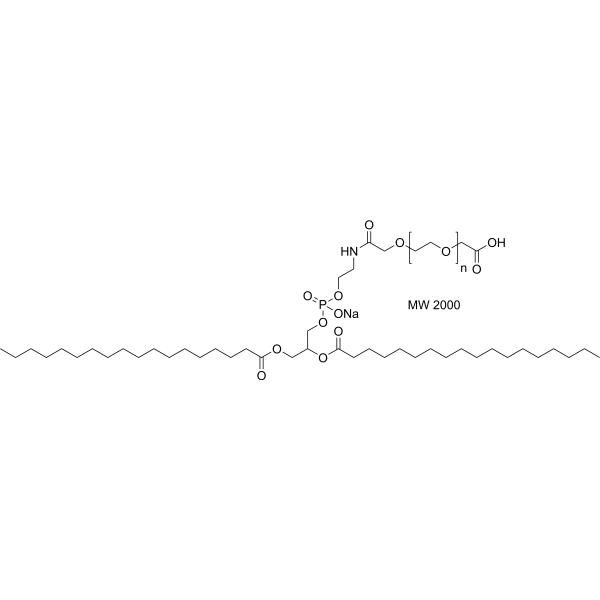
| DC66109 | DSPE-PEG-COOH Featured |
DSPE-PEG Carboxylic acid (sodium), MW 2000 is a PEG-lipid that can be used to form micelles as nanoparticles for drug delivery. DSPE-PEG Carboxylic acid (sodium), MW 2000 increases the blood circulation time of liposomes.
More description
|
|
| DC66110 | DSPE-PEG-NHS Featured |
NHS PEG DSPE can be easily incorporated into liposomes and other nanoparticles through the reaction of NHS with amine. DSPE peg NHS is one of the most commonly used reactive phospholipids that bind antibodies, proteins, peptides or other substrates to the surface of liposomes and other lipid peg nanoparticles. Pegylated phospholipids have longer blood circulation time and higher encapsulation molecular stability. We have developed a series of chemically reactive phospholipid peg products with high purity, various molecular weights and excellent chemical reactivity. These lipid peg conjugates exhibit excellent amphiphilic properties and provide superior advantages for the modification, preparation and transportation of small and large molecules.
More description
|

|
| DC66161 | DSPE-PEG-HSA Featured |
Serum protein is the most abundant protein in plasma. Each protein molecule can carry seven fatty acid molecules. These fatty acid molecules bind to gaps in the protein, where their carbon-rich tails are buried safely away from surrounding water molecules. Serum proteins can also carry many other molecules that are insoluble in water. Serum proteins, in particular, can carry many drug molecules, such as ibuprofen. Human serum albumin (HSA) is a highly water-soluble globular monomer plasma protein with a relative molecular weight of 67KDa, composed of 585 amino acid residues, one sulfhydryl group and 17 disulfide bonds. In nanoparticle carriers, HSA nanoparticles are characterized by their ability to bind to various drug molecules, stability during storage and in vivo use, non-toxicity and antigenicity, biodegradability, repeatability, amplification of the production process and better control of release characteristics
More description
|
|
| DC66159 | DSPE-PEG-BSA Featured |
Bovine serum albumin (BSA), a globulin in bovine serum, contains 607 amino acid residues with a molecular weight of 66.446KDa and an isoelectric point of 4.7. Bovine serum albumin has been widely used in biochemical experiments. The total length of BSA precursor protein is 607 amino acids. The precursor protein removes 18 signaling peptides and 6 propeptides from the N terminal to form a mature BSA protein with 583 amino acids and a molecular weight of about 66.5kDa. The surface of BSA contains a large number of carboxyl and amino groups, which can be used to bind the activated groups on the surface, and can be used as a carrier of small molecules. BSA is coupled with antibodies to form carrier-haptens conjugate.
More description
|
|
| DC66157 | DSPE-TK-mPEG Featured |
|
|
| DC66274 | DSPE-PEG-TPP Featured |
Triphenyl phosphate is odorless, odorless white crystalline block or powder, its chemical formula is C18H15O4P, it is insoluble in cold water, but soluble in hot water above 50℃, when the solution temperature is reduced to room temperature, hydrophobic, precipitated from the solution.
Slightly soluble in alcohol, soluble in ben, chloroform, C tong, easily soluble in ethyl mi. Triphenyl phosphate can be used as cellulose resin, vinyl resin, natural rubber and synthetic rubber flame retardant plasticizer with high flame retardant efficiency, excellent mechanical properties retention rate, transparency, softness and toughness, used in cellulose nitrate, various coatings, triacetate thin fat and film.
Rigid polyurethane foam, engineering plastics plasticizer, flame retardant additive. Plastics are more and more widely used in construction, transportation, aviation, electrical appliances, daily furniture and other fields, but the fire accidents caused by the flammability of plastics have increasingly become a major problem, so the research and production of flame retardants have developed rapidly.
Triphenyl phosphate is one of the main phosphorous flame retardants. (Flame retardant TPP) is a phosphorus-containing compound that can be used as a halogen-free environmentally friendly flame retardant for dissolution in organic solvents. Mainly used as a flame retardant plasticizer for engineering plastics and phenolic resin laminates; Pegylated phospholipids modified by TPP can be applied in drug release, nanotechnology and new materials research, and cell culture. As well as ligand research, peptide synthesis support, grafted polymer compounds, new materials and pegylated modified functional coatings and other active compounds.
More description
|
|
| DC66281 | DSPE-PEG-VE Featured |
2-Distearoyl-sn-Glycero-3-Phosphoethanolamine(DSPE) conjugated polyethylene glycol is a combination of phospholipid and polyethylene glycol, which has hydrophilicity and hydrophobicity. Polyethylene glycol phospholipid liposomes can be used for drug delivery, gene transfection and vaccine delivery. Pegylated phospholipids can significantly improve blood circulation time and stabilize drug encapsulation. These materials can also be used for targeted drug delivery by modifying ligands with target surfaces such as antibodies and peptides,Liposomes.
More description
|
|
| DC66279 | DSPE-PEG-PEI Featured |
Polyethyleneimine (PEI), also known as polyethyleneimine, is a water-soluble polymer. Colorless or yellowish viscous liquid, hygroscopic, soluble in water, ethanol, insoluble in benzene.
PEG-PEI, a copolymer of cationic poly (ethylene imide) (PEI) and polyethylene glycol (PEG), is a well-studied compound that significantly improves the delivery of oligonucleotides and nucleic acids (DNA, siRNA) in vitro and in vivo. By varying the MW of PEI and PEG, PEG-PEI drug conjugates, polymers, or nanoparticles with dynamic range of size, surface charge, and stability can be prepared, all of which are important for transfection efficiency.
PEI-PEG-DSPE, polyethylenimine-PEGyl-phospholipid is an AB block copolymer with phospholipids at the end of PEG that can be used in drug delivery systems. DSPE, 1, 2-distearoyl-SN-glycerol-3-phosphate ethanolamine is a synthetic phospholipid that can be used as a membrane material with solubility and is suitable for the development of liposomes and phospholipid complexes.
More description
|
|
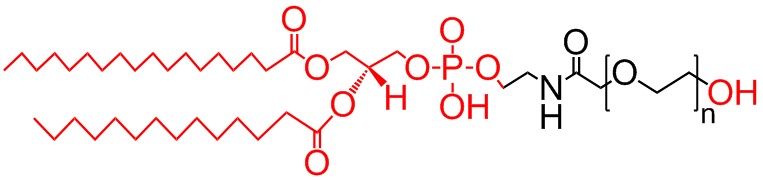
| DC66115 | DSPE-PEG-OH Featured |
DSPE-PEG-OH, MW 2000 is a PEG-based PROTAC linker that can be used in the synthesis of PROTACs. Additionally, DSPE-PEG-OH, MW 2000 can also be used for drug delivery.
More description
|
|
| DC66113 | DSPE-PEG-FA Featured |
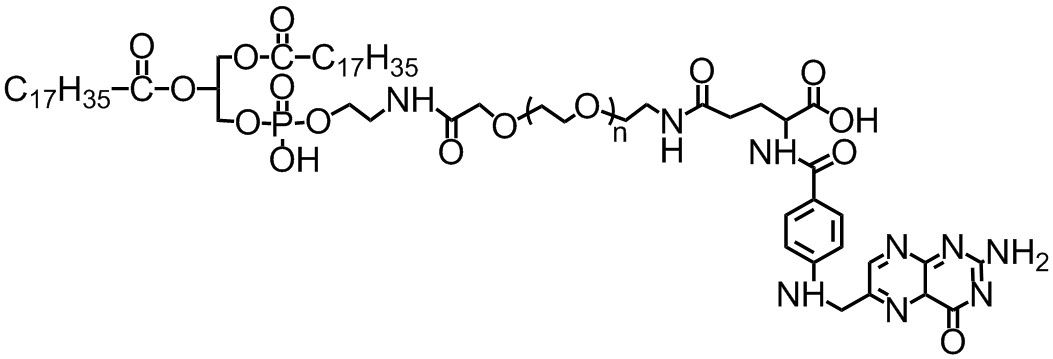
Phospholipid polyethylene glycol folate (dspe-peg-fa), carboxyl group and amino group form amide bond. This reaction makes folate ligand attach to protein, antibody, peptide or particle surface. Pegylated folate has good water solubility and bioactivity. Folate functionalized substrates have been used for targeted drug delivery, imaging and bioassay. DSPE (1,2-distearyl-sn-glycerin-3-phosphate ethanolamine) is a saturated 18 carbon phospholipid, which is commonly used in the synthesis of liposomes. Polyethylene glycol (PEG) - coupled DSPE is hydrophilic and can be used for drug delivery, gene transfection and biomolecular modification.
More description
|
|
