 To enhance service speed and avoid tariff delays, we've opened a US warehouse. All US orders ship directly from our US facility.
| Cat. No. | Product Name | Field of Application | Chemical Structure |
|---|---|---|---|
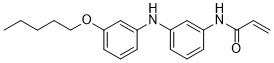
| DC74641 | HC-258 Featured |
HC-258 is a Covalent Acrylamide TEAD Inhibitor That Reduces Gene Expression and Cell Migration. HC-258 reduces the CTGF, CYR61, AXL, and NF2 transcript levels and inhibits the migration of MDA-MB-231 breast cancer cells. Co-crystallization with hTEAD2 confirmed that HC-258 binds within TEAD’s PA pocket, where it forms a covalent bond with its cysteine.
More description
|
|
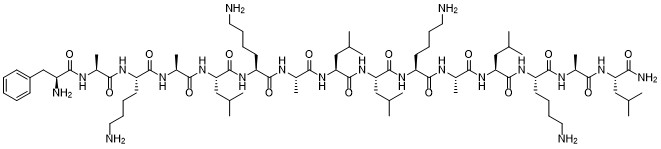
| DC74639 | Oligopeptide-10 Featured |
Oligopeptide-10, also known as granactive oligopeptide-10, is a synthetic bio-active peptide composed of 15 amino acids. it can help manage acne-causing bacteria, both on its own and in conjunction with anti-acne superstar exfoliant salicylic acid.
More description
|
|
| DC73181 | XPW1 Featured |
XPW1 is a potent and selective CDK9 inhibitor with excellent anti-ccRCC activity and low toxicity.
More description
|

|
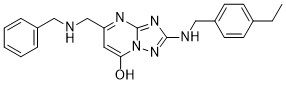
| DC73996 | FDW028 Featured |
FDW028 is a potent and highly selective small-molecule inhibitor of fucosyltransferase 8 (FUT8) with binding KD value of 5.486 uM, displays no affinity against other FUTs, shows potent anti-CRC activities.
More description
|
|
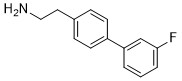
| DC74684 | ZH8667 Featured |
ZH8667 is a trace amine-associated receptor 1 (TAAR1)–Gs agonist.
More description
|
|
| DC8052 | AZ5104 Featured |
AZ-5104 is a pharmacologically active metabolite derived from the demethylation of AZD9291 (osimertinib). It functions as a potent EGFR inhibitor, demonstrating strong inhibitory activity against various EGFR mutants and ErbB4.
More description
|

|
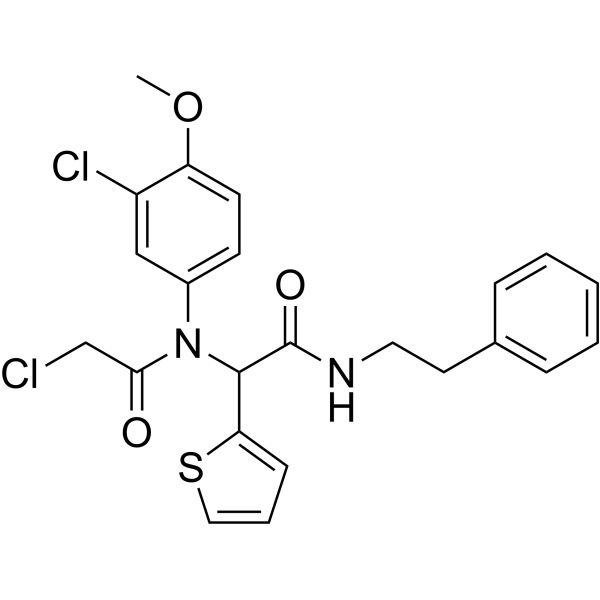
| DC22799 | ML-162 Featured |
ML162 is a covalent inhibitor that specifically targets glutathione peroxidase 4 (GPX4), a key regulator of ferroptosis. This compound exhibits selective cytotoxicity against cancer cell lines harboring mutant RAS oncogenes, making it a promising candidate for precision oncology.
More description
|
|
| DC70162 | A83B4C63 Featured |
A83B4C63 is a highly potent small-molecule inhibitor targeting the DNA repair enzyme polynucleotide kinase 3'-phosphatase (PNKP), exhibiting strong binding affinity with a Kd of 80 nM. Due to its limited aqueous solubility, A83B4C63 was formulated into nano-encapsulated carriers, enhancing its therapeutic potential—particularly in PTEN-deficient colorectal cancer (CRC).
More description
|

|
| DC11235 | Furamidine dihydrochloride Featured |
Furamidine dihydrochloride (NSC 305831) tyrosyl-DNA phosphodiesterase (Tdp1), also is a selective protein arginine methyltransferase 1 (PRMT1) inhibitor with IC50 of 9.4 uM.
More description
|

|
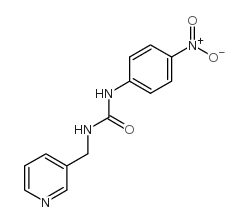
| DC32456 | Pyrinuron Featured |
Pyrinuron is an inhibitor of NAMPT and NMNAT2.Pyrinuron is used as a model compound in studies of urea derivatives and their reactivity.Research has explored the effects of this compound on insulin-producing beta cells, providing insights into diabetes mechanisms.Although not used therapeutically, this compound’s ability to selectively destroy beta cells has implications for understanding and potentially treating type 1 diabetes.
More description
|
|
| DC10832 | (E/Z)-4-hydroxy Tamoxifen Featured |
(E/Z)-4-hydroxy Tamoxifen is an active metabolite of tamoxifen that is formed by the action of cytochrome P450 2D6 in human liver.
More description
|

|
| DCS-103 | Lycorine Featured |
Lycorine is a natural alkaloid extracted from the Amaryllidaceae plant. Lycorine is a potent and orally active SCAP inhibitor with a Kd value 15.24 nM. Lycorine downregulates the SCAP protein level without changing its transcription. Lycorine is also a melanoma vasculogenic inhibitor. Lycorine can be used for the study of prostate cancer and metabolic diseases.
More description
|

|
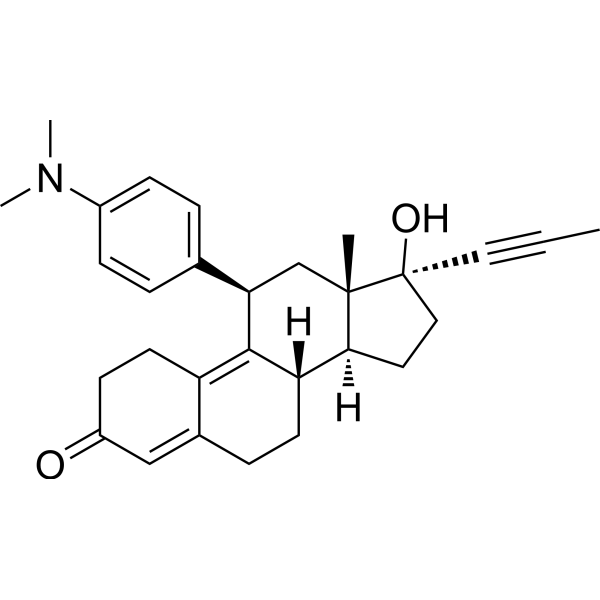
| DC31256 | Mifepristone (RU486) Featured |
Mifepristone (RU-486) is a potent steroidal antagonist exhibiting subnanomolar affinity for progesterone receptors (PR IC₅₀ = 0.2 nM) and nanomolar activity against glucocorticoid receptors (GR IC₅₀ = 2.6 nM). This dual-receptor modulator competitively blocks endogenous hormone binding while inducing distinct conformational changes that prevent coactivator recruitment, demonstrating differential antagonism between PR and GR signaling pathways.
More description
|
|
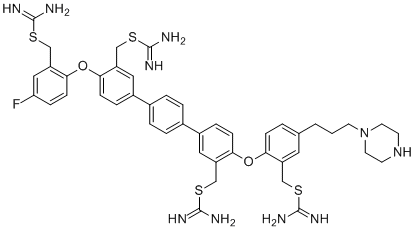
| DC74222 | XEN 602 Featured |
XEN-602 represents a breakthrough in DMT1 pharmacology as a picomolar-range inhibitor of divalent metal transporter 1 (SLC11A2), demonstrating unprecedented selectivity for manganese transport blockade (IC₅₀ = 300 pM in HEK293 cells). This structurally optimized small molecule achieves complete suppression of DMT1-mediated Mn²⁺ uptake while maintaining exceptional target specificity, as evidenced by minimal interference with other metal transporters. Its unmatched potency enables precise interrogation of DMT1's physiological roles and therapeutic exploration for manganese dysregulation disorders.
More description
|
|
| DC10391 | GSK682753A Featured |
GSK682753A is a selective and highly potent inverse agonist of the epstein-barr virus-induced receptor 2 (EBI2) with an IC50 of 53.6 nM.
More description
|
|
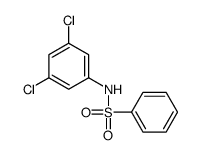
| DC34489 | DOCK5-IN-C21 Featured |
DOCK5-IN-C21 functions as an allosteric inhibitor targeting the guanine nucleotide exchange factor DOCK5, effectively modulating its activity through a non-competitive mechanism.
More description
|
|
| DC12575 | VU0466551 Featured |
VU0466551 is a targeted activator that specifically modulates homomeric G protein-gated inwardly rectifying potassium (GIRK1) channels, demonstrating its selectivity for this ion channel subtype.
More description
|

|
| DC5072 | Duvelisib (IPI-145, INK1197) Featured |
Duvelisib (IPI-145) is a selective inhibitor of the p110δ isoform, exhibiting IC50 values of 2.5 nM, 27.4 nM, 85 nM, and 1602 nM for p110δ, p110γ, p110β, and p110α, respectively, highlighting its specificity and potency.
More description
|

|
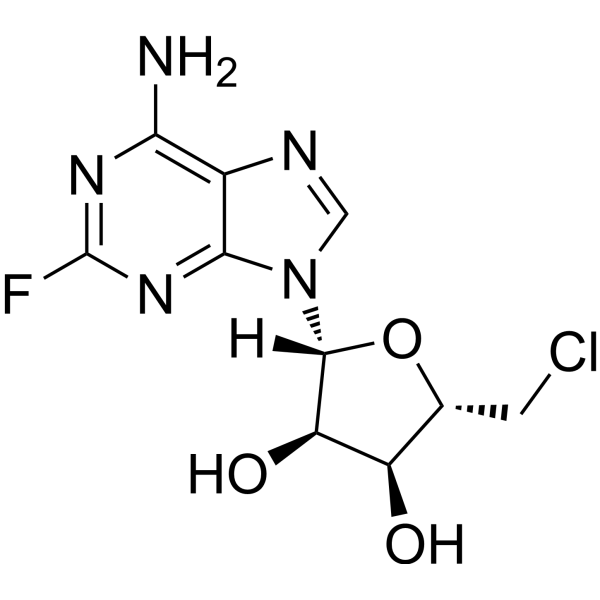
| DC49970 | ZYS-1 Featured |
ZYS-1 has inhibition effect on RNA adenosine deaminase 1(ADAR1), and can be used for preventing and/or treating cancer or tumor-related diseases.
More description
|
|
| DC10657 | COTI-2 Featured |
COTI-2 is a small molecule candidate anti-cancer drug which can convert mutant p53 to wild-type conformation.
More description
|

|
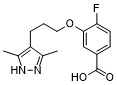
| DC44186 | Acoramidis Featured |
Acoramidis (AG10) is an orally administered, highly selective kinetic stabilizer effective for both wild-type and V122I-TTR (transthyretin) variants. It is actively investigated as a therapeutic agent in the treatment of transthyretin amyloidosis.
More description
|
|
| DC60814 | Setmelanotide acetate Featured |
Setmelanotide (RM-493, BIM-22493, CAM 4072) is a cyclic peptide full agonist of melanocortin-4 receptor (MC4R) with an EC50 of 0.27 nM and a Ki of 2.1 nM.
More description
|

|
| DC60813 | NPS-2143(SB 262470A ) |
NPS-2143(SB 262470A ) is a selective potent calcium ion-sensing receptor antagonist with IC50 of 43 and 41 nM for cytoplasmic Ca2+ concentrations and parathyroid hormone secretion, respectively.
More description
|

|
| DC60812 | SHA 68 Featured |
SHA 68 is a potent and selective non-peptide neuropeptide S receptor (NPSR) antagonist with IC50s of 22.0 and 23.8 nM for NPSR Asn107 and NPSR Ile107, respectively. SHA 68 has limited the blood-brain barrier (BBB) penetration and the activity in neuralgia.
More description
|

|
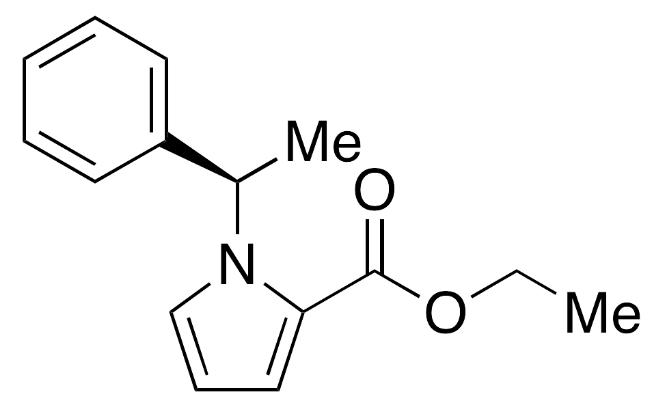
| DCC1216 | Carboetomidate Featured |
Analog of etomidate that interacts weakly with 11β-hydroxylase
More description
|
|
| DC70536 | KARI 201 Featured |
KARI-201 is a multifunctional small molecule that demonstrates dual activity as a highly selective inhibitor of acid sphingomyelinase (ASM) and an agonist of the ghrelin receptor. It operates as a competitive inhibitor by binding directly to the active site of ASM. Studies reveal that the incorporation of KARI-201 into ASM decreases in a concentration-dependent manner with sphingomyelin, resulting in KM values of 332.5, 433.9, and 572.6 μM at KARI-201 concentrations of 1, 10, and 100 μM, respectively. In preclinical models, KARI-201 has shown efficacy in reducing amyloid pathology and reversing cognitive deficits in APP/PS1 mice. Additionally, it enhances autophagy degradation by promoting lysosomal biogenesis in neuronal cells. As a ghrelin receptor agonist, KARI-201 also supports hippocampal neurogenesis and improves synaptic plasticity, making it a promising therapeutic candidate for neurodegenerative conditions.
More description
|

|
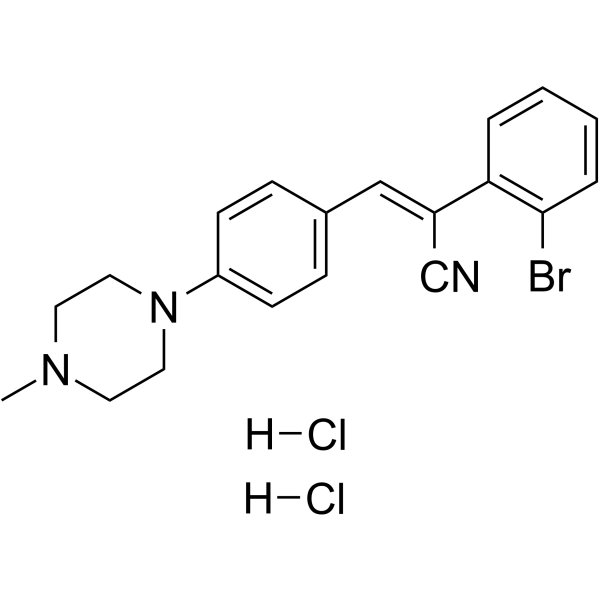
| DC24079 | DG-172 dihydrochloride Featured |
DG-172 is a cutting-edge compound designed as a selective ligand for PPARβ/δ, exhibiting remarkable binding affinity with an IC50 value of 27 nM. It demonstrates robust inverse agonistic activity, positioning it as a promising candidate for research targeting PPARβ/δ signaling pathways.
More description
|
|
| DC73498 | Ogremorphin Featured |
Ogremorphin (OGM, OGM8345) represents a pioneering small-molecule inhibitor that selectively targets GPR68, demonstrating high specificity with an IC50 value of 0.71 µM. As a first-in-class compound, it offers unique therapeutic potential by precisely modulating GPR68 activity.
More description
|

|
| DC11251 | Casein Kinase inhibitor A86 Featured |
CKIα inhibitor A86 is a groundbreaking pan-specific inhibitor targeting Casein Kinase I (CSNK1), with a remarkable binding affinity (Kd=1-10 nM) and a specific Kd of 9.8 nM for CKIα. Beyond its primary activity, this compound also demonstrates dual inhibitory effects on the transcriptional kinases CDK7 and CDK9. Notably, it exhibits minimal to no inhibition against CDK8, CDK13, CDK11a, CDK11b, and CDK19, highlighting its selective pharmacological profile.
More description
|

|
| DC24063 | Cediranib maleate Featured |
Cediranib maleate (AZD-2171 maleate) is a highly effective, orally administered inhibitor targeting VEGFR with remarkable potency. It demonstrates IC50 values of less than 1 nM for Flt1, below 3 nM for KDR, 5 nM for both Flt4 and PDGFRα, 36 nM for PDGFRβ, and 2 nM for c-Kit, showcasing its broad inhibitory activity across multiple kinase targets.
More description
|

|
