 To enhance service speed and avoid tariff delays, we've opened a US warehouse. All US orders ship directly from our US facility.
| Cat. No. | Product Name | Field of Application | Chemical Structure |
|---|---|---|---|
| DC26045 | Semax Featured |
Semax is a synthetic peptide analog of adrenocorticotropic hormone
More description
|

|
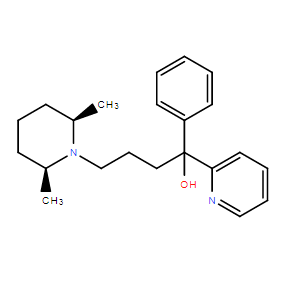
| DC10364 | (±)-Pirmenol Featured |
Pirmenol inhibits IK.ACh by blocking muscarinic receptors. The IC50 of Pirmenol for inhibition of Carbachol-induced IK.ACh is 0.1 μM.
More description
|
|
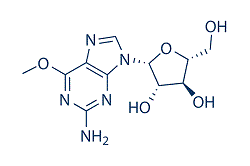
| DC4129 | Arranon Featured |
Nelarabine (Arranon, 506U78) is a purine nucleoside analog and DNA synthesis inhibitor with IC50 from 0.067-2.15 μM in tumor cells.
More description
|
|
| DC6501 | Bufalin Featured |
Bufalin inhibits steroid receptor coactivator 1 (SRC-1) and SRC-3 at doses as low as 5 nM, promotes the degradation of SRC-3 protein, and inhibits cancer cell growth both in vitro and in vivo.
More description
|

|
| DCAPI1552 | streptomycin Featured |
Streptomycin (Agrept) is an effective antibiotic against M. tuberculosis, is used for the research of tuberculosis (TB). Streptomycin also is a bacteriocidal agent that can be used for the research of a number of bacterial infections. Streptomycin can bind strongly to nucleic acids, interferes and blocks protein synthesis while permitting continued RNA and DNA synthesis. Streptomycin, as a common antibiotic used in culture media, also is a blocker of stretch-activated and mechanosensitive ion channels in neurons and cardiac myocytes .
More description
|

|
| DC6504 | Patchouli Alcohol Featured |
Pogostemon (patchouli) leaves and their extracted oils are used in perfumes and in traditional medicine to relieve sunstroke, stop vomiting, and increase appetite.
More description
|

|
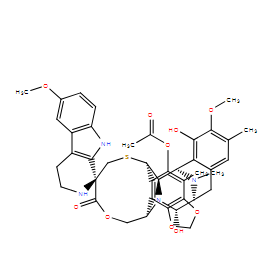
| DC12502 | Lurbinectedin Featured |
Lurbinectedin (PM01183) is a new DNA minor groove covalent binder with potent anti-tumour activity; inhibits RMG1 and RMG2 cell growth with IC50 values of 1.25 and 1.16 nM, respectively.
More description
|
|
| DCAPI1520 | S-adenosyl-L-methionine(Ademetionine) Featured |
Ademetionine, also known as AdoMet; MSI-195; SAMe, S-adenosylmethionine, is a PDE4B inhibitor potentially for treatment of primary biliary cirrhosis and major depressive disorder. Ademetionine is a ubiquitous metabolite present in all cells and biological fluids, and serves as a methyl donor in a multitude of different methylation reactions involving proteins, phospholipids, catecholamines and DNA. Pharmaceutical preparations of some stable salts of SAMe are available for parenteral and oral use in humans, and have been shown to increase plasma and cerebrospinal fluid SAMe concentrations.
More description
|

|
| DC20138 | (+)-Penbutolol Featured |
(+)-Penbutolol is a β-adrenoceptor antagonist, with an IC50 of 0.74 μM. (+)-Penbutolol is an optical isomer of l-penbutolol with Na+ channel-blocking action.
More description
|

|
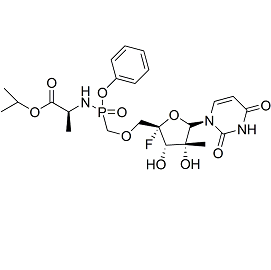
| DC8366 | ALS22335 Featured |
ALS-22335 is an anti-virus compound.
More description
|
|
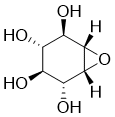
| DC8340 | myo-Inositol,1,2-anhydro- Featured |
Conduritol B Epoxide (CBE) is a specific covalent inhibitor of β-glucosidase which results in the accumulation of glucocerebroside.
More description
|
|
| DC20601 | Idarubicin Featured |
Idarubicin Free Base is an orally administered anthracycline antineoplastic. The compound has shown activity against BREAST NEOPLASMS; LYMPHOMA; and LEUKEMIA.
More description
|
.png)
|
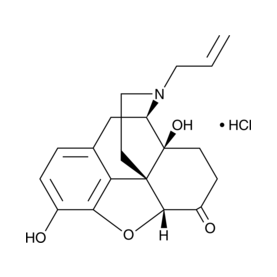
| DC26151 | Naloxone (hydrochloride) Featured |
Naloxone is an opioid inverse agonist drug used to counter the effects of opiate overdose.
More description
|
|
| DCAPI1165 | Ribavirin (Copegus) Featured |
Ribavirin is a guanosine analog with antiviral properties against DNA and RNA viruses, including respiratory syncytial virus, hepatitis C, and influenza.
More description
|

|
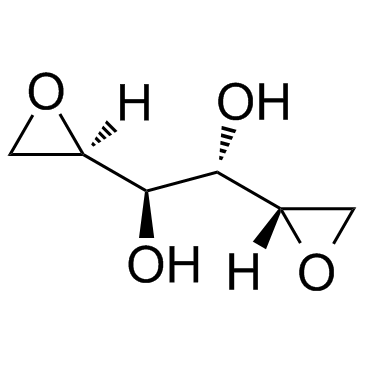
| DC31339 | VAL083 Featured |
VAL-083 is a bi-functional alkylating agent, with potential antineoplastic activity. Upon administration, VAL-083 crosses the blood brain barrier (BBB) and appears to be selective for tumor cells. This agent alkylates and crosslinks DNA which ultimately leads to a reduction in cancer cell proliferation. In addition, VAL-083 does not show cross-resistance to other conventional chemotherapeutic agents and has a long half-life in the brain.
More description
|
|
| DC9282 | cucurbitacin B Featured |
Cucurbitacin B, an oxygenated tetracyclic triterpenoid compound extracted from Cucurbitaceae plant species, is a long-term anticancer agent by disruption of microtubule polymerization.
More description
|

|
| DC9771 | ACU4429,ACU 4429,ACU-4429 Featured |
Emixustat hydrochloride strongly inhibits 11-cis-retinol production with IC50 values of 232 ± 3 nM.
More description
|

|
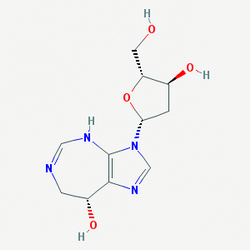
| DC7041 | Pentostatin(Deoxycoformycin) Featured |
Pentostatin(Deoxycoformycin) is an irreversible inhibitor of adenosine deaminase (Ki = 2.5 pM).
More description
|
|
| DC23025 | Secoisolariciresinol diglucoside Featured |
Secoisolariciresinol diglucoside(SDG) is a phytoestrogen, estrogens and phytoestrogen from soy have been reported to have mild hypotensive effects, and SDG is a long-acting hypotensive agent, and that the hypotensive effect is mediated through the guanyla
More description
|
.png)
|
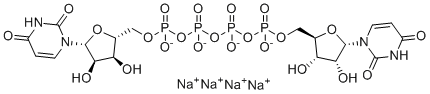
| DC10343 | Diquafosol tetrasodium Featured |
Diquafosol tetrasodium is a P2Y2 receptor agonist that stimulates fluid and mucin secretion on the ocular surface, as a topical treatment of dry eye disease.
More description
|
|
| DC11480 | Rp-8-bromo-Cyclic AMPS Featured |
Rp-8-bromo-Cyclic AMPS (Rp-8-bromo-cAMPS) is a cell-permeable cAMP analog that combines an exocyclic sulfur substitution in the equatorial position of the cyclophosphate ring with a bromine substitution in the adenine base of cAMP.
More description
|
.png)
|
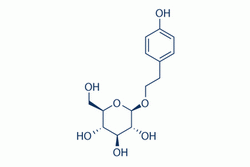
| DC7275 | Salidroside Featured |
Salidroside, a phenylpropanoid glycoside isolated from Rhodiola rosea, has been reported to have a broad spectrum of pharmacological properties.
More description
|
|
| DCAPI1371 | Scopine HCl Featured |
Scopine hydrochloride (6,7-Epoxytropine hydrochloride) is the metabolite of anisodine, which is a α1-adrenergic receptor agonist and used in the treatment of acute circulatory shock.
More description
|
.png)
|
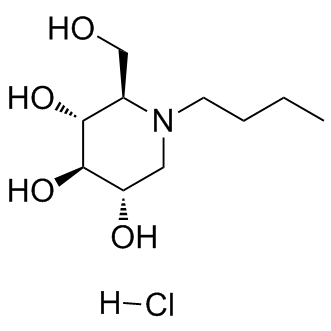
| DC9545 | Miglustat (hydrochloride) Featured |
Miglustat hydrochloride is an inhibitor of glucosylceramide synthase, primarily to treat Type I Gaucher disease (GD1).
More description
|
|
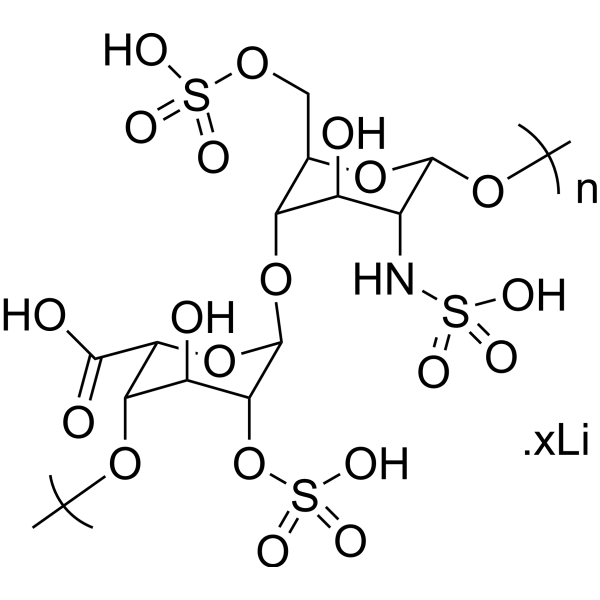
| DC12294 | Heparin lithium salt Featured |
Heparin Lithium salt is an anticoagulant which binds reversibly to antithrombin III (ATIII).
More description
|
|
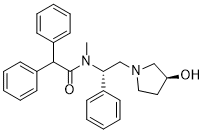
| DC10704 | Asimadoline (EMD-61753) Featured |
Asimadoline (EMD-61753) is a drug which acts as a peripherally selective κ-opioid receptor (KOR) agonist.
More description
|
|
| DC23103 | Adenosine, [P(R)]-5'-O-[(R)-hydroxymercaptophosphinyl]-P-thioadenylyl-(2'→5')-, cyclic nucleotide, ammonium salt (1:2) Featured |
ML RR-S2 CDA ammonium salt is a synthetic cyclic dinucleotide derivative that functions as a highly potent agonist of STING, enhances binding affinity to STING and activates all known human STING alleles.
More description
|

|
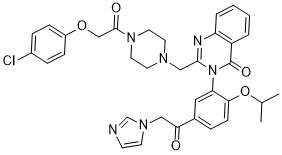
| DC22092 | Imidazole ketone erastin(IKE) Featured |
Imidazole ketone erastin (IKE, Ferroptosis inducer IKE) is a potent, metabolically stable inhibitor of system xc- and inducer of ferroptosis potentially suitable for in vivo applications.
More description
|
|
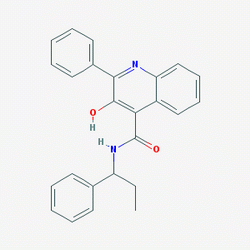
| DC7244 | Talnetant (SB 223412) Featured |
Talnetant (SB 223412) is a potent and selective NK3 receptor antagonist(ki=1.4 nM, hNK-3-CHO); 100-fold selective for the hNK-3 versus hNK-2 receptor, with no affinity for the hNK-1 at concentrations up to 100 uM.
More description
|
|
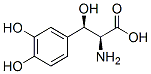
| DC2056 | Droxidopa (L-DOPS,SM-5688) Featured |
Droxidopa (L-DOPS) is a psychoactive drug and acts as a prodrug to the neurotransmitters norepinephrine (noradrenaline) and epinephrine (adrenaline).
More description
|
|
