 To enhance service speed and avoid tariff delays, we've opened a US warehouse. All US orders ship directly from our US facility.
| Cat. No. | Product Name | Field of Application | Chemical Structure |
|---|---|---|---|
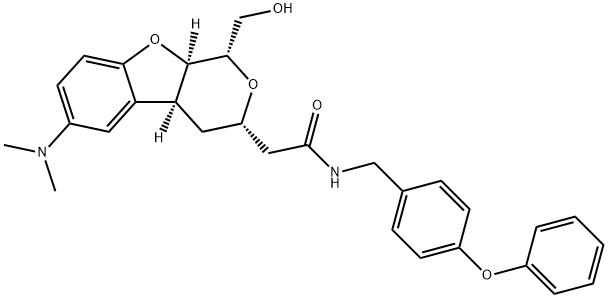
| DC42705 | BRD0418 Featured |
Novel upregulator of TRIB1 expression, leading to reprogramming of hepatic lipoprotein metabolism from lipogenesis to scavenging
More description
|
|
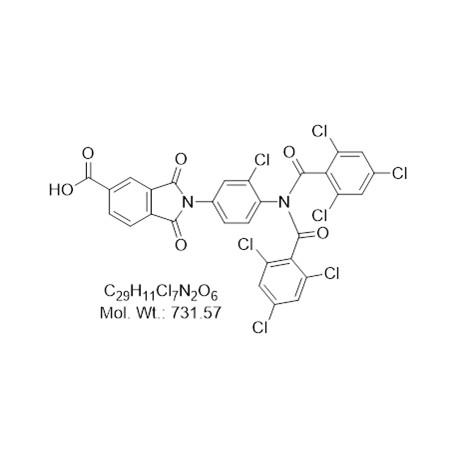
| DC42693 | CL5D Featured |
Novel potent SIRT6 activator against whole histone substrate
More description
|
|
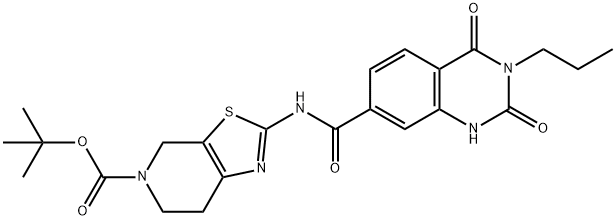
| DC42642 | Autogramin-1 Featured |
Novel autophagy inhibitor, selectively targeting cholesterol transfer protein GRAM domain-containing protein 1A (GRAMD1A), and directly competing with cholesterol binding to the GRAMD1A StART domain
More description
|
|
| DC42606 | XS018661 Featured |
The first-in-class dual inhibitor of ENL (Kd = 754 ± 45 nM) and its paralog AF9 (Kd = 523 ± 53 nM)
More description
|

|
| DC42820 | CYM51010(ML335) Featured |
CYM51010 is a biased ligand of μ-opioid receptor – δ-opioid receptor heterodimers. CYM51010 exhibits anti-nociceptive activity similar to morphine, but with a decreased levels of tolerance development and withdrawal symptoms.
More description
|

|
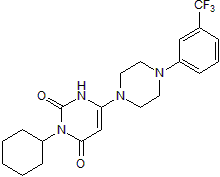
| DC42664 | ML-179 Featured |
ML-179 is a potent inverse agonist of liver receptor homolog-1 (LRH-1) (IC50 = 320 nM) with maximum efficacy of 40% repression.
More description
|
|
| DC8951 | 4-NITROCATECHOL Featured |

|
|
| DC8858 | Bafilomycin A1(Baf-A1) Featured |
Bafilomycin A1 is a vacuolar H+-ATPase inhibitor with IC50 of 0.44 nM.
More description
|

|
| DC8727 | PF-04880594 Featured |
PF-04880594 is an inhibitor of RAF with IC50 values of 0.19 nM/0.13 nM and 0.39 nM for BRAF/BRAFV599E and c-RAF, respectively.
More description
|

|
| DC8603 | SR 49059 Featured |
Potent and selective non-peptide vasopressin V1A receptor antagonist; devoid of agonist activity. Displays high affinity and efficacy at both rat (KI=1.6 nM) and human (KI -1.1 - 6.3 nM) V1A receptors.
More description
|

|
| DC8567 | 3-(4-Pyridyl) Featured |
3-(4-Pyridyl)indole is a ROCK-I inhibitor (IC50 = 25 µM) that promotes cell spreading, inhibits membrane blebbing, and induces dissolution of actin stress fibers in a wound healing assay
More description
|

|
| DC4150 | Menotrophin Featured |

|
|
| DC3115 | ICI-118551 Featured |
ICI-118,551 is a selective beta-2 (β2) adrenergic receptor antagonist.ICI binds to the β2 subtype with at least 100 times greater affinity than β1 or β3, the two other known subtypes of the beta adrenoceptor.
More description
|

|
| DC23894 | HPI-1 Featured |
HPI-1 is a Hedgehog (Hh) pathway inhibitor that suppresses signaling through Shh (IC50=1.5 uM) without significantly affecting Wnt signaling (IC50>30 uM).
More description
|

|
| DC23762 | PDI inhibitor 16F16 Featured |
PDI inhibitor 16F16 is a protein disulfide isomerase (PDI) inhibitor, first identified in a screen for compounds that prevent apoptosis induced by mutant huntingtin protein. 16F16 not only suppressed apoptosis induced by the misfolded protein mutant hungtingtin, it also protected rat neurons from cell death triggered by Aβ peptide. The actions of this inhibitor helped to identify a new mechanism in which a cell death pathway is regulated by protein misfolding via PDI upregulation.
More description
|

|
| DC23706 | Netoglitazone(MCC 555) Featured |
Netoglitazone, also known as isaglitazone and MCC-555, is an agent belonging to the glitazone class of antidiabetic agents with antihyperglycemic activity. Netoglitazone exerts both peroxisome proliferator-activated receptor (PPAR) alpha and gamma agonist activity. Netoglitazone decreases bone formation and increases marrow adipocyte formation in vivo.MCC 555 (Isaglitazone.
More description
|

|
| DC23654 | Psora-4 Featured |
Psora-4 is a potent and selective Kv1.3 potassium channel blocker with EC50 of 3 nM.
More description
|

|
| DC23610 | CP-339818 hydrochloride Featured |
CP-339818 is a potent, selective, non-peptide KV1.3 channel antagonist with IC50 of 200 nM.
More description
|

|
| DC22761 | NCI-83633 Featured |
A small molecule inhibitor of PP2C that activates extensive 3' cleavage at a concentration 50-fold below that required by fluoride or CP..
More description
|

|
| DC22706 | BMY 45778 Featured |
A potent, non-prostanoid prostacyclin partial agonist that potently inhibits human (IC50=35 nM), rabbit (IC50=136 nM) and rat (IC50=1.3 uM) platelet aggregation.
More description
|

|
| DC22696 | BRL 44408 Featured |
A potent, selective α2A-adrenoceptor antagonist with Ki of 1.7 nM, 80-fold selectivity over α2B-adrenergic receptors.
More description
|

|
| DC12218 | Tetradecanoylcarnitine Featured |
Tetradecanoylcarnitine is a human carnitine involved in β-oxidation of long-chain fatty acids.
More description
|

|
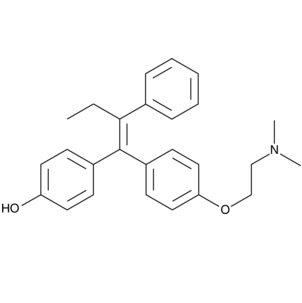
| DC26120 | (Z)-4-hydroxy Tamoxifen Featured |
(Z)-4-hydroxy Tamoxifen is a major phase I metabolite of tamoxifen, a well-known estrogen receptor antagonist in breast but partial estrogen receptor agonist in endometrium.
More description
|
|
| DC12003 | Corr4A Featured |
A small molecule corrector of ΔF508-CFTR with IC50 of 6.0 uM..
More description
|

|
| DC11786 | THPN Featured |
A potent nuclear receptor TR3 (Nur77)-specific targeting compound that can induce melanoma autophagy through a mitochondrial signaling pathway.
More description
|

|
| DC11748 | LY2033298 Featured |
LY2033298 is a robust allosteric potentiator that is highly selective for the human M4 muscarinic acetylcholine receptor subtype. LY2033298 enhances inhibition by oxotremorine of light-induced phase shifts in hamster circadian activity rhythms.
More description
|

|
| DC11346 | Salbutamol (hydrochloride) Featured |
Salbutamol is an agonist of the β2-adrenergic receptor (β2-AR; Kd = 759 nM in a radioligand binding assay using CHO cells expressing the human receptor).
More description
|

|
| DC21756 | IP6K1 inhibitor TNP Featured |
IP6K1 inhibitor TNP is a potent, selective inositol hexakisphosphate kinase IP6K with IC50 of 0.47 uM (IP6K1), does not inhibit either human or yeast Vip/PPIP5K.
More description
|

|
| DC21664 | SMIFH2 Featured |
SMIFH2 is a small molecule formin homology 2 domains inhibitor of formin-mediated actin assembly, targets formins from evolutionarily diverse organisms including yeast, nematode worm, and mice with IC50s of 5-15 uM.
More description
|

|
| DC21392 | NNC-711 Featured |
NNC-711 is a potent and selective inhibitor of GABA uptake by GAT-1 with IC50 of 0.04 uM.
More description
|

|
