 To enhance service speed and avoid tariff delays, we've opened a US warehouse. All US orders ship directly from our US facility.
| Cat. No. | Product Name | Field of Application | Chemical Structure |
|---|---|---|---|
| DC8494 | Toceranib phosphate(SU 11654) Featured |
Toceranib(SU 11654; PHA 291639) is a kinase inhibitor with both antitumor and antiangiogenic activity through inhibition of KIT, vascular endothelial growth factor receptor 2, and PDGFRβ.
More description
|

|
| DC7329 | Toceranib(SU 11654; PHA 291639) Featured |
Toceranib(SU 11654; PHA 291639) is a kinase inhibitor with both antitumor and antiangiogenic activity through inhibition of KIT, vascular endothelial growth factor receptor 2, and PDGFRβ.
More description
|

|
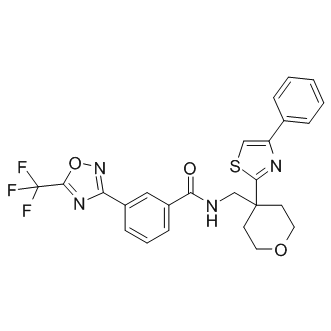
| DC7716 | TMP269 Featured |
TMP269 is a novel and selective class IIa histone deacetylase inhibitor with IC50s of 126/80/36/9 nM for HDAC 4/5/7/9, respectively; 20-400 fold selectivity over class1 HDACs.
More description
|
|
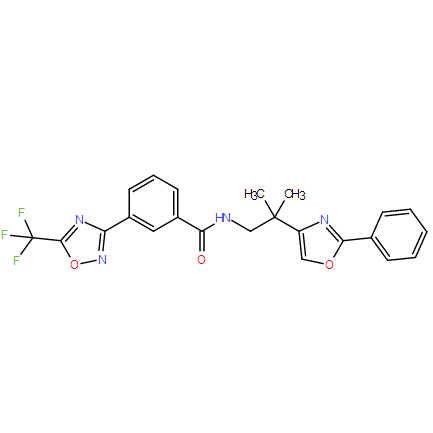
| DC10210 | TMP195 Featured |
TMP195 is the most potent and selective class IIa HDAC inhibitor.
More description
|
|
| DC2012 | Bedaquiline (TMC207) Featured |
TMC207 is a first-in-class diarylquinoline compound with a novel mechanism of action, the inhibition of bacterial ATP synthase, and potent activity against drug-sensitive and drug-resistant TB.
More description
|

|
| DC10149 | TM5275 sodium salt Featured |
TM5275 is an orally available, potent and selective inhibitor of PAI-1 that delivers antithrombotic benefits devoid of bleeding effect in nonhuman primates.
More description
|

|
| DC8336 | Tizoxanide Featured |
Tizoxanide is a potent inhibitor of hepatitis B virus and hepatitis C virus.
More description
|

|
| DC7065 | Tivantinib (ARQ 197) Featured |
Tivantinib (ARQ 197) is the first non-ATP-competitive c-Met inhibitor with Ki of 0.355 μM, little activity to Ron, and no inhibition to EGFR, InsR, PDGFRα or FGFR1/4.
More description
|

|
| DC9489 | Tirofiban (hydrochloride monohydrate) Featured |
Tirofiban hydrochloride monohydrate is a potent non-peptide, glycoprotein IIb/IIIa (integrins alphaIIbbetaIII) antagonist
More description
|

|
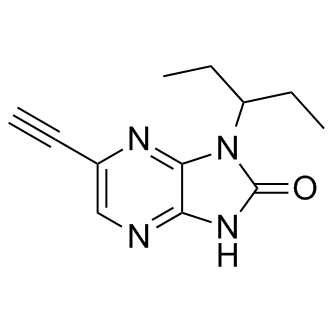
| DC7518 | Tirasemtiv Featured |
Tirasemtiv(CK 2017357) is a a small-molecule fast-skeletal-troponin activator, which is being developed as a potential treatment for diseases and conditions associated with aging, muscle weakness and wasting or neuromuscular dysfunction.
More description
|
|
| DC9701 | Tipifarnib Featured |
Tipifarnib (IND 58359; R115777) is a potent and specific farnesyltransferase inhibitor with an IC50 of 0.6 nM.
More description
|

|
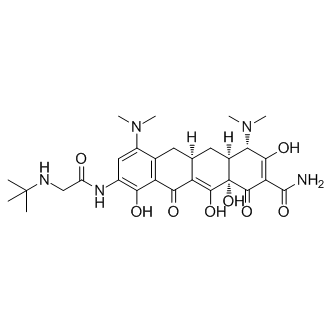
| DC9354 | Tigecycline Featured |
Tigecycline is a first-in-class, broad spectrum antibiotic with activity against antibiotic-resistant organisms.
More description
|
|
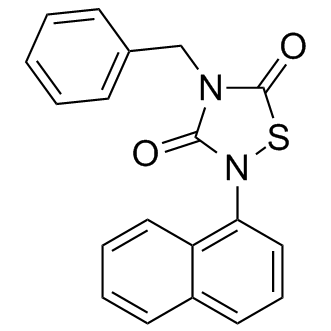
| DC8607 | Tideglusib(NP-031112) Featured |
Tideglusib(NP-031112) is an irreversible, non ATP-competitive GSK-3β inhibitor with IC50 of 60 nM.
More description
|
|
| DC9150 | Tianeptine sodium salt Featured |
Tianeptine sodium salt is a selective facilitator of 5-HT uptake in vitro and in vivo.
More description
|

|
| DC8896 | Tiagabine hydrochloride Featured |
Tiagabine(NO328) is a selective gamma-aminobutyric acid (GABA) reuptake inhibitor.
More description
|

|
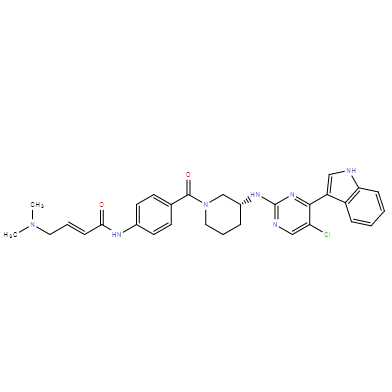
| DC10827 | THZ531 Featured |
THZ531 is a covalent CDK12 and CDK13 covalent inhibitor.
More description
|
|
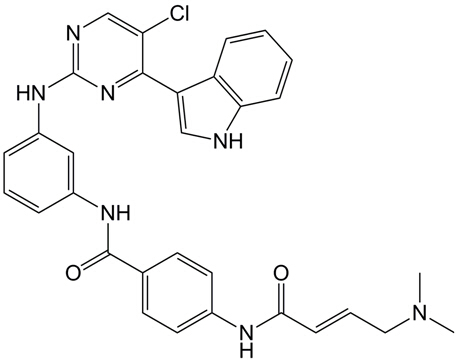
| DC7653 | THZ1 free base Featured |
THZ1 is a novel selective and potent covalent CDK7 inhibitor with IC50(binding affinity) of 3.2 nM; inhibits Jurkat cell's proliferation with IC50 of 50 nM.
More description
|
|
| DC8126 | CALCIUM IONOPHORE II Featured |
This is a very good carrier of Ca+2-ions, induces a selectivity in membranes for Ca+2over Mg+2 by a factor of about 10.
More description
|

|
| DC6902 | Thiazovivin Featured |
Thiazovivin is a rock inhibitor and enhances fibroblast reprogramming efficiency to generate stem cells
More description
|

|
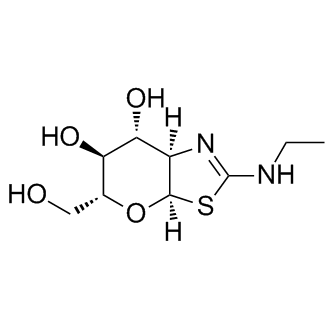
| DC8759 | Thiamet G Featured |
Thiamet G is a potent and selective inhibitor of O-GlcNAcase that demonstrates a Ki value of 21 nM.
More description
|
|
| DC7680 | IM-12 Featured |
The GSK3β Inhibitor XIX, IM-12 is a selective GSK-3β inhibitor with IC50 of 53 nM, and also enhances canonical Wnt signalling.
More description
|

|
| DC10055 | Akt-I-1,2 HCl Featured |
The compound (Akt-I-1,2) inhibited both Akt1 and Akt2 with IC50 values of 2.7 and 21 μM respectively.
More description
|

|
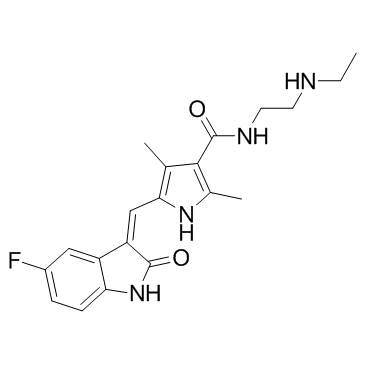
| DC23990 | N-Desethyl Sunitinib Featured |
The active metabolite of sunitinib, which is an oral, small-molecule, multi-targeted RTKs inhibitor for the treatment of RCC and imatinib-resistant GIST..
More description
|
|
| DC7689 | Evofosfamide(TH-302) Featured |
TH-302 is selective hypoxia-activated prodrug targeting hypoxic regions of solid tumors with IC50 of 19 nM, demonstrates 270-fold enhanced cytotoxicity under hypoxia versus their potency under aerobic conditions, stable to cytochrome P450 metabolism.
More description
|

|
| DC12042 | TGN-020 Featured |
TGN 020 is a thiadiazole derivative studied for its potential antitumor properties
More description
|

|
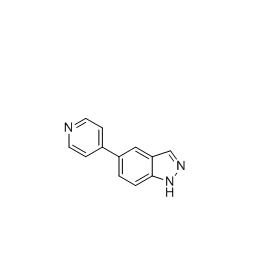
| DC21748 | TG693 Featured |
TG693 is an orally available, selective, ATP-competitive CLK1 inhibitor with IC50 of 112.6 nM.
More description
|
|
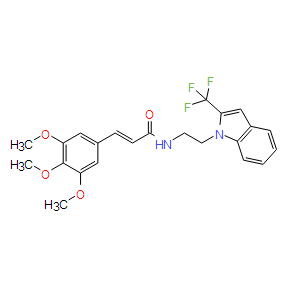
| DC8348 | TG6-10-1 Featured |
TG6-10-1 is a cell-permeable,highly potent, selective, and competitive antagonist of prostaglandin E2 receptor (EP2, Kb = 17.8 nM).
More description
|
|
| DC7318 | TG101348(Fedratinib) Featured |
TG-101348 (SAR302503) is a selective inhibitor of JAK2 with IC50 of 3 nM, 35- and 334-fold more selective for JAK2 versus JAK1 and JAK3, TG-101348 also inhibit BRD4 with IC50 of 340 nM.
More description
|

|
| DC7317 | TG101209 Featured |
TG101209 is a selective JAK2 inhibitor with IC50 of 6 nM, less potent to Flt3 and RET with IC50 of 25 nM and 17 nM, ~30-fold selective for JAK2 than JAK3, sensitive to JAK2V617F and MPLW515L/K mutations; TG101209 inhibit BRD4 activity with IC50 of 130 nM.
More description
|

|
| DC7516 | TG100-115 Featured |
TG100115 is a PI3Kγ/δ inhibitor with IC50 of 83 nM/235 nM, with little effect on PI3Kα/β. Phase 1/2.
More description
|

|
