 To enhance service speed and avoid tariff delays, we've opened a US warehouse. All US orders ship directly from our US facility.
| Cat. No. | Product Name | Field of Application | Chemical Structure |
|---|---|---|---|
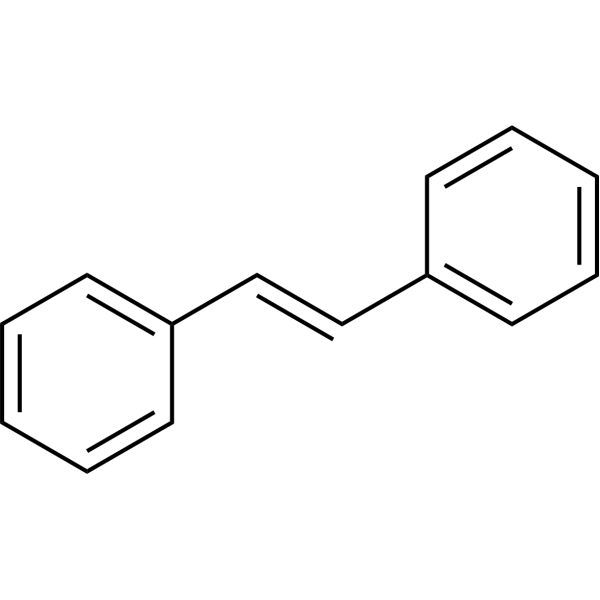
| DC42369 | trans-Stilbene Featured |
trans-Stilbene ((E)-Stilbene) is used in the manufacturing of dye lasers, optical brighteners, non-steroidal synthetic estrogens.
More description
|
|
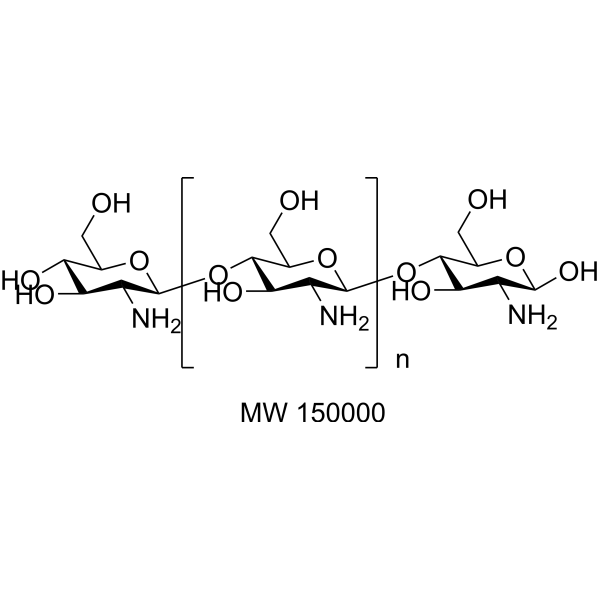
| DC36508 | Poliglusam Featured |
Poliglusam is also known as Chitosan. Chitosan is a linear polysaccharide composed of randomly distributed β-(1→4)-linked D-glucosamine (deacetylated unit) and N-acetyl-D-glucosamine (acetylated unit). It is made by treating the chitin shells of shrimp and other crustaceans with an alkaline substance, like sodium hydroxide. Deacetylated CHITIN, a linear polysaccharide of deacetylated beta-1,4-D-glucosamine. It is used in HYDROGEL and to treat WOUNDS.
More description
|
|
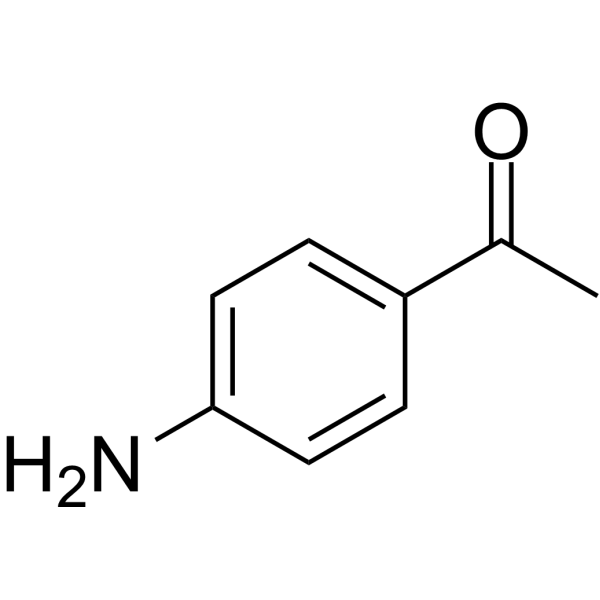
| DC37141 | 4'-Aminoacetophenone Featured |
1-(4-Aminophenyl)ethanone is a biochemical reagent that can be used as a biological material or organic compound for life science related research.
More description
|
|
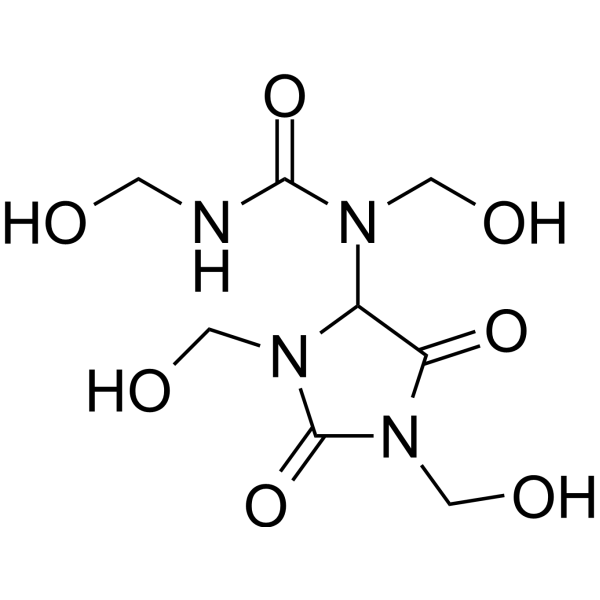
| DC42104 | Diazolidinyl urea Featured |
Diazolidinyl urea, a broad spectrum preservative, is a formaldehyde-releasing compound that releases formaldehyde through its decomposition. Diazolidinyl urea is effective against most contaminating microorganisms, especially Pseudomonas.
More description
|
|
| DC42106 | Dibenzyl disulfide Featured |
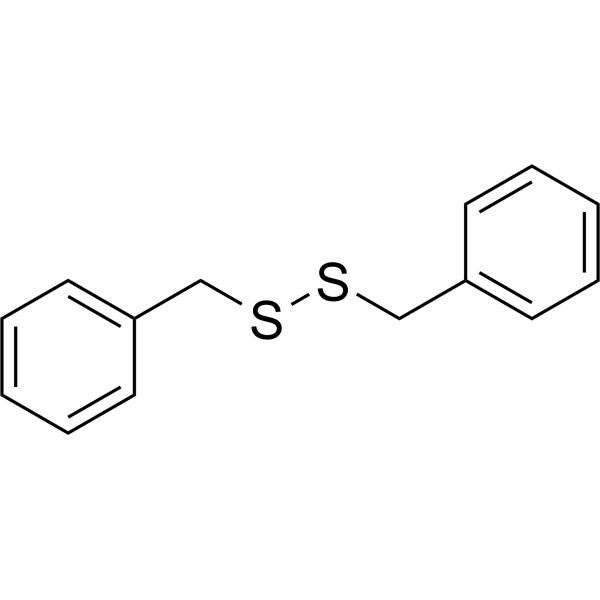
Dibenzyl disulfide is an endogenous metabolite.
More description
|
|
| DC68056 | A1T2C3(CP-LC-1067) Featured |
A1T2C3 (CP-LC-1067) is a highly potent ionizable lipid designed for lung-targeted mRNA delivery. When formulated into lipid nanoparticles (LNPs), it produces particles approximately 80 nm in size with excellent uniformity and a high mRNA encapsulation efficiency (>94%). Its most distinguished feature is its exceptional organ selectivity. Following intravenous administration in mice, A1T2C3-based LNPs demonstrated a remarkable accumulation of over 94% of the signal in the lungs, with minimal distribution to other major organs. This makes it a leading candidate for developing therapeutics specifically targeted to pulmonary tissues.
More description
|
.gif)
|
| DC43875 | Ganoderic acid H Featured |
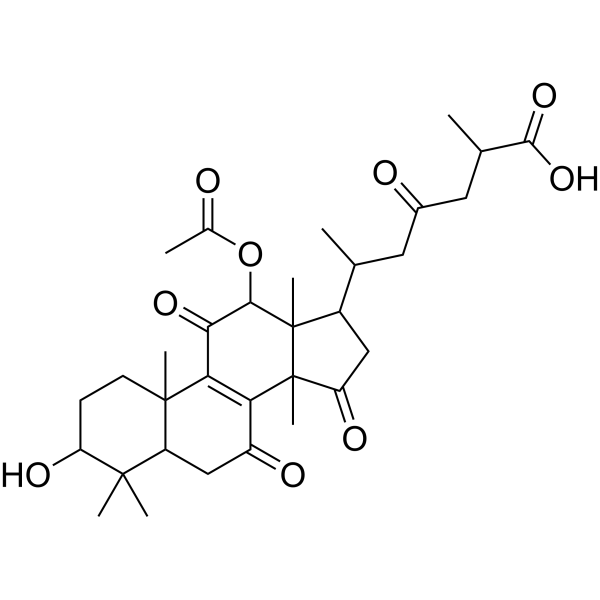
Ganoderic acid H is a lanostane-type triterpene isolated from Ganoderma lucidum. Ganoderic acid H suppresses growth and invasive behavior of breast cancer cells through the inhibition of transcription factors AP-1 and NF-kappaB signaling.
More description
|
|
| DC44537 | 2'-O-Methylguanosine Featured |
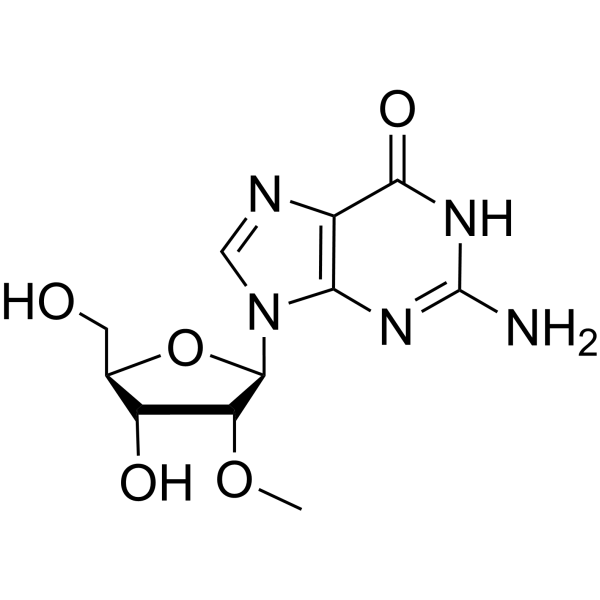
2'-O-Methylguanosine is a modified nucleoside produced in tRNAs by the action of tRNA guanosine-2’-O-methyltransferase. 2'-O-Methylguanosine results in apoptotic changes of cells.
More description
|
|
| DC44600 | DMT-2'Fluoro-DG(IB) Amidite Featured |
DMT-2'Fluoro-DG(IB) Amidite (2'-F-ibu-dG Phosphoramidite) is a nucleoside that can be used in the preparation of 4'-modified 2'-deoxy-2'-fluorouridine.
More description
|
 Amidite.gif)
|
| DC45112 | DL-Tartaric acid Featured |
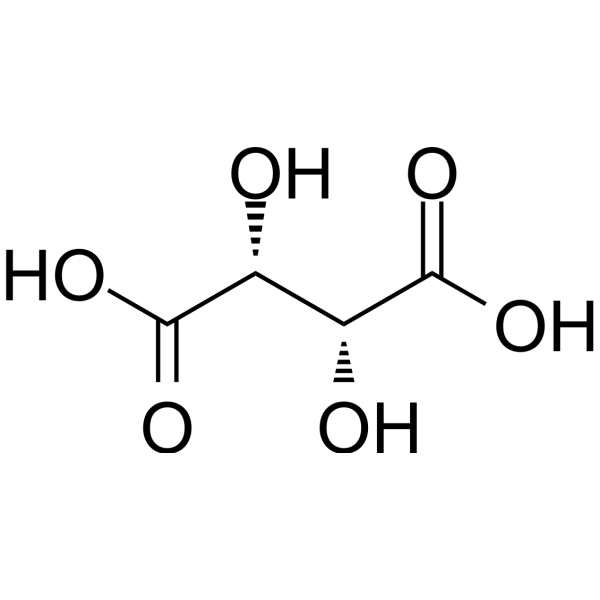
DL-Tartaric acid is a non-racemic mixture of L- and D-tartaric acids with antioxidant activities.
More description
|
|
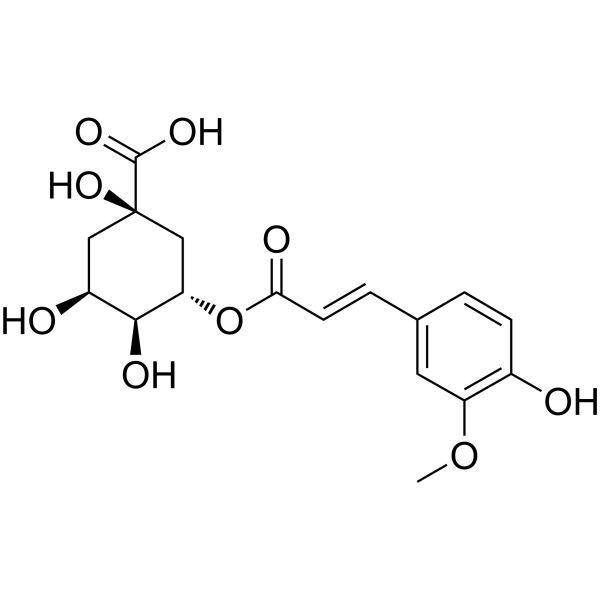
| DC45427 | 3-Feruloylquinic acid Featured |
3-Feruloylquinic acid, a derivative of quinic acid-bound phenolic acid, shows antioxidant activity. 3-Feruloylquinic acid markedly enhances by high photosynthetically active radiation (PAR) and UV irradiances.
More description
|
|
| DC45477 | (1R)-α-Pinene Featured |
(1R)-α-Pinene is a volatile monoterpene with antimicrobial activities. (1R)-α-Pinene reduces Bacillus cereus population growth, and exhibits repellent effects.
More description
|
-α-Pinene.gif)
|
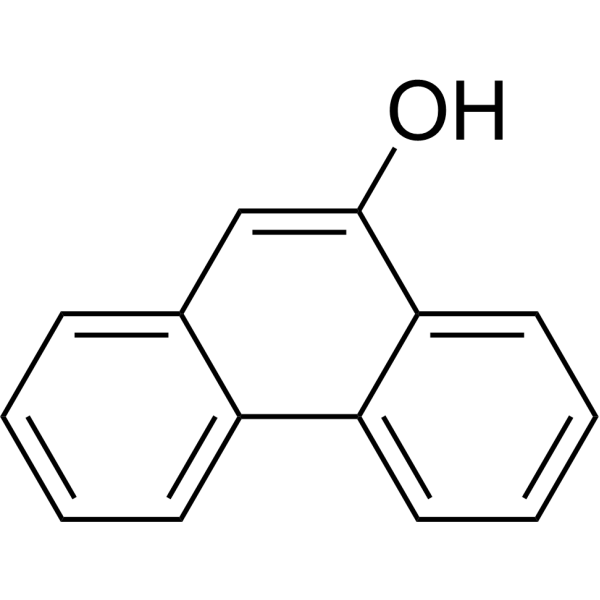
| DC46699 | 9-Phenanthrol Featured |
9-Phenanthrol (9-Hydroxyphenanthrene, Phenanthren-9-o, 9-Phenanthrenol) is a selective TRPM4 inhibitor with an IC50 in the range of 0.02 μM, without effects on TRPM5.
More description
|
|
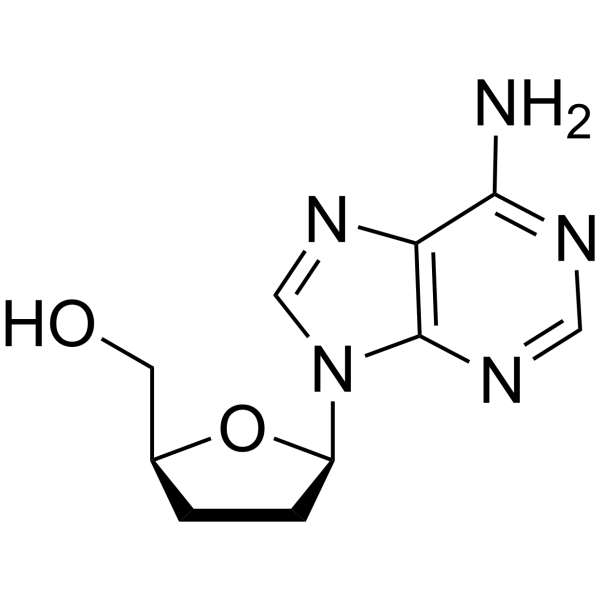
| DC36493 | Dideoxyadenosine Featured |
Dideoxyadenosine is konwn as 2′,3′-Dideoxyadenosine (ddA), a specific adenylyl cyclase inhibitor, is useful in biological process and pathway studies involving adenylyl cyclase activity and cAMP pool modulation.
More description
|
|
| DC48072 | Zinc acetate dihydrate Featured |
Zinc acetate dihydrate (Acetic acid zinc salt dihydrate, Dicarbomethoxyzinc dihydrate) contributes to the antiviral activity of microbicide gel through zinc targeting the reverse transcriptase.
More description
|

|
| DC48073 | Magnesium chloride Featured |
Magnesium chloride can reduce the activated thromboplastin times.
More description
|
|
| DC48074 | Polytetrafluoroethylene Featured |
Polytetrafluoroethylene (PTFE) is a biomedical material and has excellent non-stick properties with an exceptionally low coefficient of friction.
More description
|
.gif)
|
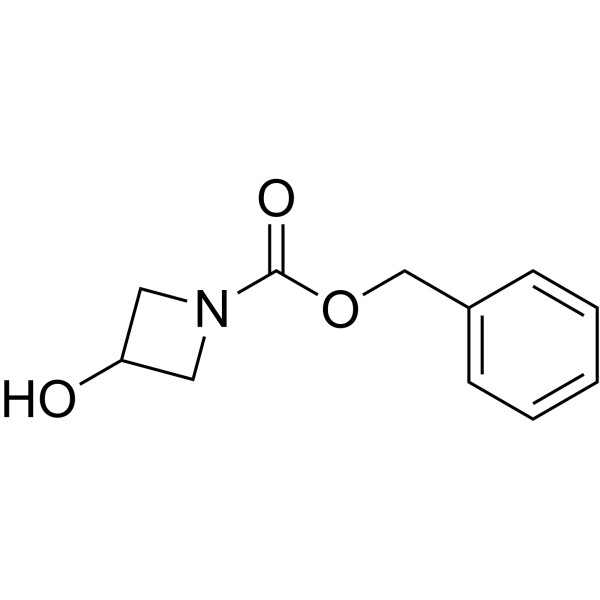
| DC48522 | 1-Cbz-3-Hydroxyazetidine Featured |
1-Cbz-3-Hydroxyazetidine is a non-cleavable ADC linker used in the synthesis of antibody-drug conjugates (ADCs). 1-Cbz-3-Hydroxyazetidine is also a alkyl chain-based PROTAC linker that can be used in the synthesis of PROTACs.
More description
|
|
| DC48964 | 20-(tert-Butoxy)-20-oxoicosanoic acid Featured |
20-(tert-Butoxy)-20-oxoicosanoic acid is a non-cleavable ADC linker used in the synthesis of antibody-drug conjugates (ADCs). 20-(tert-Butoxy)-20-oxoicosanoic acid is also a alkyl chain-based PROTAC linker that can be used in the synthesis of PROTACs
More description
|
-20-oxoicosanoic acid.gif)
|
| DC49407 | Serratia marcescens nuclease Featured |
Serratia marcescens nuclease is a nonspecific nuclease. Serratia marcescens nuclease has broad utility due to its potent digestive activity toward both DNA and RNA.
More description
|
|
| DC49409 | Glucose oxidase Featured |
Glucose oxidase is used in the food and beverage industry as a preservative and stabilizer and is commonly derived from the fungus Aspergillus niger. Glucose oxidase can react with intracellular glucose and oxygen (O2) to produce hydrogen peroxide (H2O2) and gluconic acid, which can cut off the nutrition source of cancer cells and consequently inhibit their proliferation.
More description
|
|
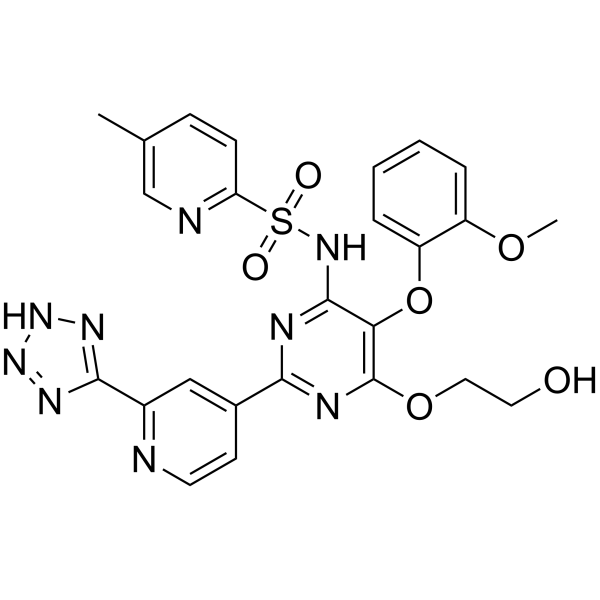
| DC72191 | Clazosentan Featured |
Clazosentan (Ro 61-1790) is a selective endothelin A (ETA) receptor antagonist. Clazosentan inhibits ET-1-mediated vasoconstriction. Clazosentan prevents cerebral vasospasm, vasospasm-related cerebral infarction.
More description
|
|
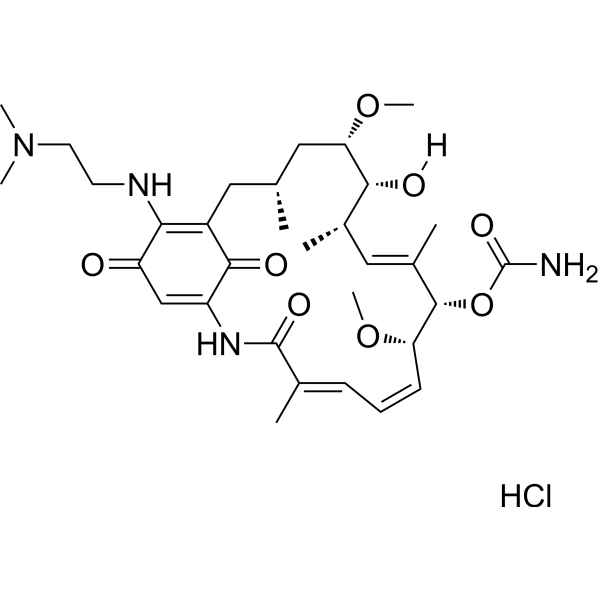
| DCC0565 | Alvespimycin Hydrochloride Featured |
Inhibitor of HSP90, leading to the degradation and depletion of its client proteins such as kinases and transcription factors involved with cell cycle regulation and signal transduction
More description
|
|
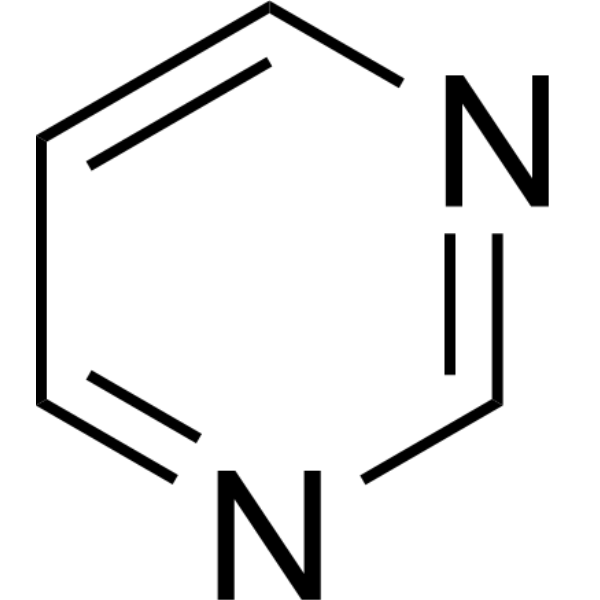
| DC74586 | Pyrimidine Featured |
Pyrimidine is an endogenous metabolite. It is used to study the photoinduced ion chemistry of the halogenated pyrimidines, a class of prototype radiosensitizing molecules, and is also used to assess pyrimidine/purine asymmetry quantitatively.
More description
|
|
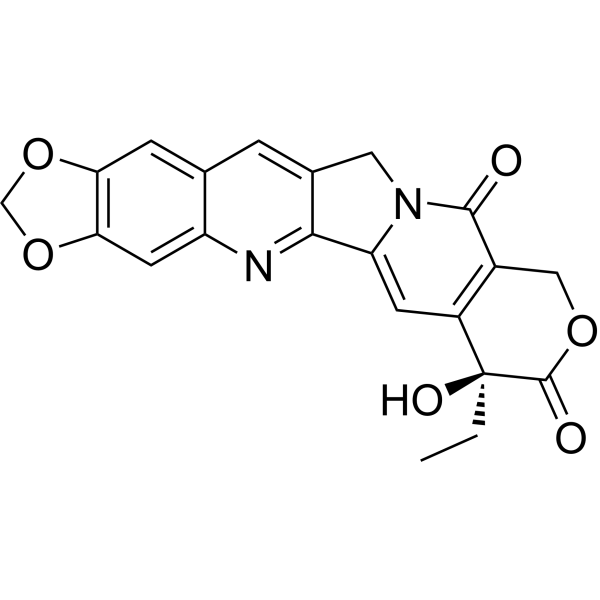
| DC74588 | FL118 Featured |
FL118(10,11-(Methylenedioxy)-20(S)-camptothecin), a Camptothecin analog, is a potent and orally active inhibitor of Survivin. FL118 also selectively and independently inhibits three additional cancer-associated survival genes Mcl-1, XIAP, and cIAP2 in a p53 status-independent manner. FL118 displays potent antitumor activity and can be used in cancer research.
More description
|
|
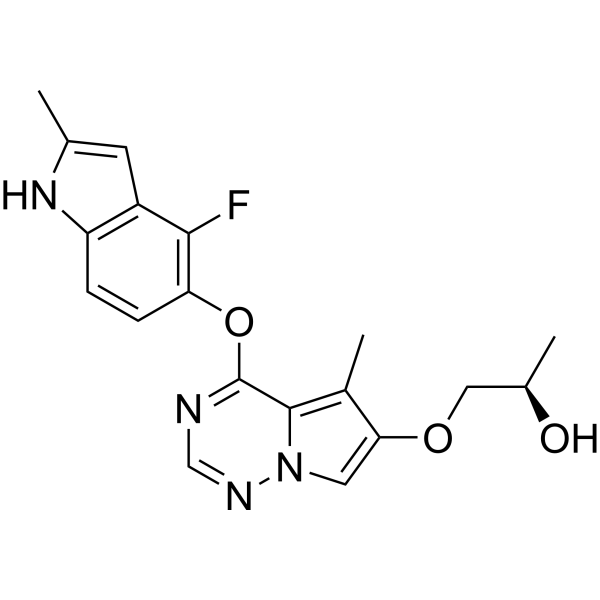
| DC2019 | Brivanib (bms-540215) Featured |
Brivanib is an ATP-competitive inhibitor against human VEGFR2 and FGFR with IC50 of 25 nM and 148 nM, respectively.
More description
|
|
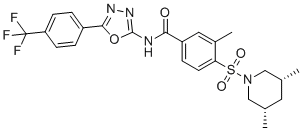
| DC72931 | HSGN-189 Featured |
HSGN-189 is a potent lipoteichoic acid (LTA) biosynthesis inhibitor, exhibits potent antibacterial activity against both MRSA and VRE strains with MICs of 1 ug/mL.
More description
|
|
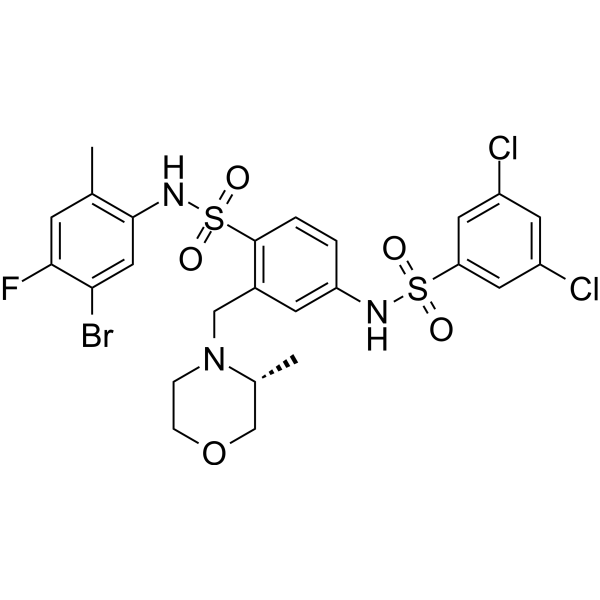
| DC73354 | MDL-811 Featured |
MDL-811 (MDL811) is a potent, selective and allosteric SIRT6 activator with EC50 of 5.7 uM (activated SIRT6 deacetylation), two-fold greater activity than MDL-800 (EC50=12.3 uM, Cat# 35760).
More description
|
|
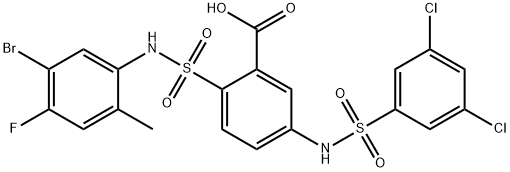
| DC42689 | MDL-801 Featured |
Novel activator of SIRT6 deacetylation
More description
|
|
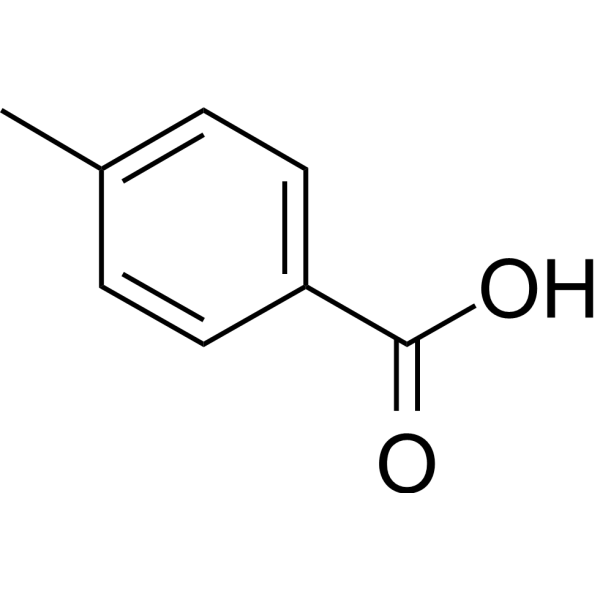
| DC74589 | p-Toluic acid Featured |
p-Toluic acid (4-Methylbenzoic acid) is a methylbenzoic acid and can be used as an intermediate for the synthesis of para-aminomethylbenzoic acid (PAMBA), p-tolunitrile, etc. It also exhibits hepatotoxicological potential in humanised-liver mice.
More description
|
|
