 To enhance service speed and avoid tariff delays, we've opened a US warehouse. All US orders ship directly from our US facility.
| Cat. No. | Product Name | Field of Application | Chemical Structure |
|---|---|---|---|
| DC60878 | Lipid A-12 Featured |
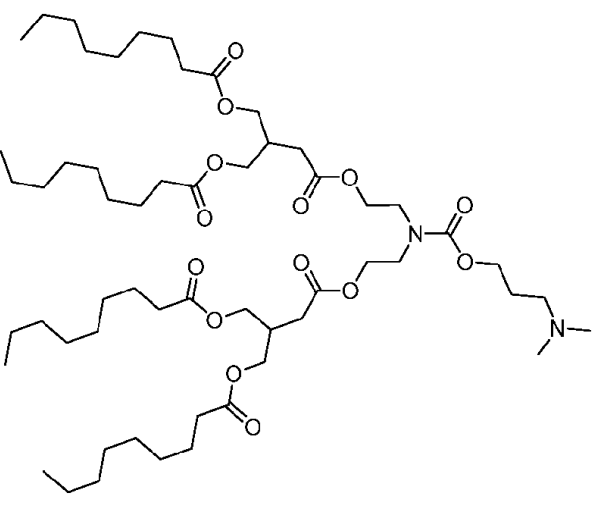
Lipid A-12 is an ionizable cationic lipid from Capstan Therapeutics and a close analog of CICL-1 (L829). The structure was modified by the extension of the headgroup linker from a two-carbon (C2) to a three-carbon (C3) spacer compared to CICL-1 (L829).
More description
|
|
| DC67990 | 4A3-LNSC8 Featured |
4A3-LNSC8 is a strategically designed thiourea-functionalized ionizable lipid that serves as the foundational core for a novel anion-coordination delivery platform. Its structure features a central 4A3 amine headgroup symmetrically extended with four hydrophobic tails, each incorporating a biodegradable ester linkage and a key thiourea-bridged linker. The inclusion of the thiourea group is the pivotal innovation, as it provides specific hydrogen-bonding sites capable of interacting with various halide anions (F⁻, Cl⁻, I⁻). When formulated into lipid nanoparticles (LNPs) without anion coordination, 4A3-LNSC8 itself exhibits a characteristic liver tropism, efficiently delivering mRNA to hepatocytes following systemic administration, with a measured surface pKa of approximately 5.54. However, its primary significance lies in its role as a versatile precursor. The strong anion-binding capability of its thiourea linkers allows for predictable modulation of the LNP's properties. Upon binding with anions like Cl⁻, the resulting complex (e.g., Cl-4A3-LNSC8) undergoes a significant pKa shift, which reprograms the LNP's in vivo fate, redirecting mRNA delivery from the liver to secondary lymphoid organs such as the spleen and lymph nodes. Thus, 4A3-LNSC8 is not merely an efficient ionizable lipid but a programmable scaffold that enables precise control over organ-targeting specificity through simple anion coordination, offering a powerful rational design strategy for advanced mRNA therapeutics.
More description
|

|
| DC67989 | Cl-4A3-LNSC8 Featured |
Cl-4A3-LNSC8 represents a novel class of thiourea-functionalized ionizable lipids engineered for selective organ-targeted mRNA delivery. Its core innovation lies in an anion-coordination strategy, where the parent lipid, 4A3-LNSC8, binds chloride ions (Cl⁻) via hydrogen-bonding interactions with its thiourea groups. This binding event is not merely structural but functionally critical, as it induces a significant shift in the surface pKa of the resulting lipid nanoparticles (LNPs) from approximately 5.54 to 8.79. This pKa modulation is the key mechanism that redirects the organotropism of the LNPs upon systemic administration. While the unmodified 4A3-LNSC8 LNPs preferentially deliver mRNA to the liver, Cl-4A3-LNSC8 LNPs effectivelyreprogram this tropism, enabling highly efficient mRNA delivery to secondary lymphoid organs (SLOs), particularly the spleen and lymph nodes. This platform demonstrates remarkable efficacy, achieving up to 65.7% gene editing efficiency in splenic macrophages in vivo, significantly outperforming benchmark delivery systems. Furthermore, by leveraging the coordination with different halides, such as iodine for computed tomography (CT) contrast, the system can be adapted for dual-modal theranostic applications, enabling simultaneous lymphatic metastasis imaging and therapeutic mRNA delivery.
More description
|

|
| DC67602 | ILB-3132(E12LA6B603) Featured |
E12LA6B603(ILB3132,ILB-3132) is a novel ionizable amino lipid disclosed in patent WO2024198497A1, developed by MagicRNA, representing a highly efficient component for lipid nanoparticle (LNP) delivery systems.When formulated into LNPs, E12LA6B603 LNP achieves a remarkable 98.26% encapsulation efficiency for mRNA. It mediates superior in vitro transfection in dendritic cells (1.8E+05 intensity) and demonstrates best-in-class in vivo protein expression after intramuscular injection (2.2E+09 intensity). Most notably, in a B16-OVA melanoma model, therapeutic OVA-mRNA vaccines delivered by E12LA6B603 LNPs induced 100% complete tumor regression, highlighting its superior efficacy over benchmarks like DLin-MC3 and SM-102. Its biodegradable ester linkages and balanced structure make it a promising, potent candidate for next-generation mRNA vaccines and therapeutics.
More description
|

|
| DC67812 | CL15F 6-4 Featured |
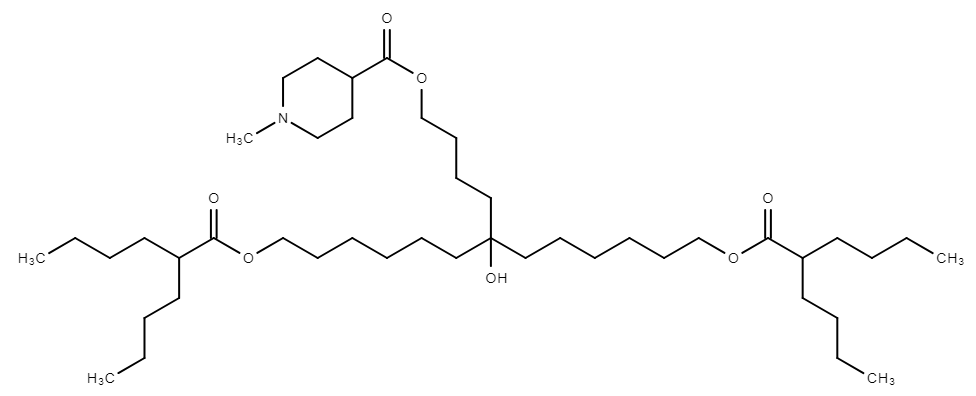
CL15F 6-4 is a short-tail ionizable lipid from the piperidine-based CL15F series, characterized by its symmetric branched structure with a 6-carbon main chain and 4-carbon side chain. This specific tail length critically determines the lipid nanoparticle's (LNP) properties, resulting in larger particles with a high surface density of the phospholipid DSPC. This elevated DSPC density reduces interactions with serum proteins like ApoE, minimizing rapid liver clearance and shifting mRNA delivery preference towards the spleen. Consequently, CL15F 6-4 LNPs achieve efficient, endogenous spleen-targeted delivery, making them a highly promising candidate for enhancing vaccine efficacy by preferentially transfecting antigen-presenting cells without complex functionalization.
More description
|
|
| DC67567 | ARV-T1 Featured |
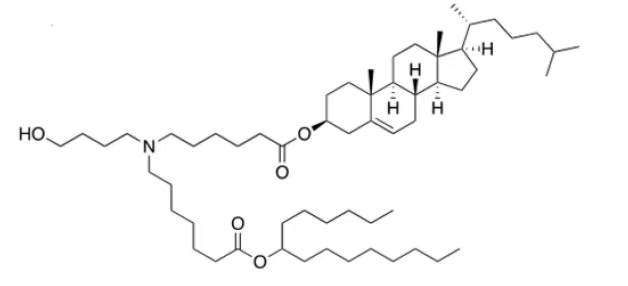
ARV-T1 is a novel ionizable lipid featuring a cholesterol moiety incorporated in its tail, designed to enhance mRNA delivery efficiency. With a pKa of 6.73, it exhibits optimal pH-dependent ionization for endosomal escape and mRNA release. Structurally, ARV-T1 contains a tertiary amine head group and ester-linked lipid tails, enabling rapid in vivo metabolism and improved biocompatibility.Compared to SM-102 (used in Moderna's vaccine), LNPs formulated with ARV-T1 demonstrate superior physicochemical properties: smaller particle size (~80 nm vs. 90 nm), lower polydispersity index (0.09 vs. 0.10), and higher absolute zeta potential (-10 mV vs. -5 mV). These characteristics correlate with >90% mRNA encapsulation efficiency and enhanced stability, maintaining performance for 12 weeks at -20°C.In vitro, ARV-T1 LNPs showed 7-fold higher protein expression than SM-102 LNPs. In vivo, they prolonged luciferase expression (>72 hours vs. <48 hours for SM-102) and induced 10-fold higher neutralizing antibodies against SARS-CoV-2 spike protein at low doses. The cholesterol tail promotes endosomal membrane fusion, while ester linkages facilitate metabolic clearance, yielding an excellent safety profile in toxicity studies. This combination of efficacy and safety positions ARV-T1 as a promising platform for mRNA vaccines and therapeutics.
More description
|
|
| DC67450 | A28-C6B2 Featured |
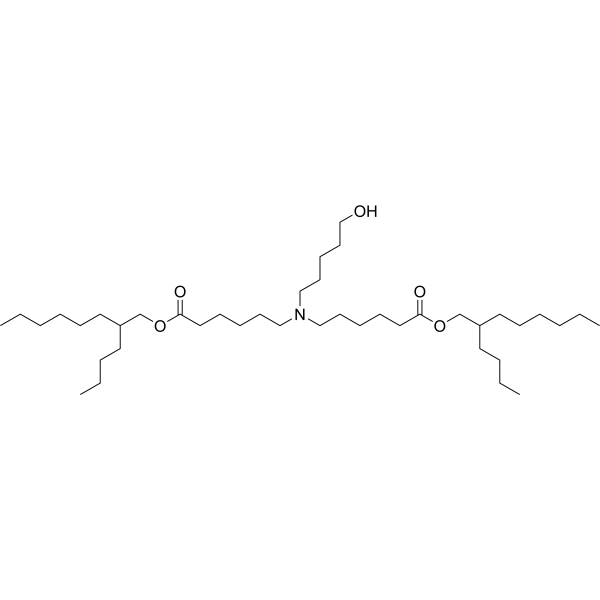
A28-C6B2 is a biodegradable ionizable lipid specifically engineered for spleen-targeted delivery. Through its unique branched structure, it bypasses hepatic uptake to achieve highly efficient transfection of F4/80+ macrophages and CD11c+ dendritic cells within the spleen. This lipid remains neutral in the bloodstream to minimize non-specific interactions, while undergoing protonation in the acidic environment of the endosome to facilitate nucleic acid release, thereby significantly enhancing the potency of mRNA vaccines and immunotherapies.
More description
|
|
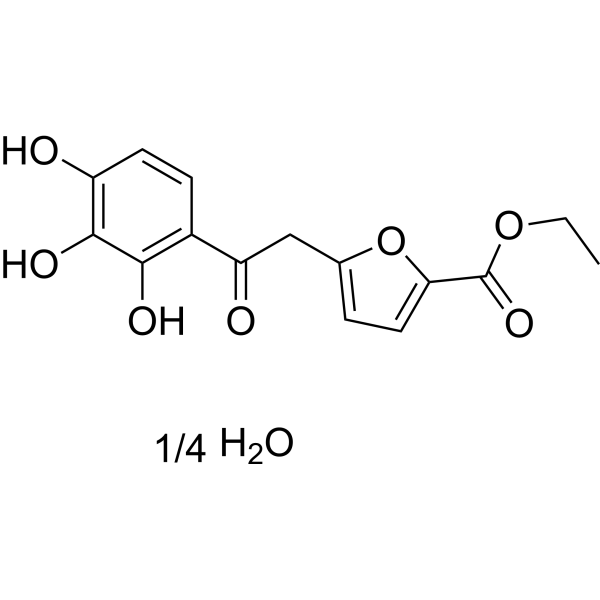
| DC40153 | MMG-11 quarterhydrate |
MMG-11 quarterhydrate is a potent and selective human TLR2 antagonist with low cytotoxicity. MMG-11 quarterhydrate inhibits both TLR2/1 and TLR2/6 signaling with IC50s of 1.7?μM for Pam3CSK4-induced hTLR2/1 and 5.7?μM for Pam2CSK4-induced hTLR2/6 responses.
More description
|
|
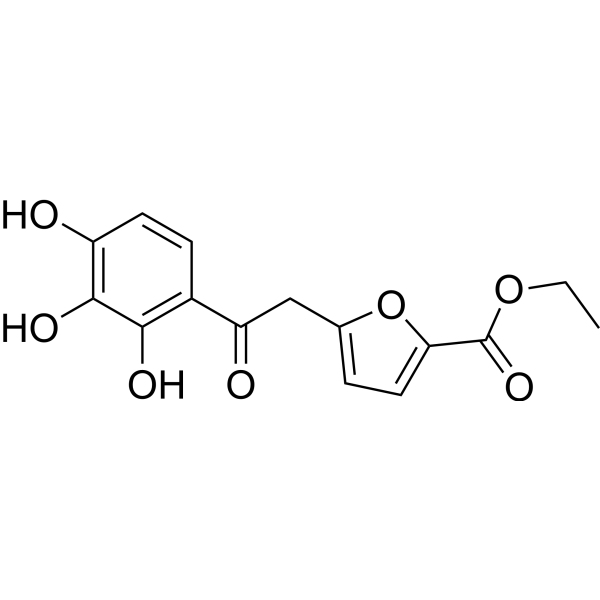
| DC34527 | MMG-11 |
MMG-11 is a potent and selective dual inhibitor of TLR2/1 and TLR2/6 signaling with low cytotoxicity.
More description
|
|
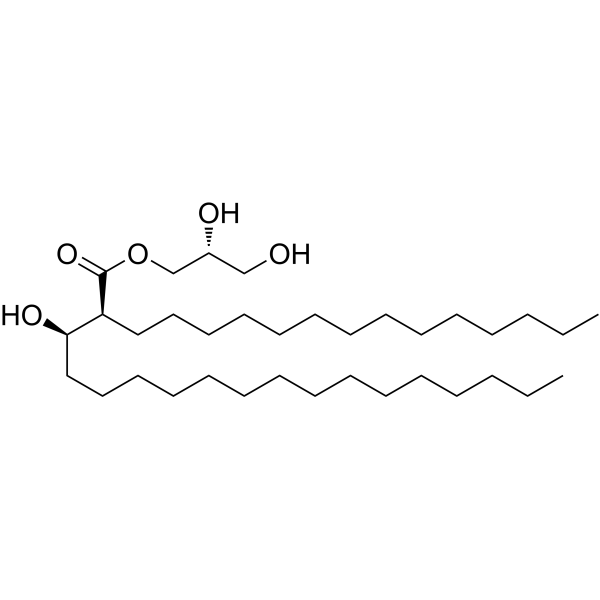
| DC68041 | MMG-1 Featured |
MMG-1, a monomycoloyl glycerol, is a C-type lectin receptor agonist. MMG-1, a lipid membrane stabilizer, is an immunopotentiator in liposomes. MMG-1 can be used to prepare lipid nanoparticles for drug delivery.
More description
|
|
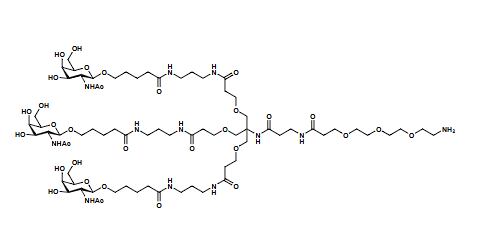
| DC68000 | Tris-GalNAc-β-Ala-PEG3-NH2 Featured |
|
|
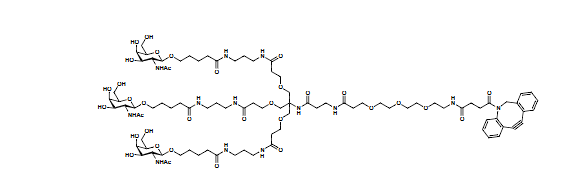
| DC68004 | Tris-GalNAc-β-Ala-PEG3-DBCO Featured |
Triantennary GalNAc ligand is known to bind Asialo Glycoprotein Receptor (ASGPR). The ligand is functionalized with dibenzocyclooctyne for click chemistry.
More description
|
|
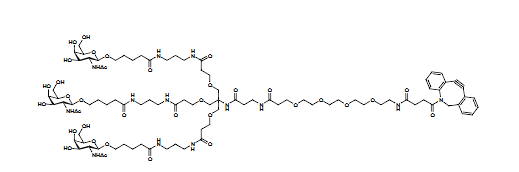
| DC68003 | Tris-GalNAc-β-Ala-PEG4-DBCO Featured |
Triantennary GalNAc ligand is known to bind Asialo Glycoprotein Receptor (ASGPR). The ligand is functionalized with dibenzocyclooctyne for click chemistry
More description
|
|
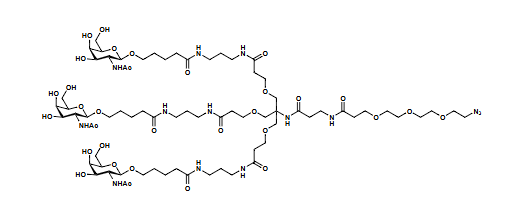
| DC68002 | Tris-β-GalNAc-β-Ala-PEG3-N3 Featured |
(β-D-GalNAc-sp)3-NHC(O)-(CH2)2-NHC(O)-PEG3-(CH2)2-N3 Tris-β-D-GalNAc ligands bind with asialoglycoprotein receptors (ASGPR) that are highly expressed on hepatocytes resulting in rapid endocytosis of the ligand along with conjugated payloads
More description
|
|
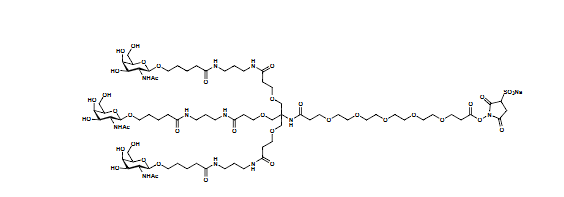
| DC68005 | Tris-GalNAc-PEG5-sulfo-NHS Ester Featured |
An amine-reactive asialo glycoprotein receptor (ASGPR) ligand.
More description
|
|
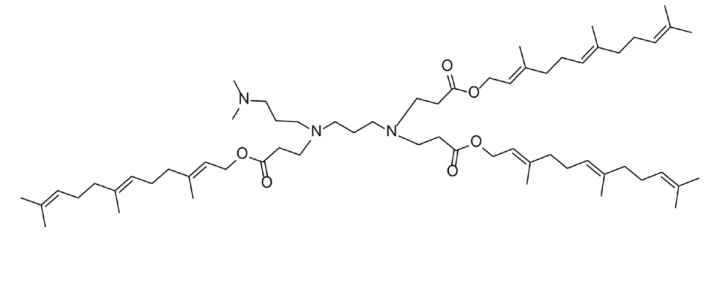
| DC60925 | Lipid H5T5 Featured |
H5T5 is a leading ionizable lipid nanoparticle (LNP) formulation optimized for in vivomRNA delivery, featuring a pKa of 6.51, a size of ~154 nm, and a narrow polydispersity index (PDI) of 0.05. It demonstrated superior in vitromRNA transfection efficiency in primary immune cells, such as bone marrow-derived macrophages. Following intravenous administration, H5T5 exhibits precise organotropism, predominantly targeting the spleen and bone marrow, where it effectively delivers mRNA to a broad spectrum of immune cells, including macrophages, dendritic cells, T cells, B cells, and NK cells. This capability enables its core application: the in vivogeneration of "pan-CAR" immune cells. When loaded with anti-HER2 CAR mRNA, the H5T5-based therapy achieved potent tumor regression and prolonged survival in multiple solid tumor models. Preliminary safety assessments indicated a manageable cytokine profile and no significant organ toxicity, positioning it as a promising platform for in vivocell engineering.
More description
|
|
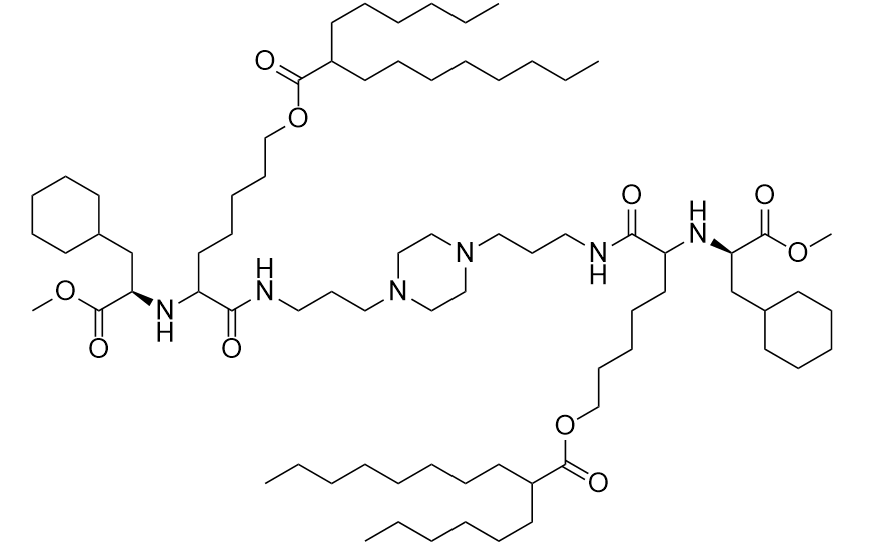
| DC68039 | CHCha-10 Featured |
CHCha-10 is an amino acid-derived ionizable lipid engineered for pulmonary gene therapy. Its optimal surface charge (-0.126 mV) enables efficient mucus penetration, while a pKa of ~7.0 facilitates endosomal escape. Its unique conical structure promotes membrane fusion and mRNA release. In animal models, CHCha-10-based LNPs achieved highly efficient and specific editing of lung epithelial cells, particularly stem-like basal cells (~44%), with effects persisting through tissue renewal. It also demonstrated excellent efficacy and safety in ferrets, a model closely mimicking human lung physiology.
More description
|
|
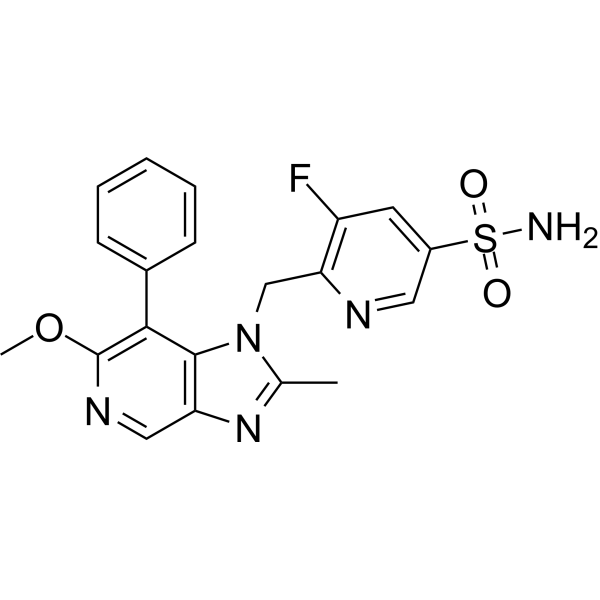
| DC78548 | ISM5939 Featured |
ISM5939 is an orally active and selective ENPP1 inhibitor with an IC50 of 0.63 nM for 2,3-cGAMP degradation and 9.28 nM for ATP hydrolysis. ISM5939 has antitumor activity.
More description
|
|
| DC58001 | BioE-11979(BioE1197) Featured |
BioE-1197 is a novel Pask inhibitor. BioE-1197 is a compound that enhances T cell function. Functionally, treatment with BIOE-1197 significantly boosts the ability of effector T cells (such as CD8+, Th1, and Th2 cells) to produce lineage-specific cytokines upon restimulation. BIOE-1197 is considered a novel agent with potential applications in tumor immunotherapy and enhancing vaccine efficacy.
More description
|

|
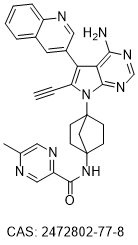
| DC77170 | Emupertinib Featured |
Emupertinib (example 37) is a potent EGFR inhibitor with IC50 values of <0.3 nM, 0.52 nM, 0.5 nM, 0.69 nM and 0.92 nM for EGFR (d746-750/T790M/C779S), EGFR (L858R/T790M/C797S), EGFR (d746-750/C797S), EGFR (L858R/C797S), and EGFR (wild-type), respectively.
More description
|
|
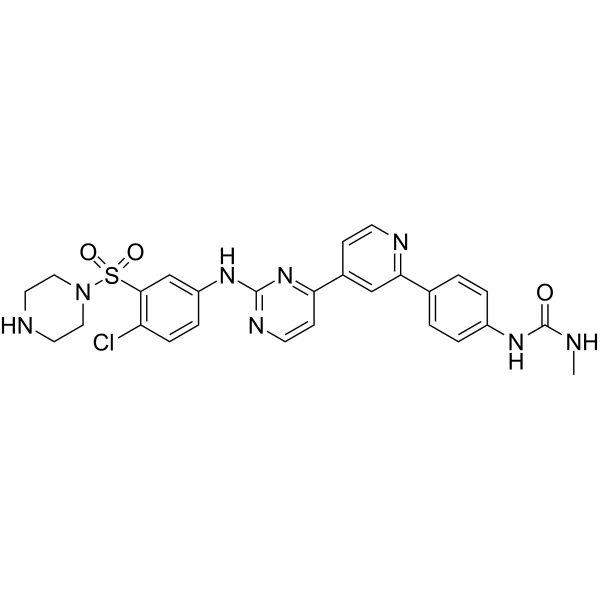
| DC74056 | KVS0001 Featured |
KVS0001 is a specific and bioavailable small molecule inhibitor of SMG1 kinase, disrupts nonsense mediated decay (NMD).
More description
|
|
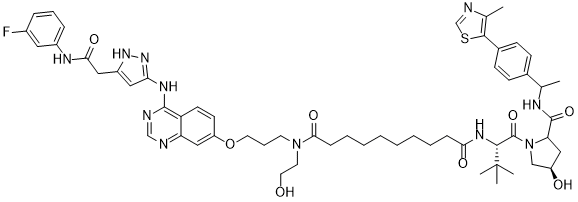
| DC68040 | AURKB PROTAC MS44 Featured |
AURKB PROTAC MS44 is a potent, selective, first-in-class Aurora B kinase (AURKB) PROTAC degrader with DC50 of 103 nM in HPAF-11 cells, Dmax of 89%.
More description
|
|
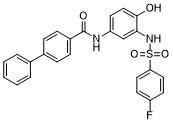
| DC60033 | SN-011 Featured |
STING inhbiitor, which inhibited the activation of the STING signal pathway and to prevent or treat a STING-mediated disease.
More description
|
|
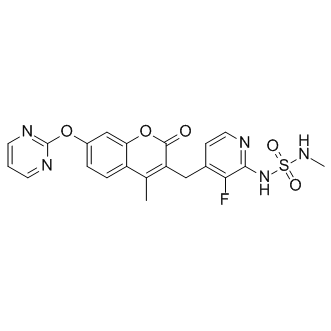
| DC7489 | RO5126766(CH5126766) Featured |
RO5126766(CH5126766) is a Raf/MEK dual kinase inhibitor.
More description
|
|
| DC74008 | GSK898 Featured |
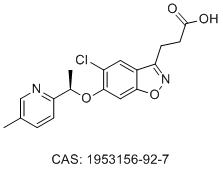
GSK898 is a potent, highly selective kynurenine monooxygenase (KMO) inhibitor with pIC50 of 8.8.
More description
|
|
| DC68038 | seMpai sodium Featured |
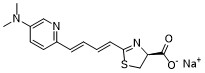
seMpai is a high-performance near-infrared (NIR) luciferin analogue engineered for enhanced deep-tissue bioluminescence imaging, producing a robust 675 nm emission comparable to top-tier substrates. In vitro, it effectively supports mutant luciferase systems like Akaluc, while in vivo, it enables detection of pulmonary micro-metastases, overcoming traditional D-luciferin limitations. The compound features an optimized, neutral pH formulation that reduces hepatic background, ensuring superior signal-to-noise ratios without significant toxicity, making it ideal for longitudinal studies. For optimal solubility and performance, seMpai is a critical tool for preclinical imaging and drug discovery. Learn more at MedKoo. NOTE. seMpai (Cat#465342) is the free acid form and is less water soluble. seMpai Sodium (CAT#333158) is water soluble.
More description
|
|
| DC68037 | YXN47931 free acid Featured |
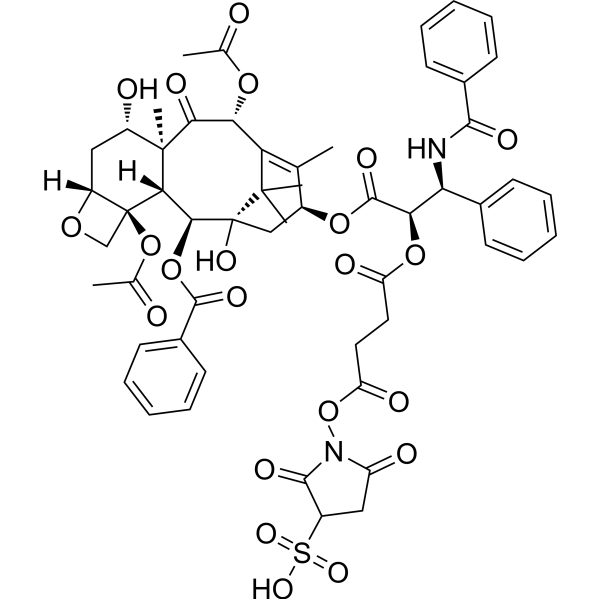
YXN47931, also known as Paclitaxel succinate sulfo-NHS ester, is a paclitaxel derivative with a succinic acid linker, in which the carboxy group is activated with an sulfo-NHS ester. The sulfo-NHS ester group is highly reactive to amino group or hydroxy group, and can be used to conjugate with other molecules such as peptides, proteins, antibodies or enzymes, or polymers. Paclitaxel-Succinic acid is a useful agent to make Paclitaxel-conjugate for drug delivery, nanodrug research. Note: Paclitaxel-Succinic acid (CAT#620101), Paclitaxel-Succinate-NHS (also called DCN10809, CAT#408092) are also in stock. This product has no formal name at the moment. For the convenience of communication, a temporal code name was therefore proposed according to MedKoo Chemical Nomenclature (see web page: https://www.medkoo.com/page/naming). NOTE: YXN47931 sodium (CAT#408203) is water soluble. YXN47931 free acid (CAT#408211) has very low solubility in water.
More description
|
|
| DC68036 | AM-001 Featured |
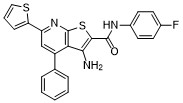
AM-001, a small-molecule EPAC1 (exchange protein directly activated by cAMP) inhibitor, showed potent in vitro antiviral activity against SARS-CoV-2 and influenza A in cultured cells. In Vero E6 cells, AM-001 reduced SARS-CoV-2 viral RNA and infectious titres with IC₅₀ ≈ 355–388 nM and in human lung Calu-3 cells with IC₅₀ ≈ 147–167 nM, achieving ~10⁴-fold suppression at 20 µM without cytotoxicity (CC₅₀ > 40 µM; selectivity index >100). AM-001 also inhibited influenza A replication in Calu-3 cells with IC₅₀ ~1 µM. These effects reflect host-targeted EPAC1 inhibition rather than direct virucidal action. No in vivo animal model data were included in the study’s antiviral evaluation.
More description
|
|
| DC78069 | CT-996 Featured |
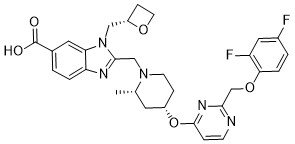
CT-996 is an orally active GLP-1RA agonist, with an EC50 of 0.49 nM. CT-996 reduces the β-arrestin recruitment and GLP-1R internalization. CT-996 suppresses postprandial blood glucose following a mixed meal tolerance test (MMTT) in mice expressing the human GLP-1 receptor and enhances glucose stimulated insulin secretion (GSIS) during an intravenous glucose challenge in obese monkeys. CT-996 can be used for the study of type 2 diabetes (T2D) and obesity.
More description
|
|
| DC29029 | Selumetinib sulfate Featured |
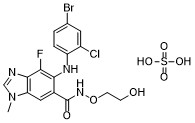
Selumetinib (AZD6244) is selective, non-ATP-competitive oral MEK1/2 inhibitor, with an IC50 of 14 nM for MEK1. Selumetinib (AZD6244) inhibits ERK1/2 phosphorylation.
More description
|
|
