 To enhance service speed and avoid tariff delays, we've opened a US warehouse. All US orders ship directly from our US facility.
| Cat. No. | Product Name | Field of Application | Chemical Structure |
|---|---|---|---|
| DC60900 | ALC-0159 (di-C18) Featured |
ALC-0159 (di-C18) is an analog of ALC-0159, in which the original C14 chain is replaced with C18 chain. C18-ALC-0159 demonstrates high stability in vivo, effectively prevents binding with proteins such as ApoE, and achieves a prolonged blood circulation time. It also reduces liver targeting and accumulation.
More description
|

|
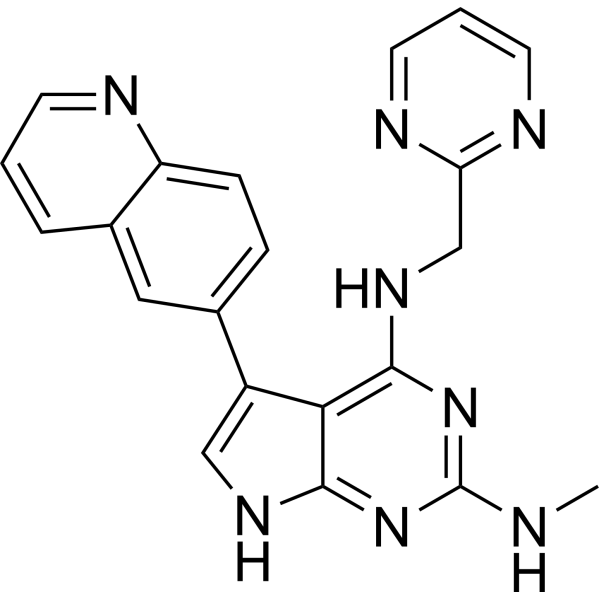
| DC77088 | T025 Featured |
T025 is as an orally available and potent inhibitor of Cdc2‐like kinases (CLKs) with an IC50s of 0.93 nM, 1 nM, 14 nM, 1.5 nM for CLK1, CLK2, CLK3, DYRK1B respectively. It exhibits anti‐tumor efficacy and can be used in MYC‐driven cancer research.
More description
|
|
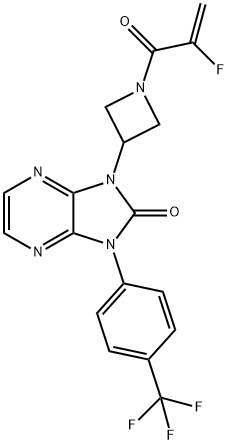
| DC60903 | BPI-460372 Featured |
|
|
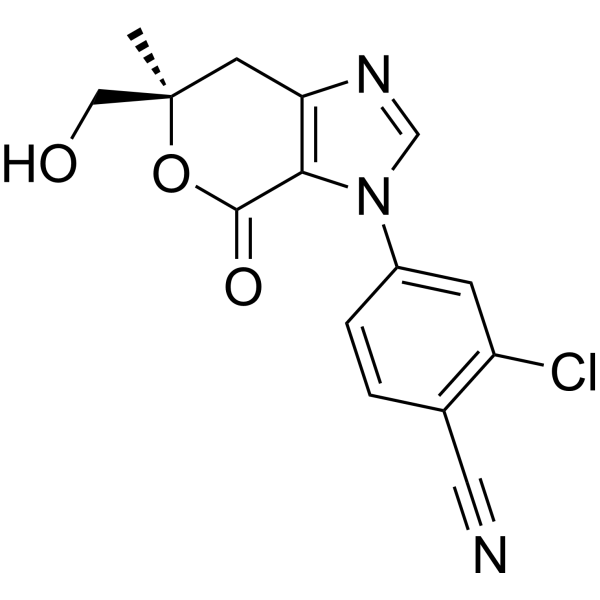
| DC77831 | Vicadrostat |
Vicadrostat (compound 29 A) is a potent and selective inhibitor of aldosterone synthase(CYP11B2) with an IC50 of 16 nM. It exhibits potential in renal disease, diabetic nephropathy, cardiovascular diseases and fibrotic disorder research.
More description
|
|
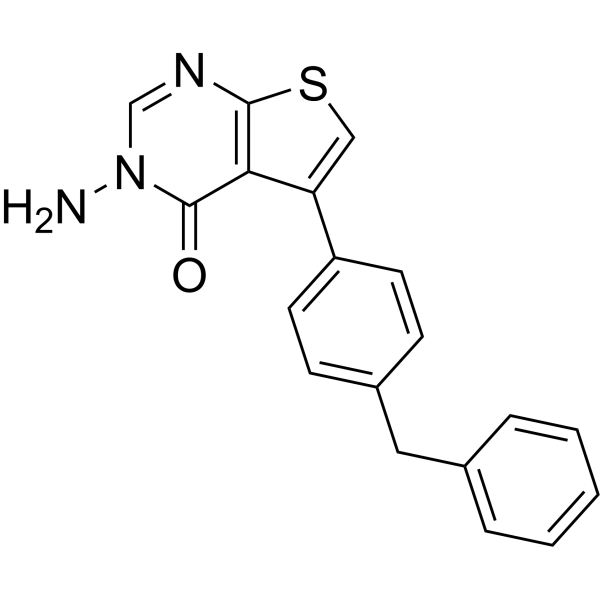
| DC20317 | Barbadin Featured |
Barbadin is a small molecule that selectively inhibits the β-arrestin/β2-adaptin interaction (IC50=19.1/15.6 uM for β-arrestin1/2) without effect on the formation of receptor/β-arrestin complexes.
More description
|
|
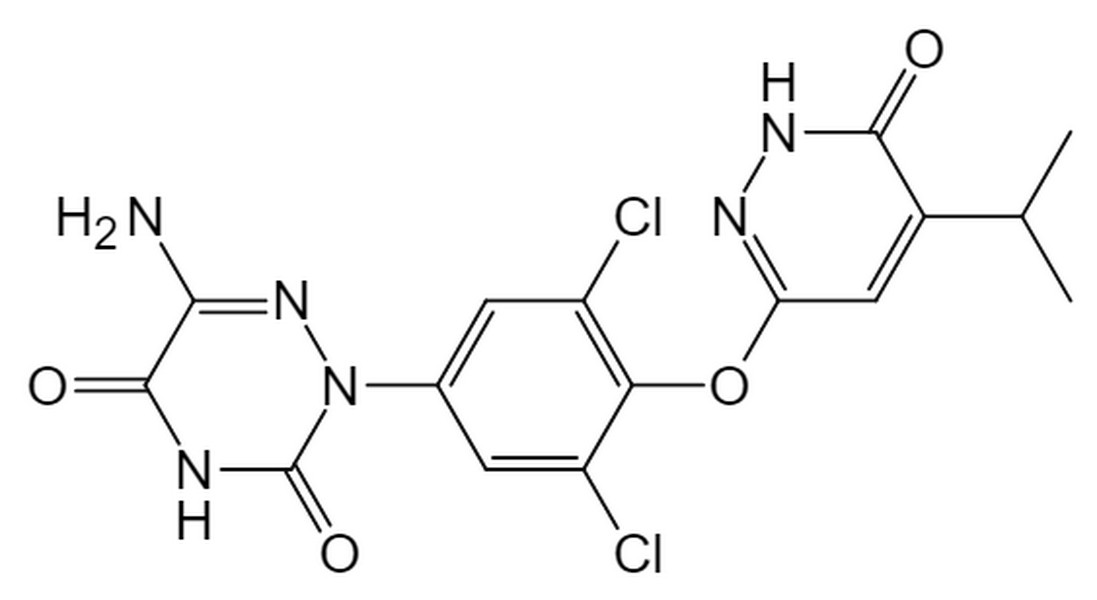
| DC60678 | ALG-055009 Featured |
ALG-055009 is a potent and selective thyroid hormone receptor beta (THR-β) agonist with EC50 of 0.063 μM. ALG-055009 is highly metabolically stable, with good permeability and a relatively low efflux ratio.
More description
|
|
| DC60906 | Lp(a)-IN-5 Featured |
Lp(a)-IN-5 (Compound A) is an orally active lipoprotein (a) (Lp(a)) inhibitor. Lp(a)-IN-5 inhibits the assembly of Apo(a) and ApoB proteins with an IC50 value of 0.41 nM. Lp(a)-IN-5 is promising for research of diseases related to elevated plasma Lp(a) levels, such as cardiovascular diseases.
More description
|
-IN-5.gif)
|
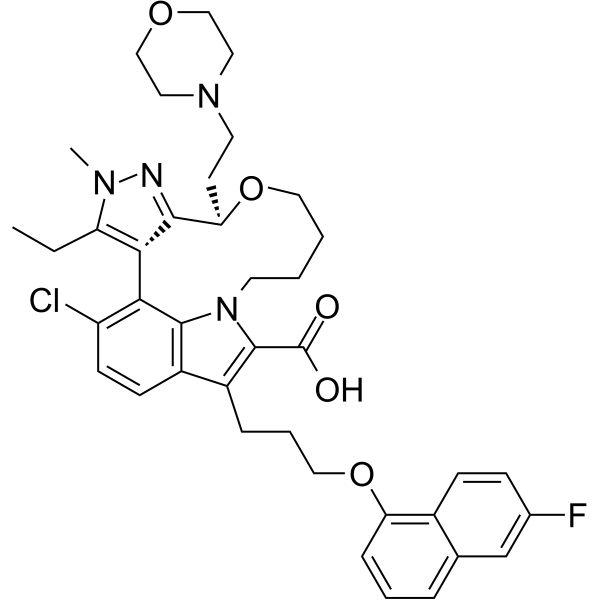
| DC60643 | BRD-810 Featured |
BRD-810 is a potent and selective MCL1 inhibitor with Kd of 0.3 nM (SPR) and IC50 of 0.4 nM (MCL1-Noxa HTRF), respectively. BRD-810 is a rapidly cleared inhibitor of MCL1 that has robust antitumor efficacy in hematological and solid tumor cancer models.
More description
|
|
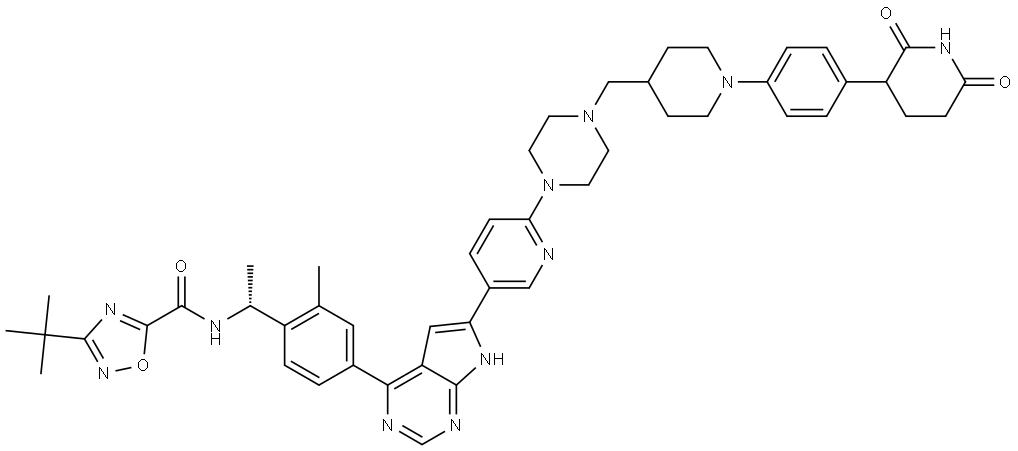
| DC60901 | PROTAC BTK Degrader-11 Featured |
PROTAC BTK Degrader-11 is a PROTAC degrader that can break down BTK, with a DC50 of 1.7 nM.
More description
|
|
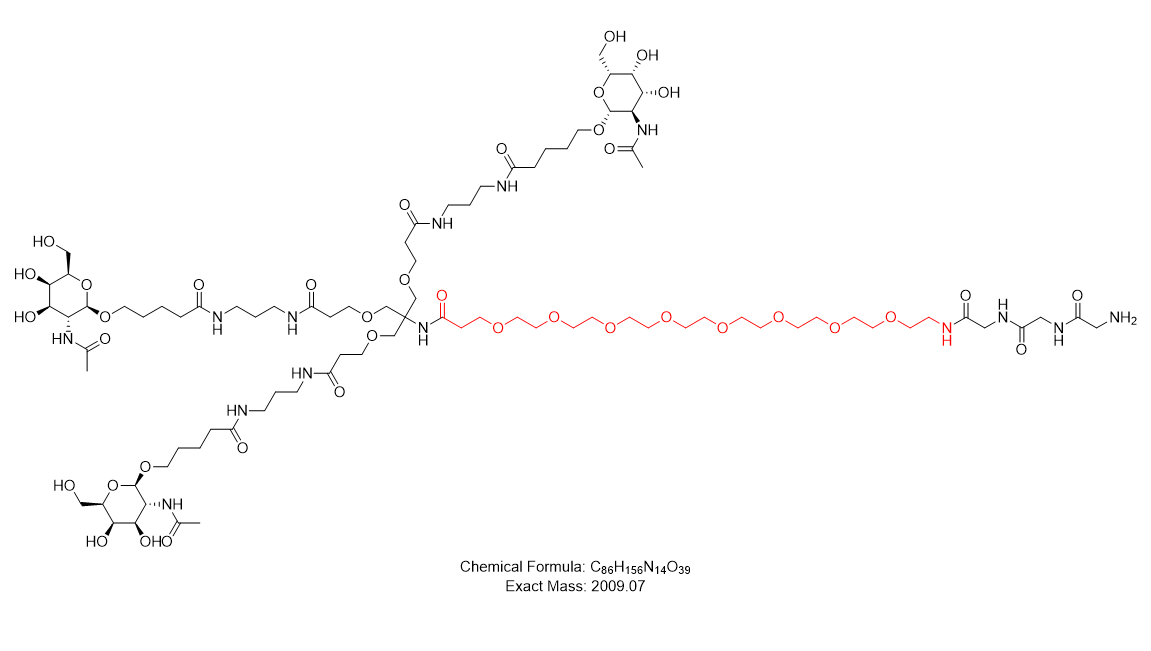
| DC60914 | Tri-GalNAc-PEG8-Gly-Gly-Gly(Tri-GalNAc-G3) Featured |
Tri-GaNAc-PEG8-Gly-Gly-Gly is a compound that targets the asialoglycoprotein receptor (ASGPR) and is utilized to conjutate with antibody.
More description
|
|
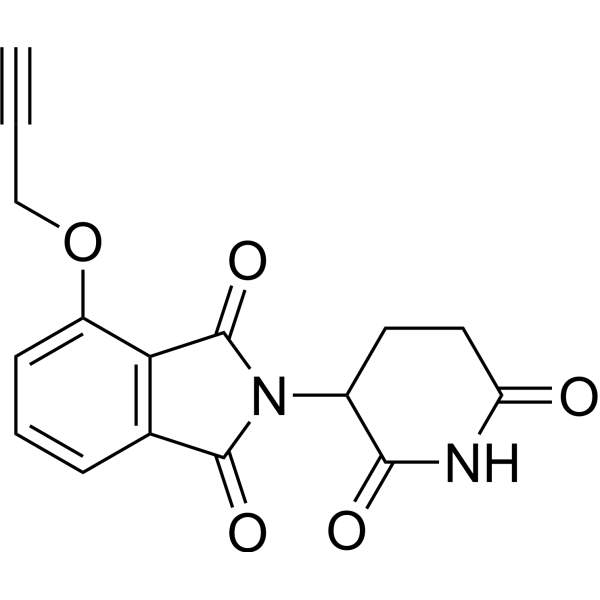
| DC67724 | Thalidomide-propargyl Featured |
Thalidomide-propargyl is the Thalidomide-based Cereblon ligand used in the recruitment of CRBN protein. Thalidomide-propargyl can be connected to the ligand for protein by a linker to form the IMiD containing PROTACs[1]. Thalidomide-propargyl is a click chemistry reagent, it contains an Alkyne group and can undergo copper-catalyzed azide-alkyne cycloaddition (CuAAc) with molecules containing Azide groups.
More description
|
|
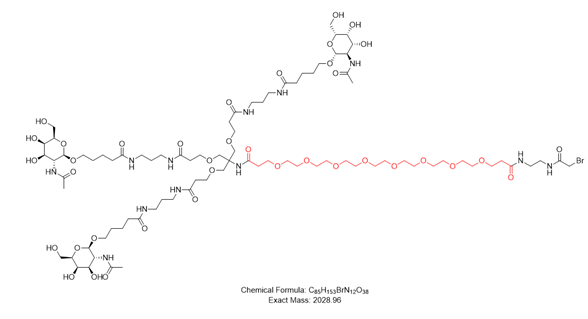
| DC60915 | Tri-GalNAc-PEG8-NH2-CH2CH2-NH2-bromoacetyl (Tri-GalNAc-Haloacetyls) Featured |
Tri-GaNAc-PEG8-NH2-CH2CH2-NH2-bromoacetyl is a compound that targets the asialoglycoprotein receptor (ASGPR) and is utilized to conjutate with antibody.
More description
|
|
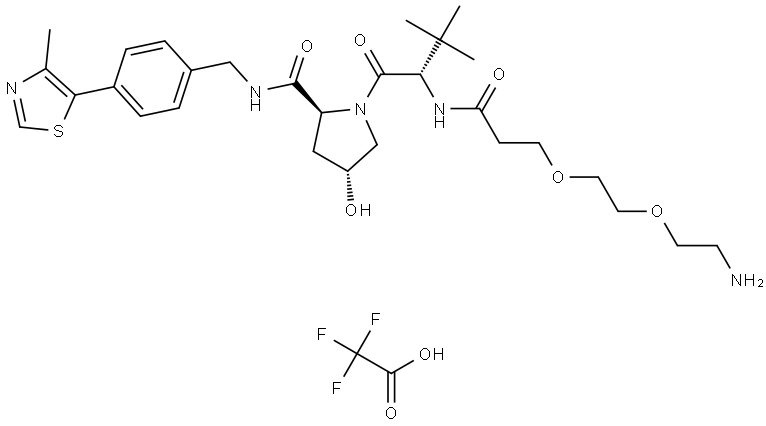
| DC67727 | (2S,4R)-1-((S)-2-(3-(2-(2-aminoethoxy)ethoxy)propanamido)-3,3-dimethylbutanoyl)-4-hydroxy-N-(4-(4-methylthiazol-5-yl)benzyl)pyrrolidine-2-carboxamide 2,2,2-trifluoroacetate Featured |
|
|
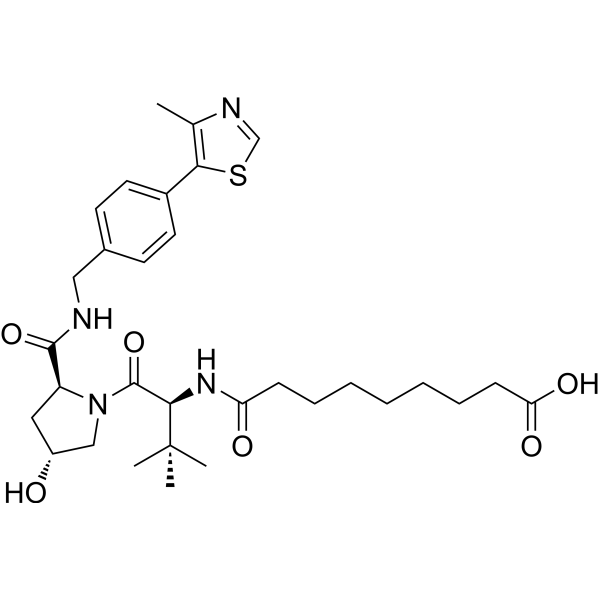
| DC67729 | (S,R,S)-AHPC-amido-C7-acid Featured |
(S,R,S)-AHPC-amido-C7-acid incorporates a VHL ligand for the E3 ubiquitin ligase and a PROTAC linker. (S,R,S)-AHPC-amido-C5-acid can be used to design PROTACs.
More description
|
|
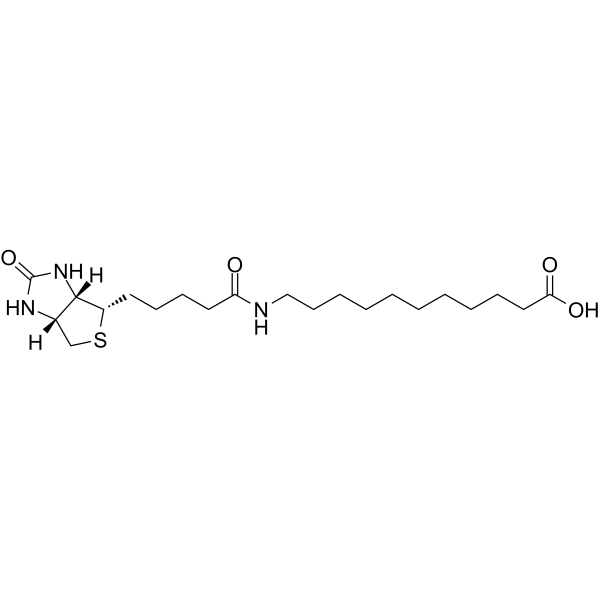
| DC67733 | Biotin-SLC Featured |
(+)-Biotin-SLC is an alkyl chain-based PROTAC linker that can be used in the synthesis of PROTACs.
More description
|
|
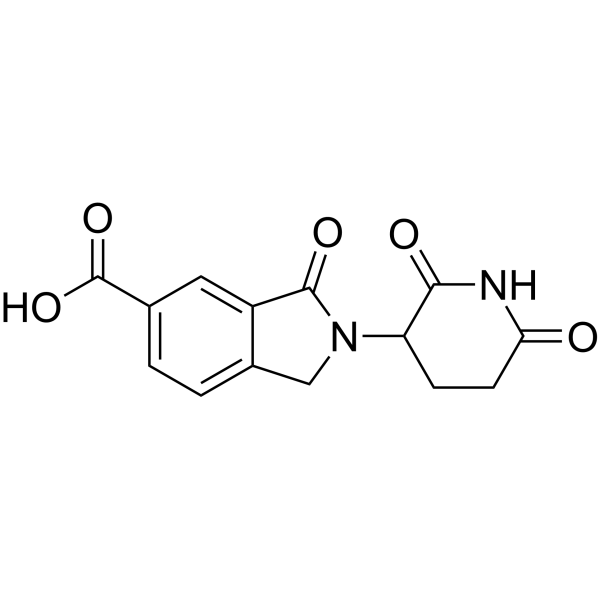
| DC67731 | Desamino lenalidomide-5-COOH Featured |
Desamino lenalidomide-5-COOH is an E3 ubiquitin ligase cereblon (CRBN) ligand used to recruit the cereblon protein. Desamino lenalidomide-5-COOH can be linked to a target protein ligand via a linker to form a PROTAC.
More description
|
|
| DC67736 | 1H-Isoindole-1,3(2H)-dione, 4-[(10-aminodecyl)amino]-2-(2,6-dioxo-3-piperidinyl)- Featured |
-dione, 4-[(10-aminodecyl)amino]-2-(2,6-dioxo-3-piperidinyl)-.gif)
|
|
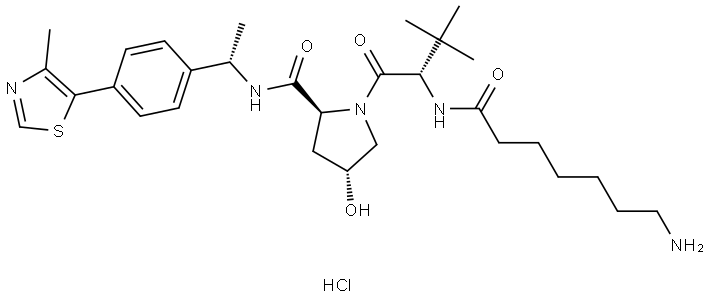
| DC67734 | (2S,4R)-1-((S)-2-(7-aminoheptanamido)-3,3-dimethylbutanoyl)-4-hydroxy-N-((S)-1-(4-(4-methylthiazol-5-yl)phenyl)ethyl)pyrrolidine-2-carboxamide hydrochloride Featured |
|
|
| DC67738 | Glycine, N-[2-(2,6-dioxo-3-piperidinyl)-2,3-dihydro-1-oxo-1H-isoindol-4-yl]- Featured |
-2,3-dihydro-1-oxo-1H-isoindol-4-yl]-.gif)
|
|
| DC67740 | Acetamide, 2-[2-(2-chloroethoxy)ethoxy]-N-[2-(2,6-dioxo-3-piperidinyl)-2,3-dihydro-1,3-dioxo-1H-isoindol-5-yl]- Featured |
ethoxy]-N-[2-(2,6-dioxo-3-piperidinyl)-2,3-dihydro-1,3-dioxo-1H-isoindol-5-yl]-.gif)
|
|
| DC67739 | N-((4,6-dimethyl-2-oxo-1,2-dihydropyridin-3-yl)methyI)-1-isopropyl-6-(6-(4-(2-(3-mercaptopropanamido)ethyl)piperazin-1-yl)pyridin-3-yl)-1H-indazole-4-carboxamide Featured |
methyI)-1-isopropyl-6-(6-(4-(2-(3-mercaptopropanamido)ethyl)piperazin-1-yl)pyridin-3-yl)-1H-indazole-4-carboxamide.gif)
|
|
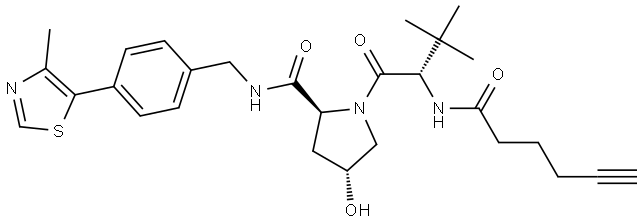
| DC67741 | (2S,4R)-1-((S)-2-(Hex-5-ynamido)-3,3-dimethylbutanoyl)-4-hydroxy-N-(4-(4-methylthiazol-5-yl)benzyl)pyrrolidine-2-carboxamide Featured |
|
|
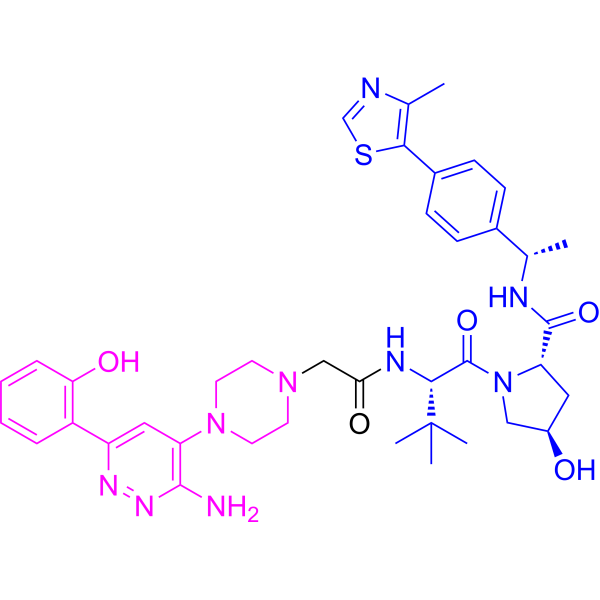
| DC48049 | AU-15330 Featured |
AU-15330 is a proteolysis-targeting chimera (PROTAC) degrader of the SWI/SNF ATPase subunits, SMARCA2 and SMARCA4. AU-15330 induces potent inhibition of tumour growth in xenograft models of prostate cancer and synergizes with the AR antagonist enzalutamide. AU-15330 induces disease remission in castration-resistant prostate cancer (CRPC) models without toxicity.
More description
|
|
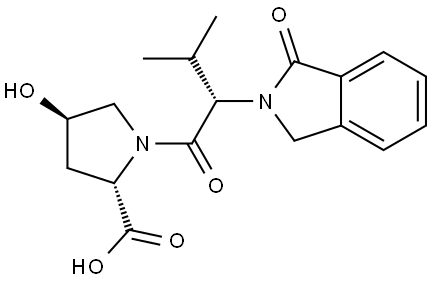
| DC67742 | L-Proline, 1-[(2S)-2-(1,3-dihydro-1-oxo-2H-isoindol-2-yl)-3-methyl-1-oxobutyl]-4-hydroxy-, (4R)- Featured |
|
|
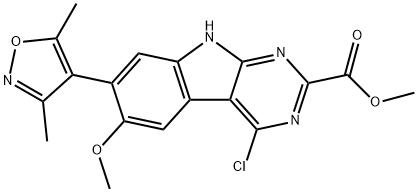
| DC67743 | 9H-Pyrimido[4,5-b]indole-2-carboxylic acid, 4-chloro-7-(3,5-dimethyl-4-isoxazolyl)-6-methoxy-, methyl ester Featured |
|
|
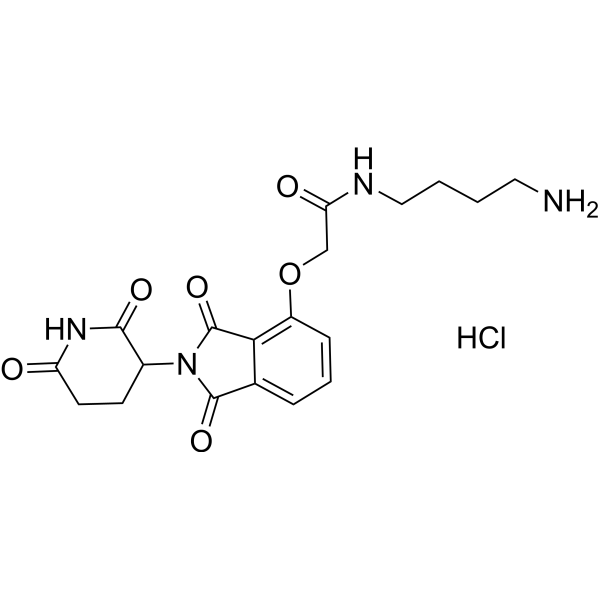
| DC67744 | Thalidomide-O-amido-C4-NH2 hydrochloride Featured |
Thalidomide-O-amido-C4-NH2 hydrochloride, a synthesized E3 ligase ligand-linker conjugate that incorporates the Thalidomide based cereblon ligand and a linker, can be used in the synthesis of PROTACs.
More description
|
|
| DC67745 | (S,R,S)-AHPC--CO-PEG1-C2-amine HCl Featured |
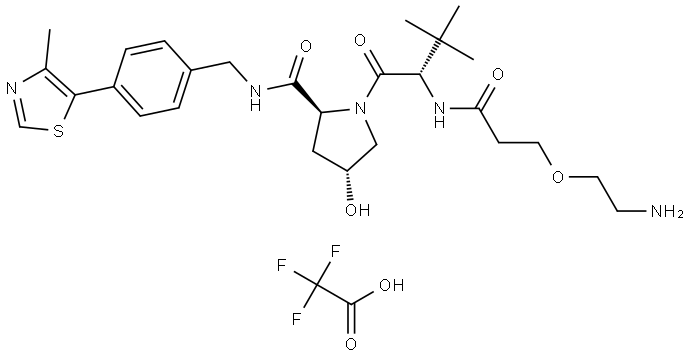
|
|
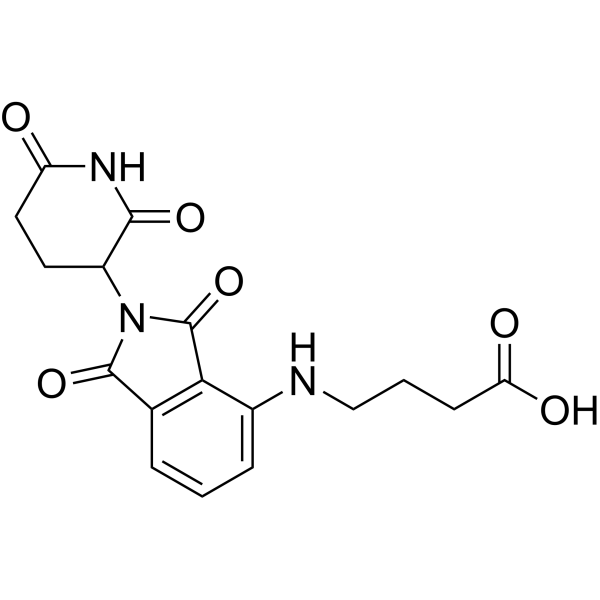
| DC67748 | Pomalidomide 4'-alkylC3-acid Featured |
Pomalidomide 4'-alkylC3-acid is the E3 ligase ligand-linker conjugate used in the recruitment of CRBN protein. Pomalidomide 4'-alkylC3-acid can be used to synthesize PROTACs.
More description
|
|
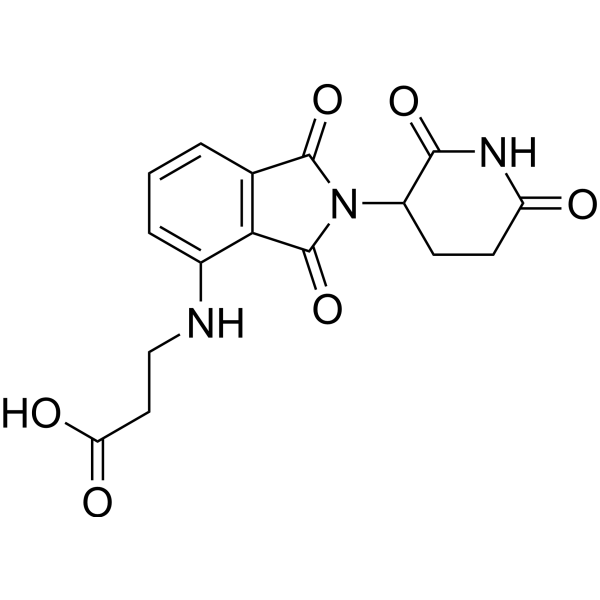
| DC67749 | Pomalidomide-C2-acid Featured |
Pomalidomide-C2-acid is a synthesized E3 ligase ligand-linker conjugate that incorporates the Pomalidomide based cereblon ligand and a linker used in PROTAC technology.
More description
|
|
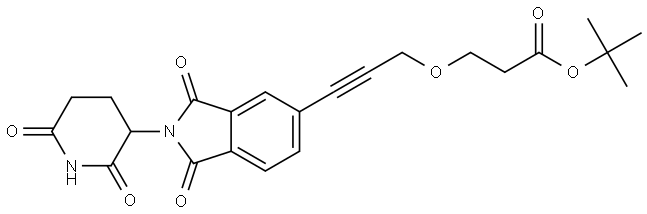
| DC67751 | tert-butyl 3-({3-[2-(2,6-dioxopiperidin-3-yl)-1,3-dioxoisoindol-5-yl]prop-2-yn-1-yl}oxy)propanoate Featured |
|
