 To enhance service speed and avoid tariff delays, we've opened a US warehouse. All US orders ship directly from our US facility.
| Cat. No. | Product Name | Field of Application | Chemical Structure |
|---|---|---|---|
| DC67528 | Ac-AEVD-pN(Caspase-10 Substrate) Featured |
This product is a ready-to-use colorimetric substrate for Caspases that recognize the amino acid sequence AEVD. Caspase activity can be quantified by spectrophotometric detection of free pNA (l = 400 nm) after cleaved from the peptide substrate AEVD-pNA, using a spectrophotometer or multi-well plate reader.
More description
|

|
| DC67547 | NOP-1A Precursor Featured |
The Precursor of NOP-1A. (11)C-NOP-1A is a useful radioligand for quantifying NOP receptors in the monkey brain, and its radiation dose is similar to that of other (11)C-labeled ligands for neuroreceptors.
More description
|

|
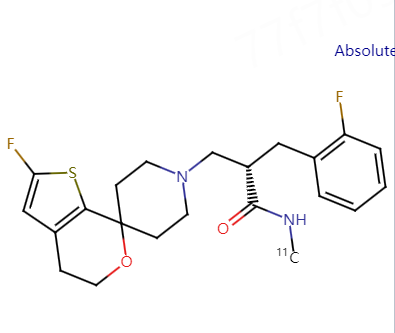
| DC67548 | NOP-1A Featured |
NOP-1A standard. 11C-NOP-1A is a new radioligand for thenociceptin/orphanin FQ peptide (NOP) receptor, with high affinity (Ki, 0.15 nM) and appropriate lipophilicity (measured logD, 3.4) for PET brain imaging. 11C-NOP-1A is the the first successful radioligand to image NOP receptors in rat and monkey brain. 11C-NOP-1A is a selective antagonist at the NOP receptor and has high affinity and appropriate lipophilicity for blood–brain barrier permeability. 11C-NOP-1A imaging in rhesus monkeys showed high brain uptake and a large receptor-specific signal and could be quantified with the gold standard method of compartmental modeling. In humans 1C-NOP-1A reliably quantified NOP receptors in human brain both in large brain regions and at a voxelwise level using parametric imaging. The radiation absorbed dose in humans was similar to that observed with other 11C-labeled ligands and would allow multiple scans of a single subject. Thus, 11C-NOP-1A is a promising radioligand for reliably quantifying NOP receptors in human brain.
More description
|
|
| DC73047 | JC19 Featured |
JC19 is a a cysteine-reactive small molecule degrader of SARS-CoV-2 nsp14 with DC50 of 8.7 uM in HEK293T cells.
More description
|

|
| DC60862 | ZSH-2208 Featured |
ZSH-2208 is a synthetic analog of all-trans retinoic acid (ATRA) designed to overcome resistance and improve differentiation therapy in acute promyelocytic leukemia (APL) and other malignancies. In published studies, ZSH-2208 has shown superior anti-proliferative and pro-differentiation activity compared to ATRA in ATRA-resistant APL cell lines such as NB4-R2. For example, ZSH-2208 induced significant G1 phase arrest and granulocytic differentiation in NB4-R2 cells at concentrations around 1–10 µM, whereas ATRA was largely ineffective at equivalent doses. In mouse xenograft models, ZSH-2208 treatment led to marked tumor growth inhibition without the rapid metabolic degradation seen with ATRA. These data suggest that ZSH-2208 is a promising candidate for treating retinoic acid-resistant leukemias and potentially other cancers sensitive to retinoid signaling.
More description
|

|
| DC67560 | SH514 Featured |
SH514 is a specific small molecule inhibitor of interferon regulatory factor 4 (IRF4) with IC50 of 2.63 uM, inhibits proliferation of IRF4-high-expressing NCI-H929 and MM.1R MM cells with IC50 of 0.08 uM and 0.11 uM, respectively.
More description
|
.gif)
|
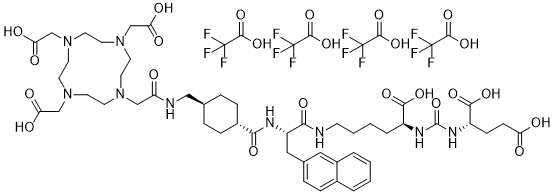
| DC75325 | PSMA-617 TFA Featured |
PSMA-617, also know as vipivotide tetraxetan, is a ligand used to make 177Lu-PSMA-617, which is a radioactive molecule to fight cancer. PSMA617 possesses a small peptide, which was designed to target prostate-specific membrane antigen (PSMA). PSMA617 demonstrates high radiolytic stability for at least 72 h. PSMA617 has high inhibition potency (equilibrium dissociation constant Ki=2.34±2.94 nM on LNCaP; Ki=0.37±0.21 nM enzymatically determined). 177 Lu-PSMA-617 offers a potential additional life-prolonging treatment option for men with mCRPC.
More description
|
|
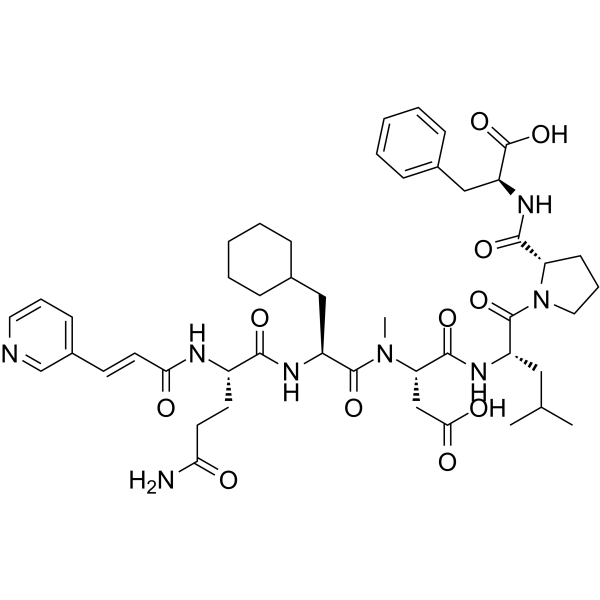
| DC47736 | Targeting the bacterial sliding clamp peptide 46 Featured |
Targeting the bacterial sliding clamp peptide 46 is a short peptide targeting the bacterial sliding clamp(SC), inhibiting SC-dependent DNA synthesis.
More description
|
|
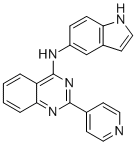
| DC74299 | BC18630 free base Featured |
BC18630 free base (BC 18630) is a small molecule inhibitor of the E3 ubiquitin ligase subunit DCAF7, potently inhibits SARS-CoV-2 infection with IC50 of 39 nM in cell-based assays.
More description
|
|
| DC74298 | BC18630 Featured |
BC18630 (BC 18630) is a small molecule inhibitor of the E3 ubiquitin ligase subunit DCAF7, potently inhibits SARS-CoV-2 infection with IC50 of 39 nM in cell-based assays.
More description
|

|
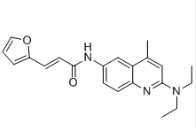
| DC73322 | DP308 Featured |
DP308 is a novel and effective 53BP1 tandem Tudor domain (TTD) inhibitor, disrupts the binding between 53BP1 and H4K20me2 peptide with IC50 of 1.69 uM.
More description
|
|
| DC73130 | AC-003 Featured |
AC-003 is a novel, orally administered small-molecule inhibitor targeting receptor-interacting protein kinase 1 (RIPK1), demonstrating therapeutic potential for the treatment of idiopathic pulmonary fibrosis (IPF).
More description
|

|
| DC70170 | AC3573 Featured |
AC3573 (AC-3573) is a potent, specific small molecule inhibitor of HER3.AC3573 abrogates HER2–HER3 signalling in cells and is more specific for HER3, inhibits NRG (heregulin)-induced HER3 phosphorylation with IC50 of 10 uM, abrogates the formation of the active HER2-HER3 heterodimer, inhibits oncogenic downstream signalling in SK-BR-3 breast cancer cells.
More description
|

|
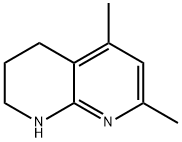
| DC73284 | F1957-0088 Featured |
F1957-0088 is a small molecule targeting the UHRF1 tandem Tudor domain (TTD) with TR-FRET (TTD vs. H3K9me3) EC50 of 45.1 uM.
More description
|
|
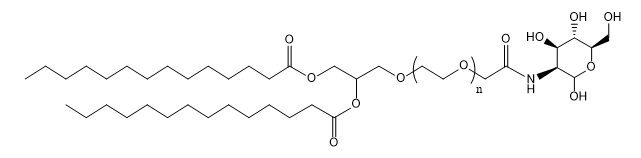
| DC67571 | DMG-PEG-Mannose Featured |
DMG-PEG-Mannose is a specialized functionalized lipid used primarily for the targeted delivery of lipid nanoparticles (LNPs) and liposomes to cells expressing mannose receptors, such as macrophages and dendritic cells. It combines a 1,2-dimyristoyl-sn-glycerol (DMG) lipid anchor with a polyethylene glycol (PEG) spacer and a terminal mannose sugar moiety.
More description
|
|
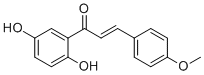
| DC74181 | SPI-21 Featured |
SPI-21 (Spt5-Pol II inhibitor 21) is a small-molecule inhibitor of Spt5-Pol II with IC50 of 25.2 uM.
More description
|
|
| DC40319 | H-D-Phe-Pip-Arg-pNA Featured |
H-D-Phe-Pip-Arg-pNA (S-2238), a chromogenic substrate, is patterned after the N-terminal portion of the A alpha chain of fibrinogen, which is the natural substrate of thrombin. H-D-Phe-Pip-Arg-pNA is specific for thrombin and is used to measure antithrombin-heparin cofactor (AT-III). The AT-III assay using H-D-Phe-Pip-Arg-pNA is sensitive, accurate, and easy to perform.
More description
|

|
| DC53059 | H-D-CHG-Ala-Arg-pNA.2AcOH(Substrate Th-1) Featured |
Chromogenic peptide substrate for the determination of thrombin and antithrombin III
More description
|

|
| DC71617 | Suc-Gly-Gly-Phe-pNA Featured |
The synthetic peptide Suc-Gly-Gly-Phe-pNA serves as a specific substrate for the enzyme chymotrypsin, demonstrating a Michaelis constant (Km) of 1.6 mM. This value reflects the substrate concentration at which the enzyme achieves half of its maximum reaction rate, indicating its affinity for the peptide.
More description
|

|
| DC67320 | Suc-Ile-Glu(γ-pip)-Gly-Arg-pNA hydrochloride Featured |
The activated factor X (FXa)-specific chromogenic substrate S-2732 is a short peptide covalently bound to pNA (4-nitroaniline). A free pNA will be cleaved off the peptide chain by activated factor X, thus enabling quantitive detection by a spectrophotometer.
More description
|
|
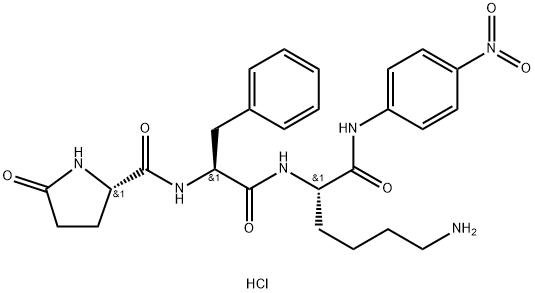
| DC67319 | S-2403(chromogenic substrate for plasmin and streptokinase-activated plasminoge) Featured |
S-2403 is a chromogenic substrate for plasmin and streptokinase-activated plasminoge
More description
|
|
| DC11457 | Tos-Gly-Pro-Arg-pNA(Thrombin substrate) Featured |
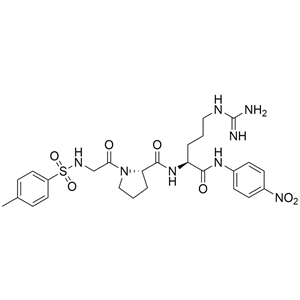
Tos-Gly-Pro-Arg-pNa is a chromogenic substrate for Thrombin.
More description
|
|
| DC43231 | Phenamil Featured |
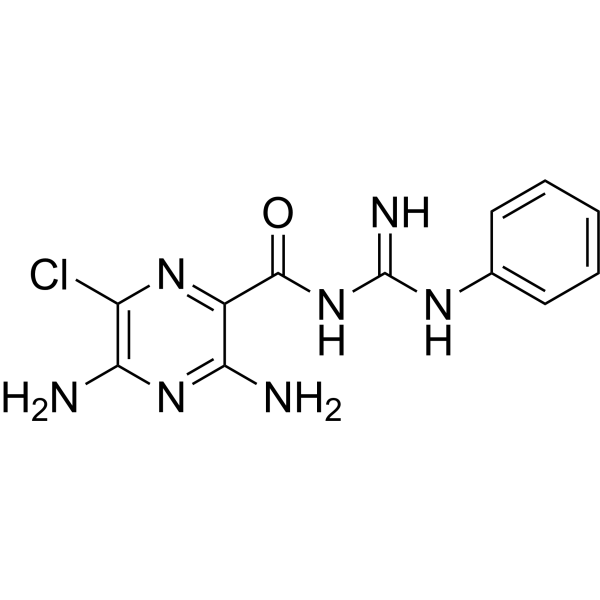
Irreversible inhibitor of amiloride-sensitive Na channels; derivative of amiloride
More description
|
|
| DC67594 | Pitstop2-100 Featured |
|
|
| DC73706 | ER-001135935 Featured |
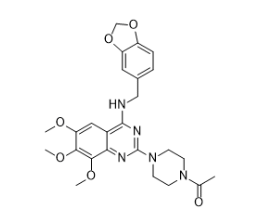
ER-001135935 is a potent selective inhibitor of aldehyde dehydrogenase family 1 member A3 (ALDH1A3) with IC50 of 64 nM, Ki value of 106 nM.
More description
|
|
| DC66199 | DMPE-PEG-NBD (PEG2000) Featured |
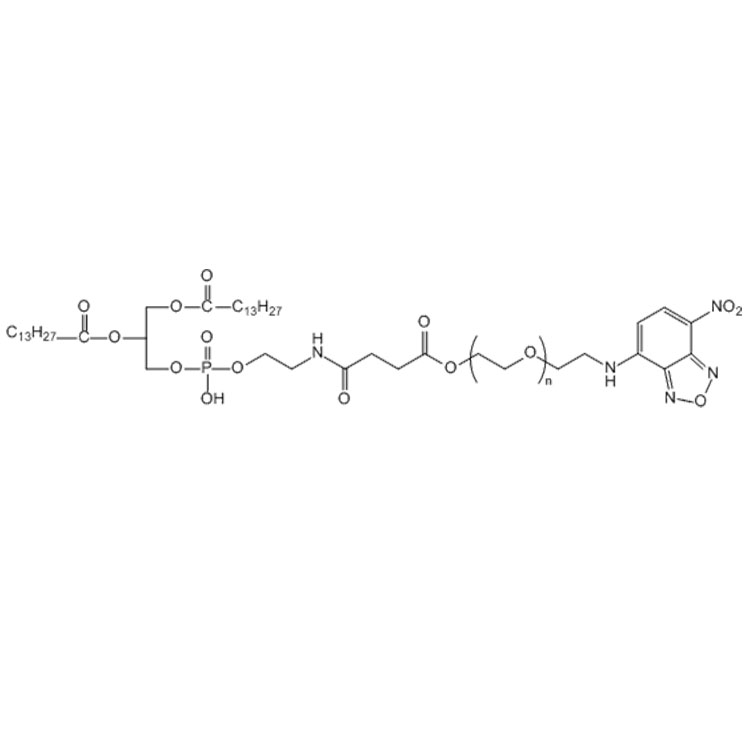
DMPE-PEG, a synthetic lipid, possesses unique properties and finds extensive applications as liposomes. Firstly, DMPE-PEG exhibits excellent biocompatibility and solubility, allowing for its stable presence and efficient absorption and metabolism in vivo. Additionally, DMPE-PEG possesses good surface activity, aiding in the stabilization of liposome structures and enhancing their stability.
More description
|
|
| DC66294 | DSPE-PEG-NBD(PEG2000) Featured |
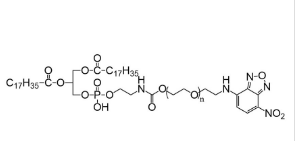
DSPE-PEG-NBD is a fluorescent phospholipid PEG conjugate, which can be used as a lipid membrane probe. The excitation/emission wavelength of NBD is 460 nm/534 nm.
More description
|
|
| DC66293 | DSPE-PEG-N3(DSPE-PEG-Azide, MW2000) Featured |
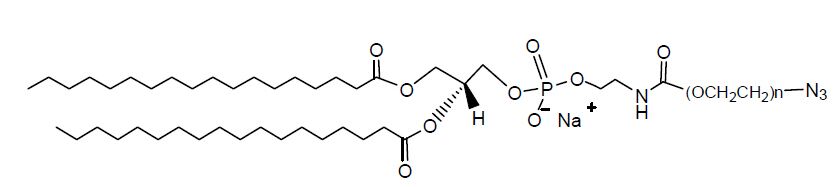
DSPE-PEG-N3 is a click chemical PEG reagent. Azide group is easy to react with alkynyl group under the catalysis of copper catalyst. It can also react directly with DBCO without any catalyst. DSPE (1,2-distearoyl-sn-glycerol-3-phosphoethanolamine) is a saturated 18 carbon phospholipid, which is commonly used in the synthesis of liposomes. Polyethylene glycol (PEG) - coupled DSPE is hydrophilic and can be used for drug delivery, gene transfection and biomolecular modification. The PEG of phospholipid significantly improved the blood circulation time and stability of the capsule drug. Polyethylene glycol can enhance the solubility and stability, reduce the non-specific binding of charged molecules on the surface, and reduce the immunogenicity of polypeptides.
Azide (- N3) can react with copper catalyzed alkynes in aqueous solution and be reduced to amino groups. Polyethylene glycol can increase solubility and stability. It can also inhibit the nonspecific binding of charged molecules on the modified surface.
More description
|
|
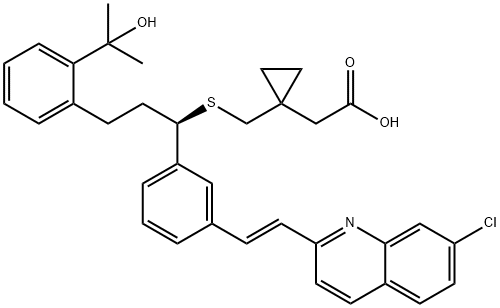
| DC40582 | Montelukast Featured |
Montelukast is a potent, selective and orally active antagonist of cysteinyl leukotriene receptor 1 (CysLT1). Montelukast can be used for the reseach of asthma and liver injury. Montelukast also has an antioxidant effect in intestinal ischemia-reperfusion injury, and could reduce cardiac damage.
More description
|
|
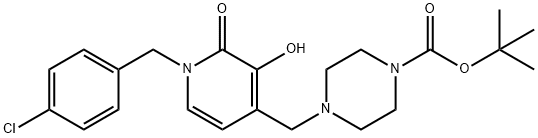
| DC48260 | Izilendustat Featured |
Izilendustat is a potent inhibitor of prolyl hydroxylase which can stabilize hypoxia inducible factor- 1 alpha (HIF- lα) and hypoxia inducible factor-2 (HIF-2). Izilendustat has the potential for researching diseases that relate to the body’s inmmune response like colitis and other inflammatory bowel diseases (extracted from patent WO2011057115A1 and WO2011057121A1).
More description
|
|
