 To enhance service speed and avoid tariff delays, we've opened a US warehouse. All US orders ship directly from our US facility.
| Cat. No. | Product Name | Field of Application | Chemical Structure |
|---|---|---|---|
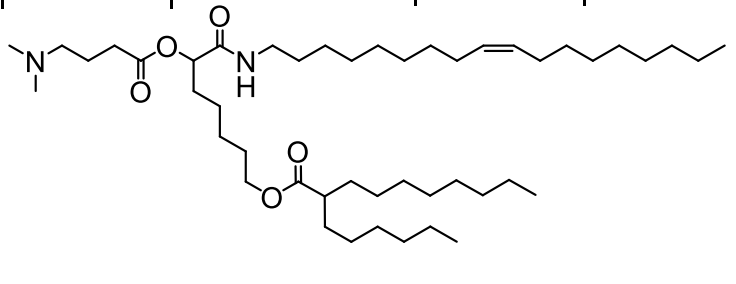
| DC60782 | Lipid A4B4-S3 Featured |
A4B4-S3 is a novel biodegradable ionizable lipid that has been meticulously designed through modular platforms and optimized specifically for mRNA delivery. It serves as a critical component of lipid nanoparticles (LNPs) and enhances mRNA delivery efficiency by facilitating endosomal escape. The structural design of A4B4-S3 leverages the Passerini reaction, a highly efficient and modular chemical method that enables the rapid generation of diverse lipid libraries. The design focuses on optimizing the methylene units between lipid headgroups and linkages to strengthen hydrogen bonding interactions with mRNA ribophosphate complexes. This enhanced hydrogen bonding allows for more effective release of mRNA from endosomes, thereby boosting delivery efficiency. Concurrently, the structural optimization improves biodegradability, reducing potential long-term toxicity risks.
In experimental studies, A4B4-S3 has demonstrated superior gene editing efficacy in mouse liver compared to SM-102, a clinically prevalent lipid used in Moderna's COVID-19 vaccine. It also shows potential for repeat-dose protein replacement therapies, suggesting enhanced stability and safety for long-term treatment regimens. Technologically, A4B4-S3 not only provides a more efficient LNP formulation but also deepens the understanding of the relationship between structure and delivery efficiency. This offers new directions for the development of future mRNA therapeutics. In summary, A4B4-S3 represents a next-generation delivery carrier achieved through rational design and high-throughput screening strategies. Its performance enhancements and biodegradable properties position it as a promising candidate for gene therapies and vaccine applications.
More description
|
|
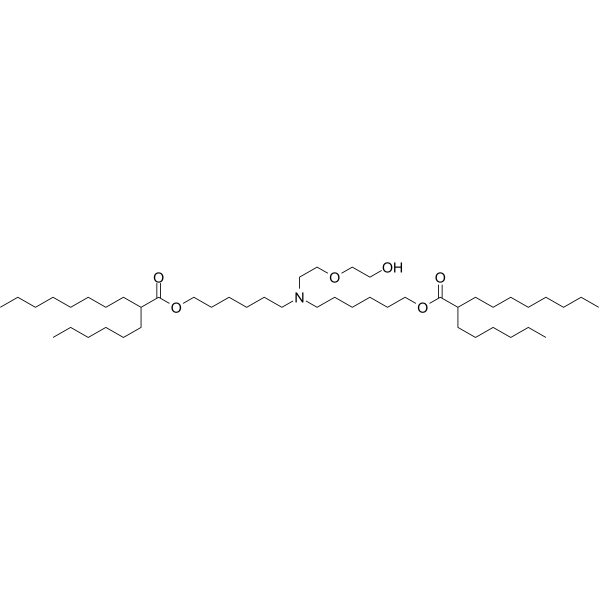
| DC65329 | ALC-0315 analogue-2 Featured |
ALC-0315 analogue-2 is an analogue of ALC-0315. ALC-0315 is an ionisable aminolipid that is responsible for mRNA compaction and aids mRNA cellular delivery and its cytoplasmic release through suspected endosomal destabilization. ALC-0315 can be used to form lipid nanoparticle (LNP) delivery vehicles. Lipid-Nanoparticles have been used in the research of mRNA COVID-19 vaccine.
More description
|
|
| DC52025 | SM-102 Featured |
SM-102 is an ionizable amino lipid that has been used in combination with other lipids in the formation of lipid nanoparticles.Administration of luciferase mRNA in SM-102-containing lipid nanoparticles induces hepatic luciferase expression in mice. Formulations containing SM-102 have been used in the development of lipid nanoparticles for delivery of mRNA-based vaccines.
More description
|

|
| DC42537 | ALC-0315 Featured |
ALC-0315 is an ionisable aminolipid that used for mRNA compaction and aids mRNA cellular delivery. ALC-0315 can be used to form lipid nanoparticle (LNP) delivery vehicles.
More description
|

|
| DC66219 | Lipid 88 Featured |
Lipid88 is a high-performance, novel ionizable lipid component engineered for advanced mRNA-LNP vaccine delivery. LNP88 formulation demonstrates superior biodistribution, achieving >10-fold higher transfection efficiency in spleen and lymph nodes compared to benchmark lipids like ALC-0315 via intramuscular delivery. When encapsulating antigen-encoding mRNA (e.g., optimized mCSA construct), Lipid-88 based LNPs drive robust humoral and cellular immunity, enabling complete protection against challenging SARS-CoV-2 variants (WA1/2020, Omicron BA.1, BQ.1) in preclinical models. Its design prioritizes potent immunogenicity with favorable safety profiles.
More description
|

|
| DC60856 | DMA4-H228 Featured |
DMA4-H228 is a novel, biodegradable lipidoid specifically engineered for spleen-targeted mRNA delivery. Its structure combines a dimethylamino (DMA4) headgroup with a unique hyperbranched lipid tail (H228) synthesized via Michael addition, incorporating ester bonds for enhanced biodegradability. This design enables the formation of stable lipid nanoparticles (LNPs) (~170 nm) with high mRNA encapsulation efficiency (>96%).
Critically, DMA4-H228 exhibits exceptional intrinsic tropism for the spleen (>98% targeting efficiency after IV administration), requiring no external targeting ligands. It selectively delivers mRNA to splenic antigen-presenting cells (APCs), including dendritic cells, macrophages, and B cells. This triggers potent immune activation: rapid IFNα secretion, upregulation of APC maturation markers (CD86/CD40), and robust antigen-specific immune responses.
Demonstrating significant therapeutic potential, DMA4-H228-based mRNA vaccines effectively inhibit tumor growth in melanoma models (e.g., B16F10-OVA). This correlates with increased tumor-infiltrating CD8⁺ T cells, a shift towards pro-inflammatory M1 macrophages, elevated antigen-specific antibodies (IgG), and strong T cell responses (evidenced by IFNγ⁺ spots). Its ability to bypass liver tropism and directly activate splenic APCs makes DMA4-H228 a powerful platform for next-generation mRNA vaccines and cancer immunotherapy.
More description
|

|
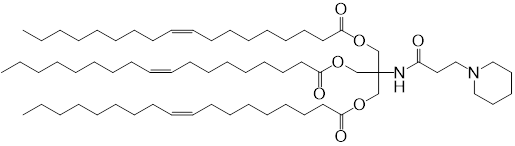
| DC60821 | Lipid TOT-5 Featured |
TOT-5, a tri-oleoyl-Tris ionizable lipid (pKa 6.2), enables splenic B cell-targeted mRNA delivery via 15% DSPC-incorporated LNPs. Its charge-neutral, hydrophobic surface minimizes hepatic ApoE uptake and enhances complement C3 adsorption, facilitating CD21/35-mediated uptake by marginal zone B cells. In vivo, intravenous 15%DSPC-LNPs showed 8-fold higher spleen-to-liver luciferase expression vs 3%DSPC, with anti-CD21/35 blocking 60% B cell uptake. Intramuscular administration induced robust OVA-specific IgG (10^5 titer) and CTL responses (3.5% tetramer+ CD8+ T cells) while reducing hepatotoxicity (ALT/AST levels ≤40 U/L vs SM-102-LNPs' 80-120 U/L). Cryo-ET confirmed stable lamellar structures (80-100 nm, ζ-potential -2 mV). This formulation achieves safe, ligand-free splenic targeting for mRNA vaccines.
More description
|
|
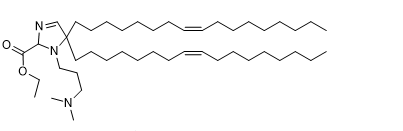
| DC82003 | A12-Iso5-2DC18 |
A12-Iso5-2DC18 is a novel amine containing lipid can be used for mRNA delivery, activate the stimulator of interferon genes (STING) pathway, and exhibit anti-tumor immunity.
More description
|
|
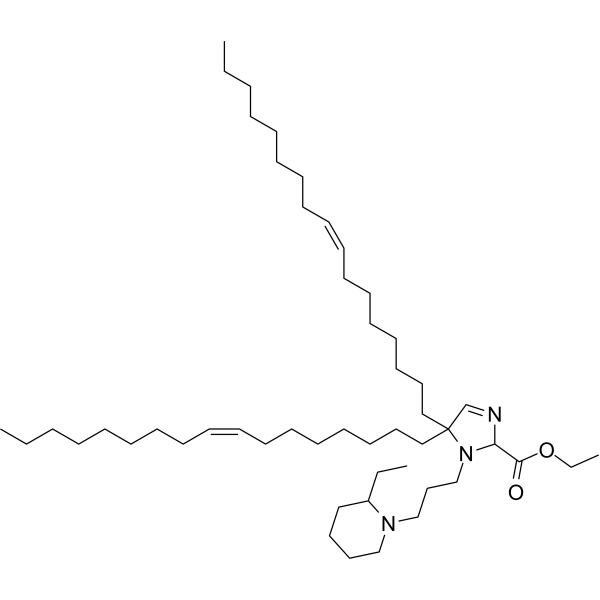
| DC80071 | A18-Iso5-2DC18 Featured |
A18-Iso5-2DC18 that could not only deliver mRNA vaccines robustly but also activate the stimulator
of interferon genes (STING) pathway.
More description
|
|
| DC80070 | A2-Iso5-2DC18 Featured |
A2-Iso5-2DC18 is a top-performing lipid for mRNA delivery in bone marrow-derived dendritic cells (BMDCs), BMDMs and HeLa cells.
More description
|

|
| DC67537 | DM3-BTA-14 Featured |
DM3-BTA-14 is a cationic lipid compound engineered for high-efficiency mRNA delivery developed by Hefei AlphaNA Biotechnology. Its structure features a rigid benzene-1,3,5-tricarboxamide core linked to a protonatable dimethylamino headgroup (-N(CH₃)₂) via a propylene spacer (-CH₂CH₂CH₂-) and two saturated C14 alkyl chains. This design enables ≈90% endosomal escape efficiency , superior lymph node targeting for vaccines , and effective tumor-specific mRNA delivery . It outperforms benchmark lipids while maintaining low cytotoxicity, forming stable nanoparticles with cholesterol/DSPC/DSPE-PEG (50:39:10:1 ratio) for therapeutic applications.
More description
|

|
| DC58046 | C12-200 Featured |
C12-200 is a well-known cationic lipid used in the formulation of lipid nanoparticles (LNPs) for the delivery of therapeutic nucleic acids, including siRNA, mRNA, and CRISPR components. It is widely recognized for its high in vivo potency at low doses and is often used as a positive control ionizable lipid in research exploring new ionizable lipids.
More description
|

|
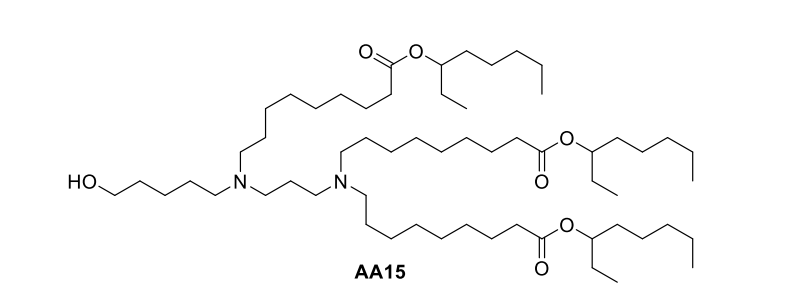
| DC67315 | Lipid AA15 |
The AA15 lipid, an amino acid-derived ionizable lipid, integrates a carboxylic acid-containing headgroup and biodegradable branched ester tails (R2) to enhance mRNA delivery. Optimized as AA15V LNP, it exhibits a hydrodynamic diameter of 102.3 ± 4.1 nm, low polydispersity (PDI <0.15), and slightly positive zeta potential (+4–6 mV), enabling efficient tumor-targeted delivery. With a pKa ~6.1–6.4, AA15V ensures protonation in acidic endosomes, promoting mRNA release. It achieves >85% mRNA encapsulation efficiency, critical for stable saRNA delivery. In vitro, AA15V LNP-sSE-SCTs induced sustained SE-SCT expression (69% H-2Kb+β2m+ B16F10 cells at 72 h), outperforming mRNA formulations. In vivo, a single intratumoral dose of AA15V LNP-sSE-SCTs suppressed tumor growth by 22-fold in vaccinated mice, synergizing with checkpoint inhibitors (anti-PD-1/CTLA-4) for complete regression in 28.6% of lymphoma models. Ex vivo, AA15V enabled SE-SCT expression in human glioblastoma (7.1% CD45− cells) and lung cancer samples (5.8–8.7%), underscoring clinical potential. Key data: pKa ~6.3; encapsulation: 85–89%; zeta: +4–6 mV; size: 102.3 ± 4.1 nm.
More description
|
|
| DC80065 | 113-O12B Featured |
113-O12B LNP, an LN-targeting LNP delivery system, is developed for a mRNA cancer vaccine.
More description
|
.gif)
|
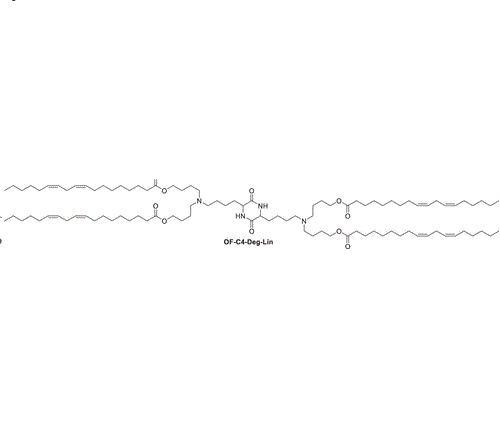
| DC80080 | OF-C4-Deg-Lin Featured |
OF-C4-Deg-Lin is a novel ionizable lipid for RNA delivery.
More description
|
|
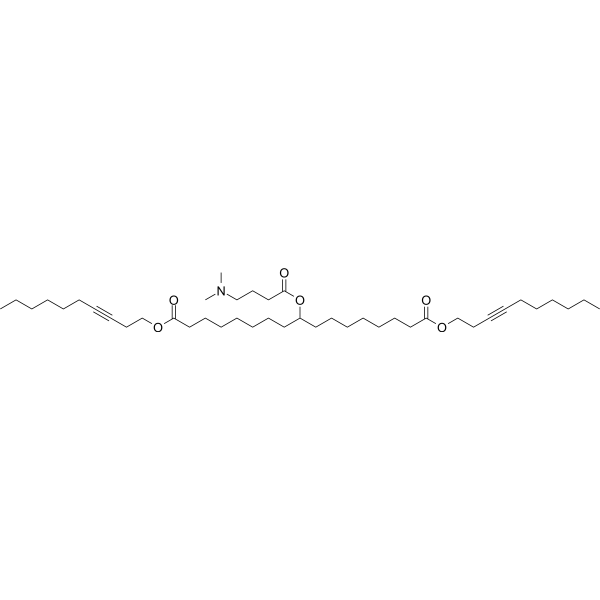
| DC80050 | LIPID A6 Featured |
Lipid A6 is an ionizable cationic and biodegradable alkyne lipid (pKa = 6.65).It has been used with other lipids in the formation of lipid nanoparticles (LNPs) for the delivery of mRNA. LNPs containing lipid A6 and encapsulating mRNA encoding human erythropoietin (EPO) increase and then maintain homeostatic levels of hemoglobin in the blood in an adenine-induced mouse model of renal anemia.
More description
|
|
| DC81110 | TS-202 Featured |
TS-202 is a novel ionizable lipid for RNA delivery.
More description
|

|
| DC31024 | SM-86(Lipid 5) Featured |
SM86 is a cationic, ionizable lipid developed by Moderna as a core component of its lipid nanoparticle (LNP) platform for mRNA therapeutic delivery.SM-086 is structurally optimized and analogous to SM-102 (used in Moderna’s COVID-19 vaccines), with modifications aimed at enhancing mRNA delivery efficiency and safety.SM-86 serves as the primary cationic lipid in three investigational mRNA therapies targeting rare metabolic disorders:mRNA-3927: Restores propionyl-CoA carboxylase activity in propionic acidemia (PA).
mRNA-3705: Delivers methylmalonyl-CoA mutase mRNA for methylmalonic acidemia (MMA).
mRNA-3210: Provides phenylalanine hydroxylase mRNA to treat phenylketonuria (PKU).
More description
|

|
| DC60564 | Lipid GVS-18-B6 Featured |
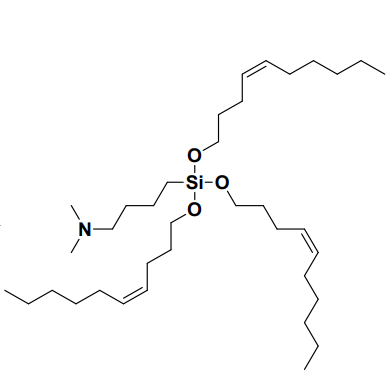
GVS-18-B6 is a silicon ether-based ionizable lipid (pKa:6.15) developed by Genevant, optimized for mRNA-LNP delivery, characterized by a short-chain trialkyl structure with three C10 alkyl chains (including a cis double bond) and a dimethylamino (DMA) head group linked via a 4-carbon spacer (pKa ~6.15). Its LNP formulations exhibit a narrow particle size distribution (89 nm, PDI=0.06), high mRNA encapsulation efficiency (90%), and pH-dependent surface charge (−0.11 mV at pH 7.5 vs. +2.69 mV at pH 5.5), facilitating endosomal escape. In vivo, GVS-18-B6 demonstrated superior liver-specific mRNA expression (5.30×10⁷ pg EGFP/g liver, 2.6× higher than MC3) with minimal spleen accumulation (liver/spleen ratio 92:1 vs. MC3’s 10:1), attributed to rapid non-enzymatic hydrolysis of its silicon ether bonds. This mechanism enables near-complete hepatic clearance within 6 hours in mice and 24 hours in NHPs, avoiding long-term organ retention (MC3 retained 25% in liver after 28 days). Compared to benchmarks (MC3, SM-102, LP-01), GVS-18-B6 showed enhanced potency in RBC hemolysis assays (pH 6.2), indicating earlier endosomal membrane disruption, and maintained stability through 12-month frozen storage or repeated freeze-thaw cycles. Toxicity profiling revealed minimal immunogenicity (MCP-1 levels 0.58×10⁶ vs. MC3’s 1.10×10⁶) and no ALT/AST elevation or anti-PEG antibody induction in NHPs after repeated dosing. Its species-agnostic clearance, low off-target effects, and high tolerability (6 mg/kg dose in mice) position GVS-18-B6 as a leading candidate for chronic disease therapies requiring frequent mRNA administration.
More description
|
|
| DC85555 | YK-009 Featured |
YK-009 is an advanced, biodegradable ionizable lipid designed for efficient mRNA delivery. Via intramuscular injection, it demonstrates superior targeting to draining lymph nodes, boosting immune cell transfection for vaccines. When administered intravenously, it distributes to the liver but leverages a highly degradable chemical backbone to ensure rapid clearance post-endosomal escape. This effectively eliminates the risk of long-term tissue accumulation and liver toxicity seen in traditional lipids. Delivering a balance of high transfection efficiency and exceptional biocompatibility, YK-009 is an ideal component for safe and potent lipid nanoparticle (LNP) formulations.
More description
|

|
| DC60843 | CF3-2N6-UC18 Featured |
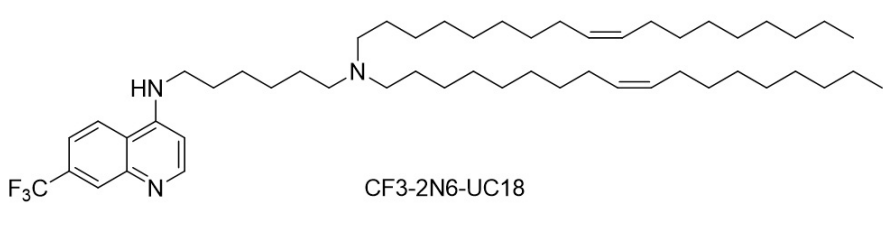
CF3-2N6-UC18 is a rationally designed chloroquine-inspired ionizable lipid that enables robust mRNA delivery and genome editing. It integrates three modular components: a 7-trifluoromethyl-substituted quinoline scaffold (mimicking chloroquine’s endosomolytic properties), a hexamethylenediamine linker with two ionizable nitrogen atoms (pH-responsive protonation), and two unsaturated oleyl (C18:1) hydrophobic tails (enhancing membrane fusion and nanoparticle stability). This lipid self-assembles into ecoLNPs (endosomolytic chloroquine-like lipid nanoparticles) with spherical morphology (~200 nm diameter, 98% mRNA encapsulation). Its pH-sensitive activity triggers endosomal escape through dual mechanisms: proton sponge effect (buffering endo-lysosomal pH) and saposin B-mediated membrane disruption (molecular docking confirms chloroquine-like binding to lysosomal saposin B). In vitro, ecoLNPs outperform commercial reagents (18.9-fold higher mRNA delivery than Lipofectamine 2000) and penetrate 3D cell models. They resist serum/RNase degradation and retain >90% activity after 7-day storage at 4°C. In vivo, ecoLNPs achieve tissue-specific mRNA expression via multiple routes (intravenous, intramuscular, etc.), with strong lymph node tropism (90.2% after intramuscular injection) comparable to SM-102 LNPs (Moderna’s COVID-19 vaccine carrier). They mediate efficient Cre mRNA-driven recombination and CRISPR-Cas9 editing in transgenic mice. CF3-2N6-UC18’s modular design, stability, and dual endosomal escape strategies position it as a versatile platform for mRNA vaccines, gene therapy, and genome editing applications.
More description
|
|
| DC67515 | CICL-207 Featured |
CICL 207 is structurally optimized based on Lipid CICL-1. CICL207 is a constrained ionizable cationic lipid designed for lipid nanoparticle (LNP) delivery systems developed by Capstan. Its structure features a rigid cyclic backbone (e.g., pyrrolidine-derived core) paired with a tertiary amine group that ionizes at acidic pH (pKa ~6.5–7.0), enhancing endosomal escape. The lipid includes asymmetric hydrophobic tails (likely C14–C18 alkyl/ester chains) to stabilize LNP membranes and improve nucleic acid encapsulation. Integrated into LNPs (e.g., 58% CICL-207, 10% DSPC, 30.5% cholesterol, PEG-lipids), it enables targeted delivery to T cells (anti-CD5/CD8 tLNPs) with high transfection efficiency (spleen T cells >70% mCherry+), reduced liver uptake, and low toxicity (no significant ALT/AST elevation in rats). Its constrained design balances stability, tissue specificity, and biocompatibility for gene therapy applications.CICL 207 (F50) significantly outperforms CICL-1 by delivering dramatically enhanced target cell transfection with reduced off-target effects. It achieves >50% transfection efficiency in splenic T-cells—nearly double that of CICL-1—while slashing off-target expression in liver cells to <5% (versus >15% for CICL-1. This precision translates to superior therapeutic outcomes: CICL-207 enables ~95% B-cell depletion in CAR-T applications, far exceeding CICL-1 ’s ~60% efficacy. Critically, it maintains an exceptional safety profile, showing no significant liver toxicity or inflammatory cytokine elevation even at high doses. Furthermore, CICL-207 demonstrates 2-fold higher transfection efficiency in hematopoietic stem cells, enabling robust gene editing. Its optimized pKa (~6.5) and constrained amine structure enhance endosomal escape while minimizing Kupffer cell uptake, making it ideal for targeted therapeutics requiring both potency and safety.
More description
|

|
| DC60213 | DOTMA Featured |
N-[1-(2,3-Dioleyloxy)propyl]-N,N,N-trimethylammonium (DOTMA) is a cationic lipid.It has been used as a component in liposomes that can be used to encapsulate siRNA, microRNAs, and oligonucleotides and for gene transfection in vitro.
More description
|

|
| DC60215 | Moderna Lipid 29 Featured |
Lipid 29 is an ionizable amino lipid (pKa = 6.91) from Moderna platform that has been used in combination with other lipids in the formation of lipid nanoparticles (LNPs).Administration of human erythropoietin (EPO) mRNA in lipid 29-containing LNPs increases serum EPO levels in mice.
More description
|

|
| DC60579 | Lipid B3 Featured |
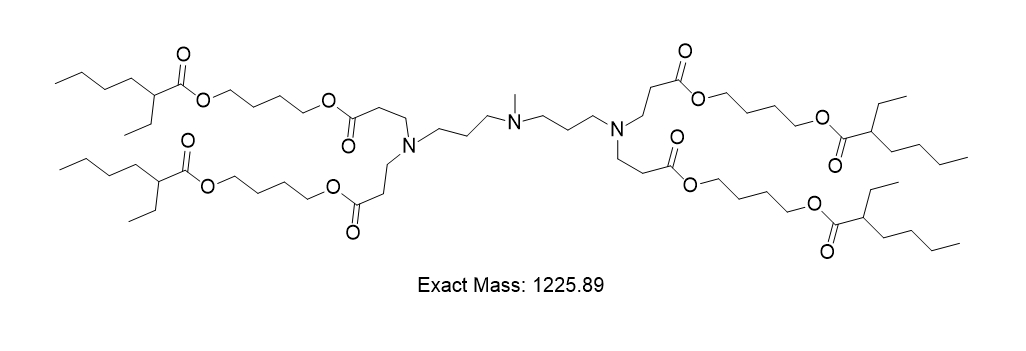
Lipid B3 is a biodegradable ionizable lipid for liver targeted delivery. Lipid B3-LNP shows high delivery efficacy and low toxicity in delivering RNA to liver cells.
More description
|
|
| DC60842 | Lipid H7T4-4 Featured |
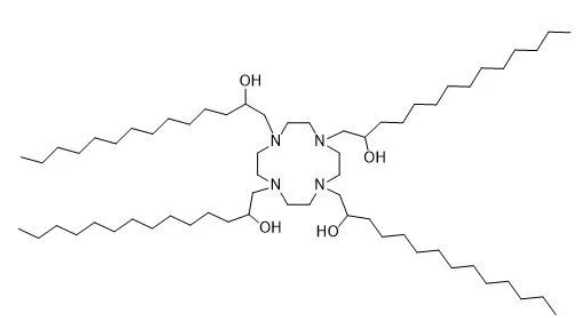
H7T4-4 is an ionizable lipid designed for mRNA delivery via lipid nanoparticles (LNPs). It features a cyclic amine headgroup (derived from cyclen tetrahydrochloride) and four C14 hydrophobic alkyl tails, synthesized through a Michael addition reaction between cyclen and 1,2-epoxytetradecane. With a high transition temperature (Tm = 58.6°C) due to strong intermolecular interactions from its cyclic headgroup and multi-tail structure, H7T4-4 alone forms rigid aggregates incompatible with mRNA encapsulation. However, when blended with low-Tm helper lipids (e.g., DOPE, Tm = -16°C), the system’s overall Tm decreases, enabling stable LNP formation. Optimized formulations (20% H7T4-4, 41% DOPE, 38% cholesterol, 1% DMG-PEG) exhibit efficient mRNA encapsulation (>90%) and transfection. Structural analyses (SAXS, cryo-TEM) confirm monodisperse LNPs with lamellar/hexagonal phases. In vivo, H7T4-4 LNPs show tumor-targeted and intranasal mRNA delivery with reduced off-target accumulation compared to SM-102-based LNPs. This rational design highlights Tm-guided helper lipid selection to overcome rigidity challenges in ionizable lipids.
More description
|
|
| DC60800 | 18-2-9b2 Featured |
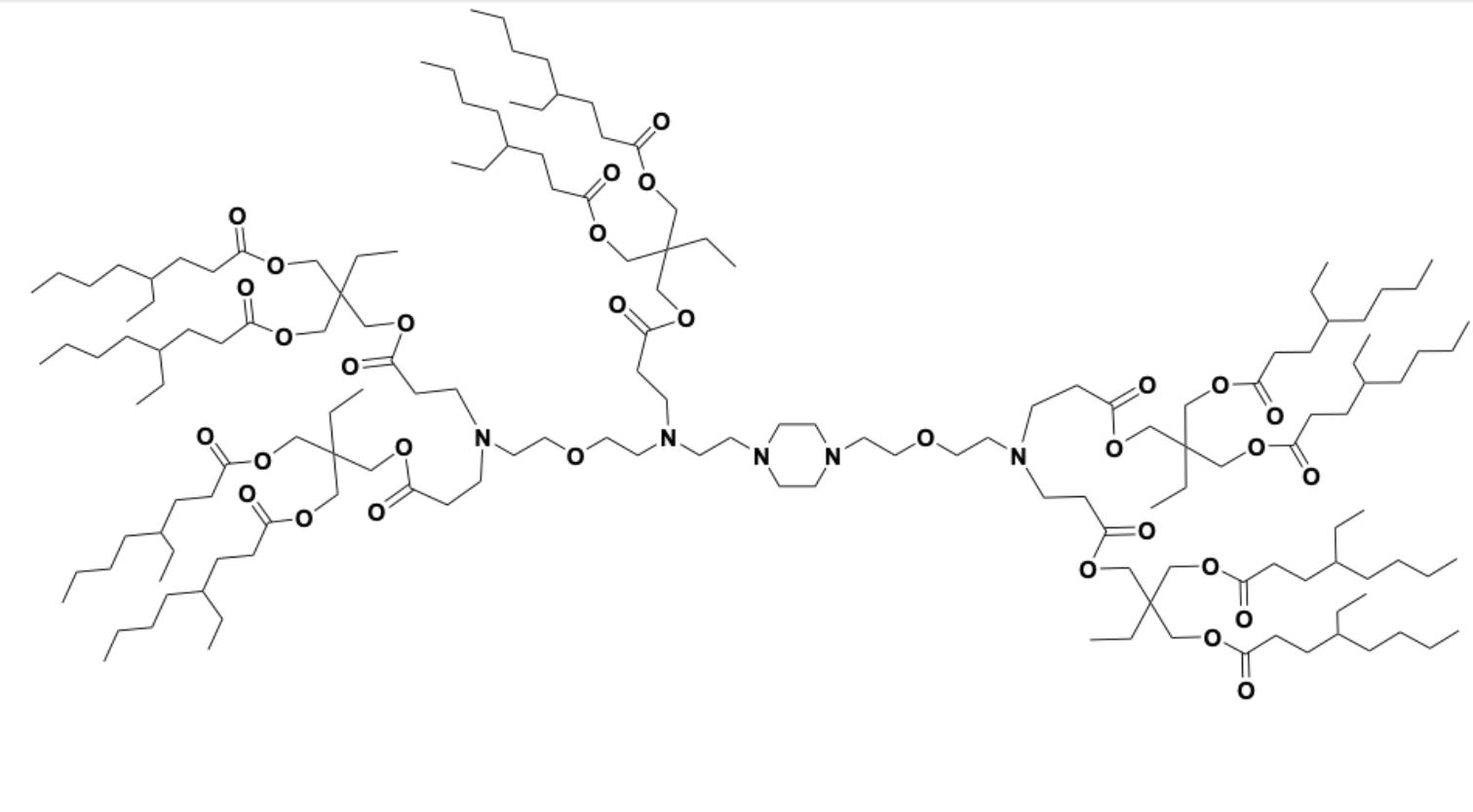
18-2-9b2 is a dendron-like degradable ionizable lipid which facilitates mRNA delivery to splenic macrophages. 18-2-9b2 LNP encapsulating therapeutic BTB domain and CNC homologue 1 (BACH1) mRNA exhibited proficient BACH1 expression and subsequent Spic downregulation in splenic red pulp macrophages (RPM) in a Spic-GFP transgene model.
More description
|
|
| DC41043 | NT1-O12B Featured |
NT1-O12B, an endogenous chemical and a neurotransmitter-derived lipidoid (NT-lipidoid), is an effective carrier for enhanced brain delivery of several blood-brain barrier (BBB)-impermeable cargos. Doping NT1-O12B into BBB-impermeable lipid nanoparticles (LNPs) gives the LNPs the ability to cross the BBB. NT-lipidoids formulation not only facilitate cargo crossing of the BBB, but also delivery of the cargo into neuronal cells for functional gene silencing or gene recombination.
More description
|

|
| DC60212 | NT1-O14B Featured |
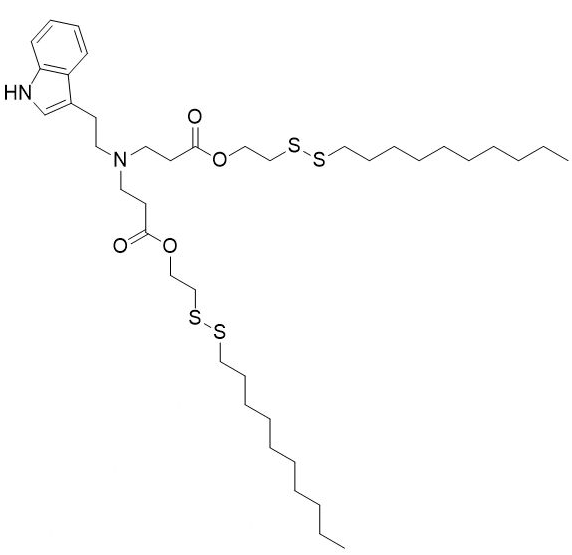
NT1-O14B is a tryptamine-containing cationic lipidoid.1 It has been used in combination with other lipids in the formation of lipid nanoparticles (LNPs). Intravenous administration of LNPs containing NT1-O14B and encapsulating antisense nucleotides against tau decreases tau brain levels in mice.
More description
|
|
| DC60503 | C12-A1 Featured |
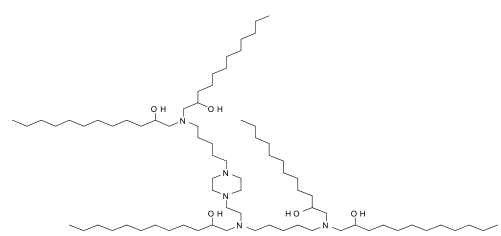
Lipid C12-A1 is an ionizable lipid. C12-A1-LPN is a potent and safe LNP platform to deliver Foxp3 mRNA to CD4+ T cells to engineer immunosuppressive FP3T cells. C12-A1 has a slightly lower average cell viability than C14-A1.
More description
|
|
